Last month we started an exploration of Australia’s Hunter Valley with a trip down memory lane of the brief months we spent living in Sydney and a visit to Hope Estate. Today we’re continuing the journey with a look at my other favorite stop from the visits we made to the Hunter Valley: Tyrrell’s.
It was hot and muggy out when we visited Tyrrell’s Wines on Christmas Eve in 2009. Walking outside felt like moving through soup. My mother-in-law Carolyn and my good friend Marc were both visiting, taking advantage of the final weeks of our stay in Oz. Thinking that wine tasting would be an activity that could please everyone in the group, we headed up to the Hunter Valley, but the intensity of the summer’s heat and humidity was formidable and it did us all in. We ended up cutting our day short and I recall us all being kind of grumpy and sticky on the drive back to Sydney. The fact that Tyrrell’s stands out as a bright spot in the day says a lot. The wines were good enough to cut through all the bad moods and stuck in my memory as my favorite winery visited during our time in New South Wales.
 |
| Marc, Greg, and Carolyn at Tyrrell's on the day we visited. Everyone has a bit of a sheen from the heat, but we hadn't yet melted at this point in the day. |
Happily, these days I’m also able to fairly easily find their wines stateside.
HUNTER VALLEY’S TERROIR

Last month we took a look at the history of Australia’s oldest wine region – check out this post for more background. This month we’ll take a look at the terroir.
Hunter Valley’s climate is a bit of an anomaly for a wine region. We simply weren’t unlucky in picking an unfortunate day to visit the area – the heat and humidity are defining characteristics of the region’s climate. This isn’t a combo you usually look for in a fine wine region. Grapes like a temperate climate that allow them enough heat and sunshine to allow them to ripen, balanced with time to cool off so as to maintain acidity. Grapevines also shut down in extreme heat. For this reason, most fine wine regions sit between 30° and 50° latitude. The Hunter Valley is right at the edge of this range, sitting at a latitude of 32/33°S.
 |
| Zeroing a bit further. Map courtesy of Wineaustralia.com. |
Wet conditions can also bring problems. First off, disease pressures from things like molds and fungus go up in wetter conditions. Also, if grapes take in a lot of water from rain close to harvest time, the juice inside can become diluted and less flavorful.
Luckily, there are several mitigating factors to help conditions in the Hunter Valley. Cloud cover and gentle breezes from the Pacific Ocean tend to roll into the area from the coast in the afternoon. Evenings also grow cooler during the fall and winter. It also tends to rain quite a bit during the growing season, which also helps to cool things off and give the grapes a break. Thankfully, most of the rain comes during the summer, although rain at harvest can definitely be a problem. As you might guess, climate change is also a definite concern in this area.
 |
| This image is of Tyrrell's Old Patch Vineyard (borrowed from their site). It was planted in 1867, making it almost 150 years old. It is the oldest vineyard in NSW and one of the oldest in the world. |
The terrain for most of the Hunter Valley is made up of gently sloping hills with the Hunter River and its tributaries running throughout it. Many of the most prestigious vineyards are located in the foothills and valley of the Brokenback Range, which is part of the Great Dividing Range. The terrain of the Upper Hunter area is considerably flatter than other sections. The Goulburn River (a major tributary of the Hunter) runs through the region and helps to provide water for irrigation in the drier parts of the region.
The Hunter Valley sits on an ancient seabed, giving it rich and diverse soils. Volcanic soils also run through various parts of the region. Pokolbin, where our winery today is located, has red volcanic soils on sites on higher ground that is particularly good for Shiraz. White grapes like Sémillon and Chardonnay tend to be planted on white sands and loam located on the lower ground.
A BIT ABOUT SÉMILLON

Image of Sémillon grapes borrowed from Wikipedia.
Sémillon is an interesting grape. Wines made from this variety tend to undergo complete personality changes as they age, even more so than most other grapes. When they’re young, the wines show lots of citrus, green apple, and peach, along with notes of blanched almond, beeswax, or a lanolin component that gives the grape a lot of texture and mouthfeel. As the wines age, the flavors deepen and become riper, deeper, honeyed, and more tropical, and the nutty flavors become toastier. They’ll also often start to taste like they spent time in oak, even when the wine never got close to a barrel.
The Hunter Valley is a benchmark region for the grape. (In general, we look to Bordeaux and Australia for the premier examples of this variety.) The style the Hunter Valley is known for doesn’t seem like it should be possible under the growing conditions – super zesty, bright, and crisp. The typical Hunter Valley Sémillon (HVS) is picked early, handled gently to reduce skin and seed extract, fermented at cold temperatures in stainless steel, and is then transferred to bottles as soon as fermentation stops. As a result of being picked early, the wines tend to be lower in alcohol – around 10 to 11%. Wine Australia describes the HVS in this way:
When first bottled, Hunter Valley Semillon is almost water-white in appearance with aromas of citrus, grass, straw, lanolin, and subtle green herbs. It’s crisp and delicate with a chalky minerality. Patience pays great dividends, however, and the finest examples with high acidity and low alcohol transform after as little as five years in bottle, revealing honeyed, toasty, grilled nut characters – almost as if the wine has spent time in oak (even though it hasn’t). It’s these wines that make Hunter Valley Semillon one of the wine world’s great collectible wonders. Prices of these age-worthy Semillons are well within reach of most wine lovers and, under the right conditions, the transformation that occurs over time is substantial. The key point of difference in aged Hunter Valley Semillon is that the best examples will retain an identifiable stamp of primary fruit and a nucleus of fine acidity even after decades in the cellar.
The acidity is so racy in Hunter Valley Sémillons that they were often referred to as Hunter Rieslings – don’t let this confuse you, it is a different grape. The typical style here is dry, however, the grape is susceptible to botrytis and the humid conditions in many parts of the Hunter Valley are perfect for it, so excellent sweet versions are also made here.
TYRRELL’S WINES
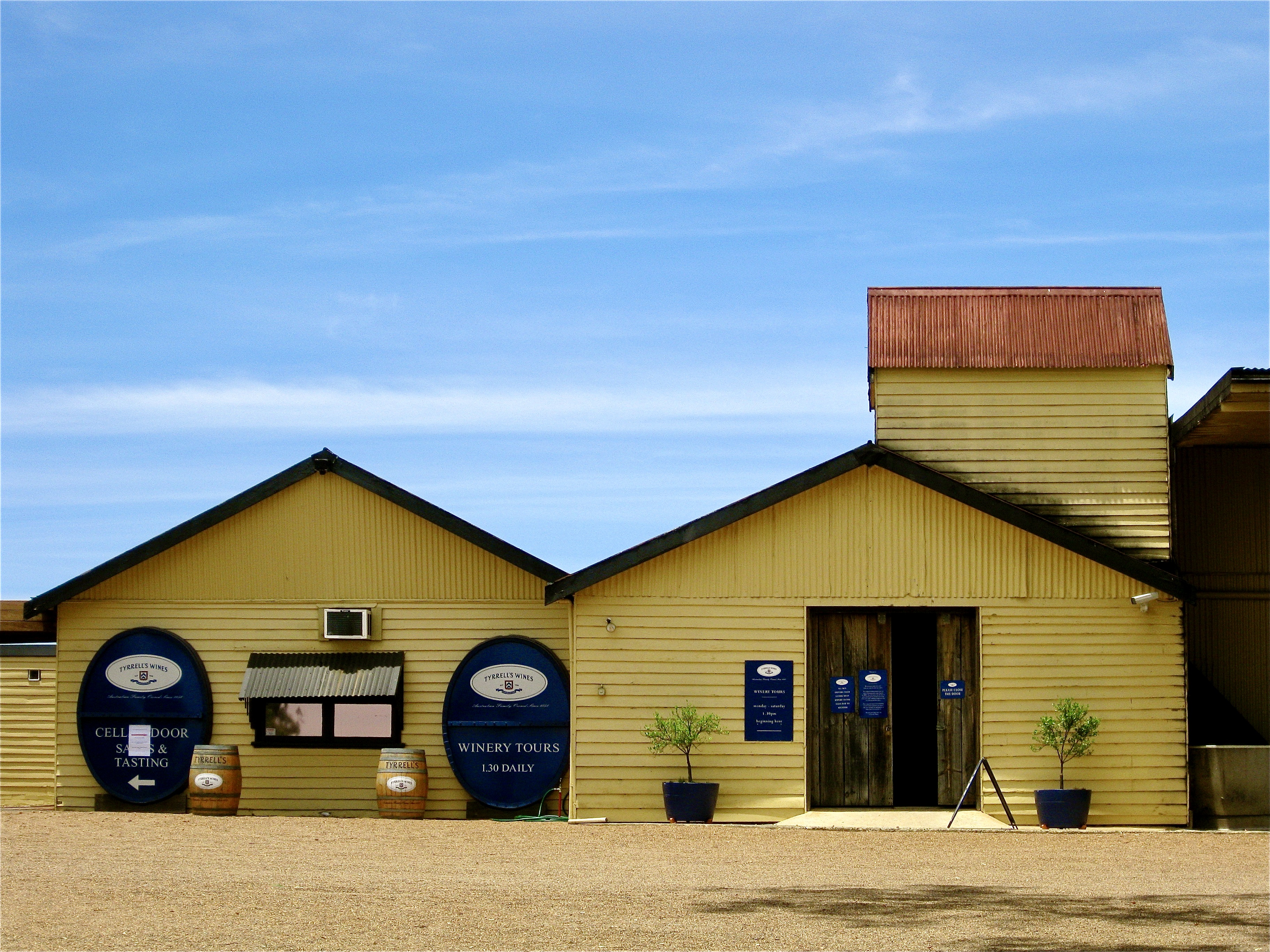
Tyrrell’s history dates back to the early days of wine production in the Hunter Valley, and by extension, Australia. It shares the position of being the second oldest continuously owned and operated family winery in Australia. Edward Tyrrell settled on the original property and began planting Shiraz and Sémillon in 1858. He harvested the grapes for his first vintage in 1864. The company has been handed down through four generations and is now managed by Bruce Tyrrell. He began working at the winery in 1974, at the age of twenty-three alongside his father Murray.
Throughout his long career, he has become a major force in Australian wine. In 2006, Bruce Tyrrell was recognized with an Order of Australia medal for his contribution to the Australian wine industry; improving grape quality, research, tourism, and export opportunities. In 2009, he was named a Hunter Valley Living Legend at the Hunter Valley Wine Industry Awards. He is also currently a Director of the Hunter Valley Wine and Tourism Association and the Hunter Valley Research Foundation. His children Jane, John, and Christopher are all currently working in the business, taking it into its fifth generation.
Tyrrell’s puts a large focus on sustainability and has built a program that takes into account sustainable vineyard management and seeks to reduce energy usage, water consumption, and waste. They established their Environmental Management System in 2009 and they lay out the following stats showing their improvements in energy usage since that time:
Since 2009, we’ve achieved a 68 percent reduction in our fuel usage and a 70 percent reduction in our consumption of coal-fired electricity, which adds up to a 70 percent reduction in our total greenhouse gas emissions, the equivalent of more than 2,700 tonnes of carbon dioxide. This translates to a 32 percent reduction in our greenhouse gas emissions per liter of wine produced.
In recent years, they’ve also focused on reducing waste and note that their recycling program has resulted in a 60 percent reduction in the amount of solid waste sent to landfill. They also dry-farm whenever possible, with about 90% of their vineyards being unirrigated. Wastewater is collected and recycled. These are only a few examples of their sustainability efforts. They lay out their practices in great detail on their website here. (I always appreciate it when a winery takes the time to share the nitty-gritty of their sustainability practices.)
They also point to the fact that they have a high percentage of old vines that are healthy and continue to produce quality wine as a good indicator of the sustainability of their vineyard management practices – 36% percent of their vines are more than 50 years old and 11% are more than 100 years old.
The grapes for their Hunter Valley Semillon come from a selection of their top Sémillon vineyards around the valley, with an average vine age of 40 years. The wine is made very much in the classic style for the region – grapes are gently pressed and then fermented in stainless steel tanks. The wine then spends a short amount of time on its lees to gain extra complexity and mouth feel. It sees no oak during fermentation or maturation. Additional details for the current vintage here and for the 2015 vintage here.
We recently opened a bottle of Tyrrells’ Hunter Valley Semillion 2016 and at six years old it was still in firmly in its youthful vibrancy and hadn’t started to move into the secondary characteristics, showing the longevity of this grape. On the nose, it showed notes of lemon, lime, green apple, and blanched almond. All those notes came back on the palate with the citrus notes expressing themselves in both juice and a bit pith. The wine had the characteristic lanolin/beeswax texture that gave it a medium body and it had a chalky minerality carried through the finish. There was also plenty of acidity to keep things vibrant. The alcohol level was characteristically low at 11%. As the wine warmed up, notes of white peach emerged and the wine’s mouthfeel plumped up and broadened a bit more.
I think this is a great example of the style at a great price. I can’t recall what I paid for this bottle as it was a couple of years ago, but the price usually hovers around $20ish. (Wine_searcher.com lists the average price for this vintage at $24, and $18 for all vintages.) I can’t help but wish I’d purchased another bottle to open in a few more years to see where it goes.
I often see Tyrrell’s wines at K & L and on Wine.com, or use Wine-Searcher.com to find additional options.
THE PAIRING: SEARED SALMON STEAKS WITH LEMON MYRTLE, LIME, & MACADAMIA OIL

Usually, when I share a “Cooking to the Wine” post, I taste the wine and then create a recipe from scratch to match the wine based on that tasting. This time I thought I’d show how you can do essentially the same thing by selecting a recipe and tweaking it just a bit to match the wine. In this case, I decided to explore a cookbook I bought during our time in Sydney – Rainforest to Table - A Taste of the Bush by Jill Richardson. The books seek to help the reader incorporate native Australian herbs, spices, and fruits in contemporary cooking. The nice thing is that nowadays, it’s much easier to get your hands on many of the ingredients the book discusses via a simple search on the internet. Amazon has quite a few.

Since this wine seemed like it would be a safe match for many kinds of seafood, I decided to start in that section of the book. I very quickly found a recipe for tuna steaks that featured lime juice, herbs, and macadamia nuts, all of which seemed like they’d resonate with elements I tasted in the wine. Zesty lime was a shoo-in, and macadamia nuts seemed like a good choice since they’re a lighter-tasting nut, much like the blanched almond. I made a few tweaks based on the availability of ingredients and what I thought would work with the wine. The original recipe called for stronger use of chilis, but I chose to tone this down as spicy heat is often tricky to pair with wines. As it turns out, I think this wine could have handled a bit more, so feel free to turn it up a bit if you’d like. I thought the wine’s texture would match nicely with a meatier fish like tuna. Unfortunately, the grocery store was out of tuna steaks, so I went with salmon instead and these worked quite well – feel free to use either.
Lemon myrtle, the herb the recipe showcased, comes from a sub-tropical rainforest tree. The leaves are the part most commonly used, as is the case here, but the flowers and seeds can also be used. The leaves are most typically dried and used ground. It has a strong lemon/lime flavor with warm, savory herbal notes. If you can’t find it, lemongrass should make a good substitute.

The company that produced the book makes a Lemon Myrtle Lime and Chilli infused Macadamia Oil that was included in the original recipe and sounds delicious.
I loved this pairing. The lemon myrtle, lime, and macadamia nuts all mirrored flavors in the wine, just as I’d hoped they would, and the herbs along with the greens in the accompanying simple salad brought out herbal notes in the wine. The char on the grilled salmon provided a nice counterbalance to all of the citrusy flavors and resonated well with the wine's beeswax texture.
*****
*****
The rest of the World Wine Travel (#WorldWineTravel) Blogging Group is exploring white wines from New South Whales this month. Check out the rest of their posts for more great pairings:
- Jeff with Food Wine Click is sharing "Why Does WSET Love Hunter Valley Semillon?"
- Wendy with A Day in the Life on the Farm shares "Yellow Tail Wine Round 2 and the Weekly Menu"
- Terri of Our Good Life shares "Simply Summer's Best: BBQ Pork Steaks and Rock It Like a Redhead Sauvignon Blanc"
- Nicole at Somm's Table shares "Tyrrell's Hunter Valley Semillon and Seared Salmon Steaks"
- Gwendolyn Alley of Wine Predator shares "Burning Man 2022: Waking Dreams, Secretly Abandoned Spaces, Minstrel Cramp, and the Fox in the Henhouse"
- Deanna with Wineivore shares "Korean Bar Snacks with Biodynamic Somos Orange Verdehlo Wine"
- Cam of Culinary Adventures with Cam shares "A Sémillon from New South Wales + A Snack from Japan"
- Robin at Crushed Grape Chronicles, shares "Semillons from New South Wales Australia – comparing the young and the old"
Additional sources used for this post and extra reading: