Somm's Table

Perfect pairings from the other side of the equation.

  • About
  • Front of the House
  • Back of the House
  • Contact Us
Powered by Blogger.
Cava has been undergoing a makeover!  It's time to take a new look at Spain's sparkling wine. 


The wines in this post were provided as media samples. No other compensation was received and all opinions are my own. This post also contains affiliate links from which I might gain a commission at no cost to you.


Happy New Year! It seems appropriate to kick off the new year with some bubbly to celebrate.

I spent a lot of time last year reacquainting myself with Cava. The Spanish bubbly has been undergoing some changes, and it’s time to take another look. 
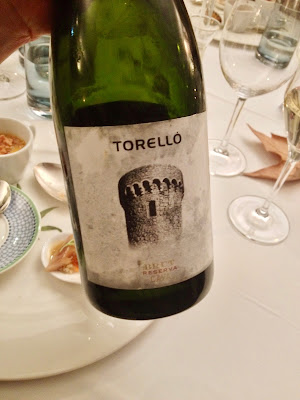
Drinking a bottle of Cava with dinner in Barcelona.

I have excellent memories of drinking glasses of Cava while eating tapas in Barcelona, as well as elsewhere around Spain. Nonetheless, I’m not going to lie, for a long time, Cava seemed to be a bit of a mess to me. Quality was very variable amongst bottles I’d try. Some were lovely, balancing citrus, smoky and toasty notes, in others, the smoky notes would come off as an unpleasant rubbery quality instead. Eventually, broadly speaking, I started to view Cava as cheap fizz – fine for mixing in a cocktail or mindless sipping, but not the bubbly I was going to grab if I was planning to pay attention to the wine at all. There were exceptions of course, but in general, it fell to the bottom of my personal hierarchy of bubbly regions. (I’m not talking about carbonated bubblies here – I’m talking about “should-be” quality sparkling wines.) I don’t think I’m alone here, as it would appear that many consumers had similarly begun to give the category the side-eye. 

As I started to learn a bit more about the D.O., it seemed to me that it was a region that was aware of its problems and its flagging reputation, but that the producers couldn’t agree on a solution. You didn’t have to dig too deeply to see that they were plagued by infighting since quite a few high-quality producers were choosing to leave the D.O. altogether. Raventos i Blanc is one famous example, as they opted to leave and to spearhead the creation of a whole new appellation: Conca del Riu Anoia. Then another group of nine quality-minded producers split off and formed Corpinnat in 2017, an association that adheres to their own stringent regulations and operates as a trademark rather than falling under the jurisdiction of a D.O.  

Basically, a lot of the best Cava wasn’t actually Cava anymore. 

I’m sure that many of the quality producers that were left were forced to do a lot of soul searching. It looks like it has paid off and that the D.O. has indeed figured out a plan and are moving forward with a renewed focus on quality and sustainability that is region-wide. In short, they’ve been giving themselves a makeover. Throughout 2021, I participated in a series of webinars to learn about the new developments in the region and was very impressed by the resolve and determination of the producers to re-establish the credibility of the region and to do it conscientiously and with care for the land. In the process, I also had the chance to taste a lot of Cava in order to reacquaint myself and got to play with many pairings!

Cava Basics

Image borrowed from D.O. Cava. 

Before we get into what’s new let’s look at the nuts and bolts of these wines.

It’s made in the traditional method, i.e. in the same way as Champagne with the second fermentation occurring in the bottle.

  • Where does it come from?  Penedès in Catalonia in northeastern Spain. . . mostly. Things get a little tricky because the region is non-contiguous. Cava production originally grew up around the town of Sant Sadurní d'Anoia, and it is still the center of production. However, there are delimited areas all around Spain in Aragon, Navarra, Rioja, and Paìs Vasco, Valencia, and Extremadura that are allowed to produce Cava. Nonetheless, this only accounts for about 10% of production. 
  • The Grapes. One of Cava’s most distinguishing features is the grapes used, as it’s made predominantly with indigenous grapes. The permitted white grapes include Xarel-lo (spelled many ways), Macabeo (aka Macabeu or Viura), Parellada, Malvasia (sometimes called Subirat), as well as Chardonnay. The red grapes, which are used for the rosés, include Trepat, Monastrell (aka Mourvèdre or Mataró), Grenache, and Pinot Noir. Here’s a bit more on the trio that makes up the most classic Cava blend:
    • Xarel-lo – Perhaps the region’s most emblematic variety. It adds acidity, citrus, and apple flavors, and is responsible for Cav’s distinctive earthiness.
    • Macabeo – It's fairly neutral in flavor, but it can also add notes of citrus and stone fruits. Its strengths lie in the fact that it adds body and texture to a blend, and it’s resistant to oxidation, so it allows the wines to age better. It also grows easily in Spain’s climate.
    • Parellada – This grape has green apple, quince, citrus, and floral notes. In addition to fruity character, it also adds structure and body, particularly to the mid-palate. Parellada ess and balance. It also has aging potential.
For more detailed info on the grapes of Cava, see this guide from D.O. Cava.

  • Styles: Cava comes in both white and rosado (rosé) styles. It is also made in the full range of sweetness levels typical of sparkling wines: 
    • Brut Nature: 0-3 grams per liter
    • Extra Brut: 0-6 g/l
    • Brut: 0-12 g/l
    • Extra Seco (Extra Dry): 12-17 g/l
    • Seco (Dry): 17-32 g/l
    • Semi-Seco (Semi-Dry): 32-50 g/l
    • Dolç/dulce (Sweet): 50+ g/l  
  • Aging Requirements: These have changed a bit recently, and we’ll get into additional details on recent changes a bit more further down. Like all traditional method sparkling wines, Cava is aged on its lees (the dead yeast cells left over from fermentation) in order to gain toasty/nutty/bready/pastry notes. Here are the minimum aging requirements by aging category – note that many producers will choose to exceed this: 
    • Cava (Cava de Guarda - basic level) - 9 months
    • Reserva - 18 months (increased from 15 months, starting with the 2020 vintage)
    • Gran Reserva - 30 months 
    • Cava de Paraje Calificado - 36 months. (This is a newer category introduced in 2016. We’ll get into it in a moment.)


A Bit of History 

Cava’s history goes back to 1872 when Josep Raventòs produced the first bottles of sparkling wines using the method he’d seen in Champagne while traveling around Europe promoting the still wine wines of Codorníu Winery. This had a few benefits. The vineyards of the Penedès were being devastated by phylloxera right around the same time, and where the vineyards had previously been dominated by red vines, they were now being replaced by larger numbers of white grapes. This dovetailed nicely with Cava production, as it relies more heavily on white wine grapes. Raventòs didn’t focus on the Champagne grape varieties  – he just imported the method of production and used the grapes of the Penedès.

Raventòs also had the aim of competing with the already fashionable Champagne. (Remember, Champagne as we know it today only came into being in the 19th century, so Cava wasn’t that far behind.) Trade wars with France also helped spur on the development of ‘Catalonian Champagne,’ and it didn’t hurt the Spanish monarchy also supported the endeavors. Altogether, Pendes’ sparkling wines were a pretty immediate success, although it would see some dips during hard times during the early half of the 20th century like the Spanish Civil War.  

The name ‘Cava’ didn’t come into being until 1959. Prior to that, the wines were known under other names like Champán and Xampany, but in 1972 Spain made an agreement with France to no longer use versions of ‘Champagne.’ The word ‘cava’ in Spanish means ‘cellar’ and is a reference to the long aging period the wines go through during and after the second fermentation, waiting around in the cellar until they’re read. Cava became an official appellation in 1986 when Spain entered the EU.

Gyropaletten Champagner.jpg
Image borrowed from Wikipedia.

Cava has also contributed to the greater sparkling wine world. Producers here developed the gyropallet, the machine that riddles bottles in large batches, collecting lees in the neck of the bottles, so that they can be disgorged (removed.) Prior to this, all bottles had to be riddled by hand, one at a time. 

Image borrowed from D.O. Cava. 

One more quick note on the industry here. It’s true that the production in the region is dominated by two major producers – Freixenet and Codorníu – you can probably picture the bottles right away. However, it's worth noting that there are also lots of medium-sized and small producers as well, and it’s well worth exploring and comparing the different styles, not to mention fun!


What’s New in Cava

Image borrowed from D.O. Cava. 

As I mentioned, there have been a lot of changes in Cava recently. Many of the complaints that were leveled by producers that left the appellation had to do with issues of quality standards and sustainability, as well as the fact that wines tended to lack a sense of place. The updates tend to speak to these issues. Even if they were too late to keep the producers from leaving, some of them are pretty impressive and ambitious. 

In addition to tightening up quality standards, a new hierarchy has been created. Starting this year, 2022, all Cava will fall under two overarching tiers: Cava de Guarda and Cava de Guarda Superior, which is then further subdivided. Cava de Guarda is basically your entry-level tier. As discussed above, it’s aged for the least amount of time and is intended to have a bright, fresh profile, ideal for early drinking.

Image borrowed from D.O. Cava. 

Great, but Cava de Guarda Superior is where things start to get interesting. This tier encompasses all Reserva, Gran Reserva, and Cava de Paraje Calificado wines. In addition to updating restrictions on vineyard yields, these wines must all now come from vines that are a minimum of 10 years old, and the wines will all be vintage-dated. Most interestingly, all grapes for Cava de Guarda Superior will be 100% organic. 

This is unique in a few ways. This is the first time I’ve heard of an appellation making the use of organic grapes a requirement in any tier. (Please leave a comment and let me know if you know of others.) It also ties the use of organic grapes to quality, as all of the higher-end wines of the region will be required to use them. It will be interesting to see how this plays out since the two things haven’t always necessarily gone together. (You can have crappy wine made with organic grapes, and good wine made with non-organic grapes.) 

It was pointed out on one of the webinars that this will hopefully have the added benefit of bringing up the sustainability factor of the Cava de Guarda wines as well. While they will not be required to use organic grapes, hopefully, as growers learn new sustainability techniques, they will start to implement them in all of their vineyards. The region already has the highest proportion of organic and biodynamic vineyards in all of Spain. As well, it might be reasonable to assume, that not all of the organic grapes grown in the region will get used for the Cava de Guarda Superior wines, so some of those grapes are likely to get used in the lower tier wines as well. (You can also read more on the region's sustainability efforts here.)

There is also a new focus on giving the wines a sense of place. Introduced in 2016, the Cava de Paraje Calificado designation is still pretty new and serves to designate that the vines the grapes came from are from a small area that is distinguished specific characteristics of location and terroir. As well, the D.O. has also approved the use of subzone labeling – so while the overwhelming amount comes from Penedès, you might soon be able to see if the wine you’re buying comes from one of the other permitted zones. Comparative tastings between Cavas from Penedès, Rioja, Extremadura, etc. might be on the horizon! As well, wineries that estate-produce all of their own wine (rather than buying base wine from another producer for use in their blends, for example – a common practice with larger producers) will also be able to indicate this on the label with the term “Integral Producer.” It’s kind of like a grower Champagne indicator, but for Cava.

Image borrowed from D.O. Cava. 

I think all of this is quite exciting and should serve to help consumers make better buying decisions by making it easier to understand what they’re getting and what wines will best suit their needs. What's even better is that many wines remain extremely accessible in price!


A Few Bottles & Pairings

As I mentioned, I’ve had the chance to drink a lot of Cava this past year and got the chance to play with a lot of pairings. For me, there are a couple of things that set Cavas apart in terms of flavor from other sparkling wines. First, Cava tends to be a little more earthy than other bubblies. I tend to get a smoky factor, particularly in the Reservas and Grand Reservas. Personally, I also often get an umami factor tied in with the minerality of the wines – and this I get across the board, with the entry-level wines, as well as with the higher-end wines. So it makes sense then that I particularly like Cavas with dishes with smoky flavors and a lot of umami notes, in particular savory Asian dishes. (For slightly sweet or spicy Asian dishes, I tend to prefer Prosecco.) Also, fried foods are the friends of all sparkling wines – there’s no exception here. 
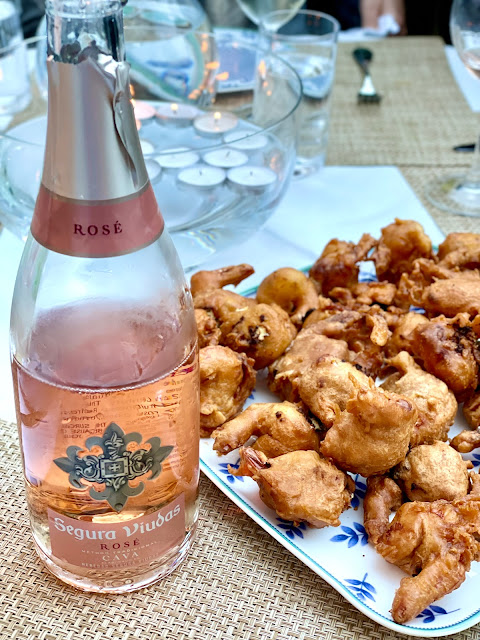
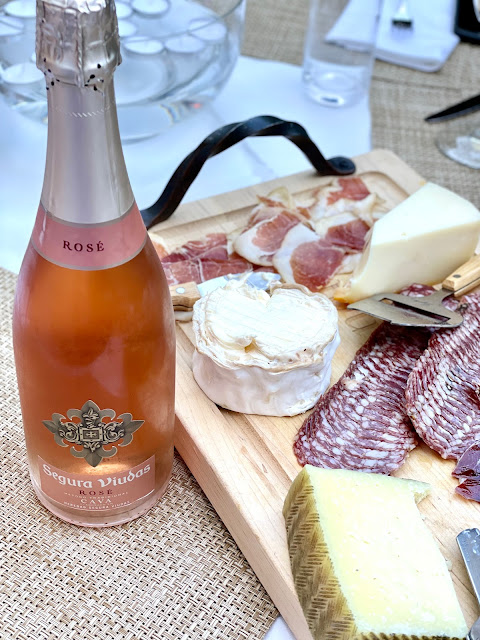
This bottle of Segura Viudas Brut Rosé was hit at a dinner party over the summer and worked equally well with cheese and charcuterie (as shown up at the top) as with fried shrimp puffs. 

You’ll see a lot of seafood pairings below, as well as a few chicken dishes, but they’d also definitely work with game birds and pork – in particular the rosados, Reservas, and Gran Reservas. We also can’t forget about cheese and charcuterie – bring on the jamón!

Here are some pairing examples. D.O. Cava also has a lot of good ideas and recipes.  Click on the name links for more info on the wines. 

Vilarnu Reserva Brut Nature Cava  2017 (Organic)

Avg price: $14  | Blend: 50% Macabeo, 35% Parellada, 15% Chardonnay | Aged more than 24 months

This wine had classic Cava nose with brioche, baked apple, pear, lemon, and a touch of smoke.

Similar notes appeared on the palate, but the fruits were more tart, rounded out by the brioche notes and creamy lees on mid-palate, leading into a crisp, stony finish

I paired this with Chilean sea bass with bok choy, in a savory broth and soba noodles. This combo surprised me by just how good it was – far above expectation! It turned out to be one of my favorite combos. The nuttiness of the soba noodles worked particularly well with the toasty notes in the wine, and the food out brought out umami notes in the wine.

Maria Rigol Ordi Mil·lenni Reserva Brut Nature Cava 2017 (Organic)  
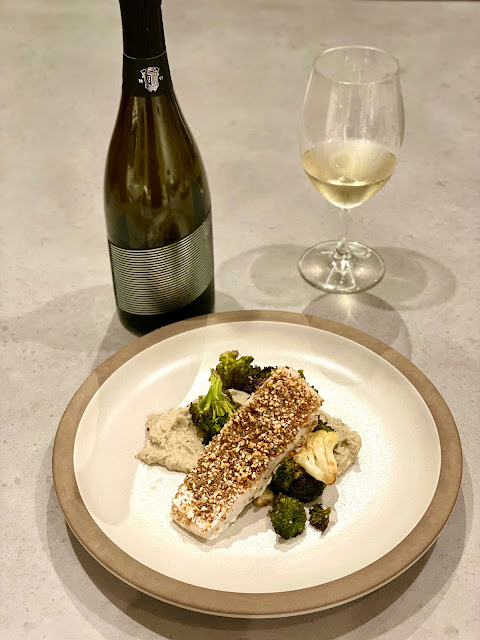

SRP: $32, Avg Price: $19 | Blend: 45% Xarel-lo, 30% Macabeo, 10% Parellada, and 15% Chardonnay | Aging 24 to 36 months

This wine is certified organic. All of their wines tend to be long-aged. It showed notes of lemon, peach, and flowers, and stones on the nose. On the palate, similar notes continued with the peachy notes hitting at the front of the palate, leading into the stones and minerality on the finish. It was tart and crisp, balanced with a little texture. 

It paired nicely with cod encrusted with dukkah, roasted broccoli and cauliflower, with a little baba ghanoush.

Canal & Munné Reserva Dionysus Brut Nature Cava (Organic)
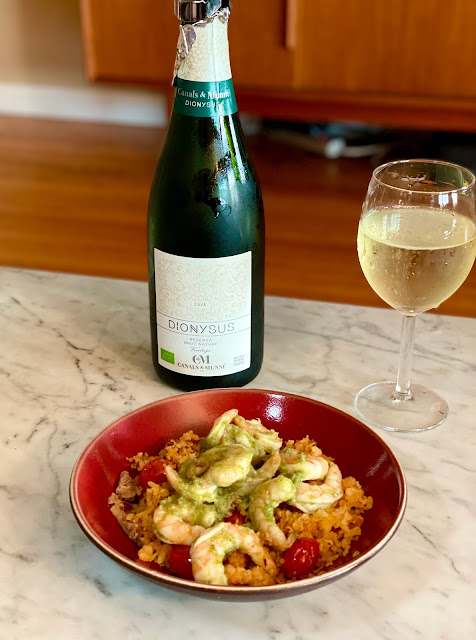
Avg Price: $15 | Blend: 60% Xarel-lo, 30% Chardonnay, and 10% Macabeo

This wine showed smoky notes on the nose, along with lemon and apple, just a hint of tar, and white flowers. There was lots of citrus and crisp apple on the palate, as well as an almost saline minerality mixed in with stones and touch of smoky tar on the finish.

We paired this with shrimp in salsa verde on tomato rice – kind of mimicking some of the flavors of paella, but far more simple. The wine spoke nicely with the green notes of the sauce, as well as the richer flavors in the rice.

I also participated in a webinar with Ray Isle of Food & Wine called "Cava in the Kitchen." In it he recommended this wine with Mt. Tam cheese and chicken with mushroom sauce.  

Seguras Viudas Reserva Heredad Brut Cava 2017 
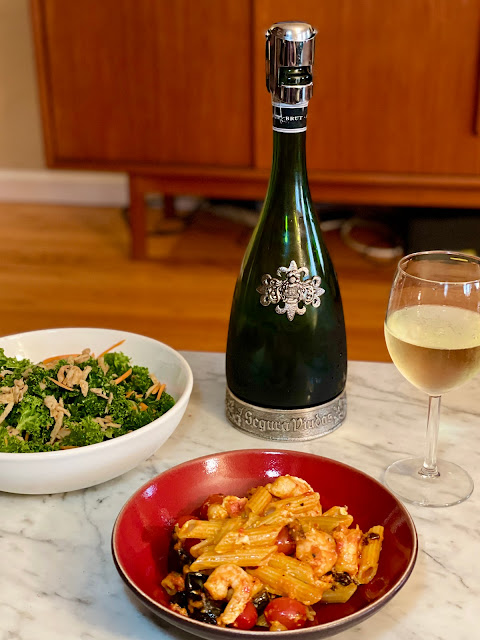

SRP $30  /Avg Price: $26 | Blend: 75% Macabeo 25% Chardonnay | Aged a minimum of 15 months

This cuvée is intended to be “democratic” in taste, to appeal to a wide set of palates. I also love that bottle seems like something out Game of Thrones. 

It had notes of green apple, Meyer lemon, and a touch of smoke balanced with a bit of honeysuckle on the nose. On the palate, the apples were more golden and a touch bruised, with a little mushroom, and a little char.  It also had some beeswax texture on the mid-palate. This is a wine that’s likely to work well with many things as it’s fresh but also has a bit of weight and round texture. It worked with this shrimp pasta dish with a slight smoky red pepper sauce, tomatoes, and olives and also made an appearance at Thanksgiving this year and also worked quite well. 

In the webinar, Ray Isle also suggested this would be good with mushroom pizza


Alta Alealla Mirgin Reserva Brut Nature Rose 2018 (Organic)
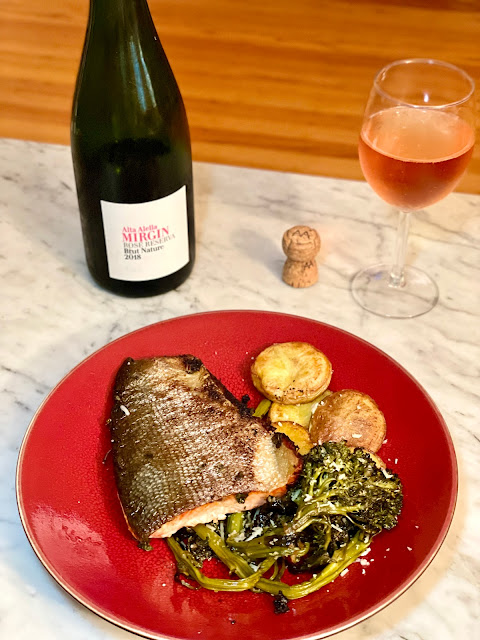
Avg Price: $24 | Blend: 100% Monastrell

This wine had a great balance of fruit, toastiness, and minerality. It started with notes of brioche topped with strawberries, cherries and raspberries doused with lemon, with a hint of smoke. The fruit brought a rounded texture up front with a crisp, stony finish. It also showed a hint of tannin. The wine is also organic and vegan to boot

I paired  it with a simple seared salmon with roasted broccolini and potatoes. (I wish I’d done a better job of plating it, but it was all delicious nonetheless.) The wine and the food made a fabulous match.

Ray Isle also recommended this with prosciutto or jamón, or a day by the sea.

Bodegas Langa Reyes d'Aragon El Casto Brut Reserva 

Blend: 75% Macabeo, 25% Chardonnay | Aged 17 months | (I couldn't find a good price marker for this wine, but it appears to range between about $8 and $17.)

This showed notes on the nose of roasted golden apple, as well as crisp green apples slightly charred, peaches, vanilla, honeysuckle. On the palate, there were gold apples and peaches doused with lemon and limejuice. It had a round, creamy texture with notes of buttered biscuits, and touches of smoke and a hint of tar on the finish. Lovely!

I paired this with roasted chicken, cauliflower, potatoes and romesco sauce, with a side of greens. It held up nicely to this richer dish with more robust flavors. (You can find the recipe for the potatoes and romesco sauce in this post.)

Ray Isle also mentioned he liked this one with potato chips. 

Roger Goulart Brut Gran Reserva Cava 2015
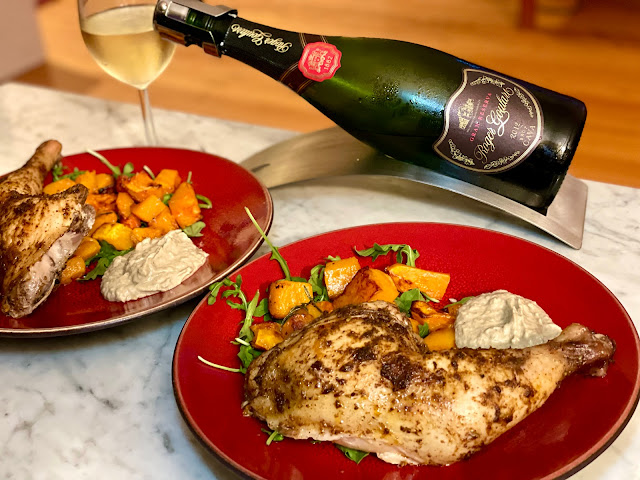
Avg Price: $19 | Blend: 60% Xarel-lo, 20% Macabeo, 20% Parellada | Aged 72 months

The wine showed lots of toasty notes on the nose, along with apples (a mix of  green and gold)and a hint of flint. On the palate, there were yellow peaches as well as apples, toast, a hint of honey, herbal touches along the lines of a hint of fennel, then leesy finish with flinty minerality. (This winery is owned by CVNE, which we had the chance to visit.) 

I paired this with shawarma-spiced chicken loosely based on a recipe from Olive Magazine, with butternut squash roasted alongside, with a side of baba ghanoush and pita bread. I’d made this baba ghanoush very lemony, and it also had a bit of smokiness, and the wine spoke to those elements beautifully. In fact, the wine worked beautifully with everything on the plate and acted as a unifier for the various elements.

Ray Isle also recommended this one with pizza, as well as nuts and aged cheese.


You’ll probably be seeing more Cava here soon. I have a few more samples to explore and a couple of recipes to share to pair with Oriol Rossell Cuvée Especial Brut Cava and Parés Baltà Blanca Cuisine Brut Cava 2012.
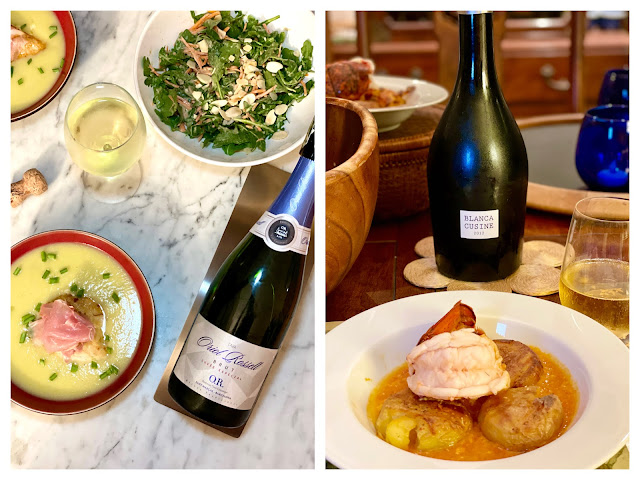
In the meantime, I’ll lead you with one last simple pairing I tend to like with Cava in general – popcorn tossed with butter or olive oil, smoked paprika, and a little salt.


Thanks to D.O. Cava and O'Donnell Lane for including me in the webinar series, as well as for the samples.

*****

The Wine Pairing Weekend (#WinePW) blogging group is kicking off the new year with an exploration of bubbles from around the world. Be sure to check out the rest of their posts:

  • Camilla from Culinary Adventures with Camilla sabers open Gelukkige Nuwe Jaar with Pannekoeke + Boschendal Brut Rosé
  • Wendy from A Day in the Life on the Farm is Celebrating Little Christmas in Michigan with a Local Bubbly
  • Linda from My Full Wine Glass cracks open Cava: Because everybody needs a go-to bubbly
  • Martin at ENOFYLZ Wine Blog pops the cork on Sparkling Wine from Chablis? Oui! Val de Mer Brut Nature Rosé
  • Anna Maria of Unraveling Wine toasts us with 10 Best Greek Sparkling Wines with Pairings 
  • David at Cooking Chat disgorges Baked Fiesta Dip with Mexican Bubbly
  • Robin of Crushed Grape Chronicles riddles with Bubbles by any other name…Sparkling wines from all over the globe
  • Jennifer of Vino Travels charms with Upcoming the Game with Asolo Prosecco
  • Lisa at The Wine Chef adds dosage with Dive Into the OG Bubbly With Blanquette de Limoux 
  • Terri from Our Good Life shares Favorite Bubbles from Around the World
  • Gwendolyn from Wine Predator...Gwendolyn Alley adds the crown with Sparkling Wine Secrets from Around the World
  • Susannah from Avvinare sparkles with Brazilian sparklers come of age
  • Andrea The Quirky Cork celebrates with A Vertical Tasting of Vinkara’s Yaşasın

  • Additional sources used for this post and extra reading: 

    • Decanter: Cava de Paraje Calificado: A new exciting age for premium Cava
    • Jancis Robinson: A Cava Compendium
    • SevenFifty Daily: Inside Cava’s Quest to Upgrade its Reputation
    • SevenFifty Daily: Corpinnat—an Emerging Category of Spanish Sparkling Wine
    • Winefolly.com: Cava Sparkling Wine: Outstanding Bubbly on the Cheap
    • Wine-searcher.com
    • Masterclass.com: The Complete Guide to Cava, Spain’s Sparkling Wine


    When people come into the wine store I work at around this time of year, more often than not they’re looking for something crisp, white, and refreshing. Maybe they don’t know what they’re in the mood for beyond that. Maybe it’s a group divided between Sauvignon Blanc drinkers and Chardonnay drinkers, not knowing how to split the difference. Maybe they’re not quite sure what they’ll be eating with it, but they know they want a white wine. Chances are that if you come ask me for a recommendation, I’ll offer up a bottle of Albariño as an option.

    It happens to be among my personal favorite summertime grapes. Albariño also fits so many different scenarios. It’s sooooooo refreshing on its own as a “porch sipper,” but most versions also work well with a wide variety of foods. It’s naturally high in acidity, which is typically balanced by a plump peachiness, complemented by lots of saline minerality. Thanks to that bit of body up front that’s backed up by a minerally finish, I find that Albariños tend to please a lot of different palates. It will also entice your nose to the glass, as it’s pretty aromatic with lots of stone fruit notes, citrus, honeysuckle, and stones. You can bet this grape is the perfect complement to seafood, but really with so much more as well.

    The grape hails from the northwestern Atlantic coast of the Iberian Peninsula and is a key player in the wines of Rías Baixas in Spain and Vinho Verde in Portugal. It’s unclear in which of these two areas it originated, but they’re in the same neighborhood. Albariño’s Spanish home of Rías Baixas is very different from most of the rest of the country. Right on the Atlantic coast, it’s much cooler, wetter, foggier, and much greener than most of the rest of the county. Luckily, Albariño, the region’s signature grape (it must make up 70% of the blend) does well here thanks to its thick skin, which helps it stand up to all the humidity. The cooling ocean influences also help the grapes retain the crisp, mouth-watering acidity that’s emblematic of the regional style.

    Map of Rías Baixas and its sub-zones courtesy of Rías Baixas Wines.
       
    The region and the grape are probably best known for making crisp, refreshing light wines, but they can definitely be made in fuller styles as well. It can be matured in oak and is increasingly aged for several years in stainless steel tanks before release. Lees aging can also add texture and richness. It can age when given the chance, but it’s just so tasty when young that it’s hard to make a convincing argument for waiting.

    Galicia is steeped in history. Winemaking in the region dates back about 2,000 years, but it’s better known as the final stop on the Camino de Santiago. The 500-mile Christian pilgrimage ends at the Cathedral of Santiago de Compostela, where the remains of St. James are buried. The area has only become known for wine in more recent years as it received its Denomination of Origin status in 1988 following Spain’s entrance into the European Union.

    If there is one downside to this grape it’s that the secret is out on Albariño. Rías Baixas has become increasingly popular in its short time span as a D.O. Sadly for the consumer, this has also caused prices to rise. Not to worry though! There are still plenty of delicious and wallet-friendly versions to be found! Additionally, its popularity has given rise to interest in the grape in many New World regions as well.


    THE PAIRING


    I happily received a couple of samples of Albariño from Rías Baixas in time for the celebration of International Albariño Days, August 1-5, 2018 from Gregory White PR and Rías Baixas Wines. Thanks guys! (Please note that while samples were received for participation in the event, all opinions are my own and no other compensation was received.)


    I decided to open a bottle of Adegas Gran Vinum Nessa Albariño Rías Baixas 2016 one evening right smack in the middle of Albariño days. The Piñeiro Cores family are the makers of this wine. They’ve been involved in making wines for many generations, however, getting their vineyards in top shape to make their wines took some time. They first brought together fragmented vineyard plots, then they slowly went about replacing the hybrid varieties originally on the land with Albariño. They finally launched Adegas Gran Vinum in 2002.


    Their holdings include 8 acres of vineyards, which they supplement with grapes from other local growers with whom they have close relationships. The vineyards are fertilized with clam and cockle shells and are carefully tended. To keep the vines from getting too soggy in the region’s extremely wet conditions, the Galician tradition is to use long stone posts to elevate the vines off the ground–which has the added benefit of looking quite pretty!

    The wine has a really pleasant tang. Greg and I picked up the characteristic peachiness on nose, along with a bit of brine, white flowers, and a faint touch of earthiness in the vein of fresh hay. The fruit on the palate became a little more tropical with crisp pineapple, tangerine white peach and a squirt of lemon. There were also some savory herbs in the mix–nori that blended in with the sea breezy briny quality. The wine had bright, high acidity, and the wine’s body was on the lighter end of medium. 

      
    I had a hankering for fish and chips, and I thought this wine would be delicious with fried seafood. What resulted was a spin with light Spanish and Japanese touches. Cod fillets were battered in tempura spiked with smoked paprika. Rather than fries, I decided to roast baby potatoes in varied colors that also got a touch of paprika. These all went on a simple salad with quick pickled red onions that brought in a perky kick. 


    To tease out that faint nori note, I sprinkled on some furikake – a Japanese seasoning that includes seaweed flakes and sesame seeds. Some friends introduced me to furikake a few years ago and it has been a staple in our pantry ever since. Variations can include a breadth of additional flavorings like yuzu or bonito. If I hadn’t had the furikake on hand, I would have brought in some capers for their briny/floral notes. 

    Furikake is great on seafood, rice, and on eggs in the morning.

    Not strictly speaking a part of the recipe, but we also ended up trying this Little Red Corvette red pepper and black garlic goat cheese spread from Cypress Grove, and it made a really nice, creamy addition.  


    Samples work! I got a taste of this at my local Whole Foods and I couldn't resist buying one. It made a tasty add-on.


    This all worked so well together! The wine was a lovely match with the fried fish balanced the richness of the fried batter and the potatoes. Vinegar can be tricky to pair because it can make many wines taste flat. It worked well here in the pickled red onions and in the salad because this wine had enough acidity to hold up alongside the vinegar. It became fruitier next to vinegary bites, while still remaining bright. The furikake played right along bringing out the briny and the umami-nori touch in the wine. YUM!

    THE GEEKY DETAILS


    From the tech sheet:

    Albarino wine Nessa is produced with selected Albarino grapes from our growers who use our traditional growth techniques and the vineyards are older than 25 years old. After a manual harvest, the grapes are specially selected and a soft pressing takes place before filtering them for 24 to 36 hours and followed by fermentation at 46ºF.

    Harvest:    Manual

    Details:    12.5%, 3.44 pH, 6.60 g/L acid

    Optimal consumption: 3-4 years

    Recommended temperature: 51°-53°F/11°-12°C


MONEY TALK


    At a SRP of $17, this makes a great House Wine. Find on here wine-searcher.com .


OTHER POSSIBILITIES


    I made more cod tempura than we needed for one dinner for the two of us. The next day I used the leftover fish on a second salad for lunch. I re-crisped up the fish in the toaster oven. This time I added avocado, crispy onions, and salsa verde, which all also worked quite well.  The Vionta Albariño Rías Baixas 2016 (also a sample, SRP $16, or find on wine-sercher.com) tended more to the minerally end of the spectrum. It was citrus driven, crisp and refreshing with some added leesy texture.


    I sometimes teach a Spanish wines and tapas class during which I typically pair a wine from Rías Baixas with a super simple tapa of roasted red pepper stuffed olive wrapped in an anchovy. It takes only a few minutes and it always works really well.

    For other wine options, I’d recommend Vinho Verde from Portugal or Txakolina from Spain’s Basque region for alternatives with similar attributes. Muscadet and Chablis would also bring notes of briny minerality and crisp acidity. 


    Here are some other Albariños I’ve liked recently:

    Top: Mar de Envero Troupe Rias Baixas;
    Carboniste Gomes Vineyard Albaniño 2017
    – traditional method Sparkling from here in CA. LOVE.
    Bottom:  Gran Bazan Etiqueta Ambar Rias Baixas;
    Quinta de Soalheiro Alvarinho Vinho Verde Portugal.

    For more pairing ideas of Rías Baixas, click here, or check out these other recipes I’ve created that match with Albariño:

    8 & 20: Smoky Paprika Shrimp With Saffron-Lemon Pilaf – One of my favorite 8 & 20’s that I’ve made!
    8 & 20: Saffron-Tomato Chicken Croquetas
    8 & 20: Roasted Stuffed Fish with Sautéed Spinach


    And now for something completely different.

    Well, maybe not completely different, but a change of pace as we explore the wonderful world of saké.

    Today’s post is part of collaborative experiment with a wonderful group of creative gals. (If you’ve been following along, you might recall these ladies from one of my trips to Hog Island.) Each of these amazing women is extremely creative in different areas. As we got to talking we realized that all of our talents could potentially come together in fun and interesting ways.

    We decided to get together for a fabulous lunch, each contributing a different aspect, to see where it all would lead. (I’m calling us a Creative Coven.) For our first endeavor, we decided to center our lunch on
    saké pairings. I think the result of this first experiment was delicious and beautiful and I hope it’s the first of many collaborations in the future. 


    Let me introduce you to these fantastic women.

    My partner in chefing and pairing the
    sakés was the lovely Kristin Posner. Check out her site Nourish  where Kristin aims to bring people together around the table to connect over traditions, particularly through the lens of building a Japanese and Jewish home.

    Our photographer for the day was my dear friend Maile Ogasawara. (I took a few pics on this post, but all the beautiful ones are hers.) I’ve been buds with this lady since NYC. She beat me back to the West Coast by a couple of years and it has been so fun hanging out again since we’ve been back in Cali. She’s also the one responsible for originally getting this group together. In addition to taking all of these beautiful shots, Maile is a talented jewelry designer–she made all the pieces you see here (with the exception of the turquoise leaf necklace I’m wearing in one pic). I have several of her beautiful, minimalist designs and they are among my absolute favorites. Her earrings are light as air and they go with everything! Check out her site BatsuMaruXO.com.

    Catherine Gutierrez was a jack of all trades during our lunch/shoot. She is responsible for the beautiful oil on canvas you see in the background in many of these shots. She also made the Ikabana (Japanese style) flower arrangement you see here, helped with the food styling, was my sous chef for a sec, and served as the model in most of these shots.

    Kristin and I each chose a
    saké around which to build our lunch. She picked a favorite saké of hers–Sequoia Junmai Ginjo Nama Genshu. It had a creamy texture with notes of green melon, light squash, yuzu, lemon zest, tangerine, and ginger spice. She then created two beautiful starters to pair with this saké–a Crudo of Scallops and Fig and a Japanese-style Caprese. You can find the recipes for both here.


    I took on the main dish. For my saké, I headed to Umami Mart in downtown Oakland. This shop has a fabulous, well-curated selection of Japanese products–everything from beautifully designed items for the kitchen and home, to interesting ingredients, and most importantly on this occasion, saké. I am not at all as well-versed in saké as I am in wine–not by a long shot–so I definitely relied on the shop staff to guide me to me a selection. I took home the Ichinokura Mukansa Extra-Dry Honjozo. 


    (Note: I found helpful tutorials at SeriousEats.com on the Ginjo and Honjozo styles . There’s even more on their Sake School–excited to dive into the rest later!)

    Greg tasted it with me even though he wasn’t going to get to be a part of the lunch. We picked up notes of melon, guava, and light floral tones on the nose. It was more crisp and savory on the palate with delicate enoki mushrooms  and herbs along with a few of their stems. There were also fruit notes of lychee and lime pith, as well as those notes of melon and guava, and a faint hint of vanilla.

    The salesperson that helped me out at Umami Mart told me that this was a pretty versatile
    saké, but that it would go particularly well with savory dishes. Our notes were taking us in a similar direction, so I decided to play up that savory/umami factor with a salmon dish flavored with soy sauce and mushrooms.

    I wanted to bring out the delicate enoki mushroom note by using them in the dish; however, I was unable to find them at the store that day. I picked up a gourmet blend of mushrooms at Whole Foods instead that included Royale Trumpets, Clamshells, and Forest Nameko among others and mixed those with basic cremini mushrooms. You should be able to use pretty much anything typically found in the grocery store.

    To bring in some different textures and to play up the sweeter flavors of guava and melon, I decided to tempura some butternut squash for garnish. I used packaged butternut that had been pre-cut into cubes to save myself some time.

    For a final flourish of flavor on the dish, I added a few drops of a smoked soy sauce Kristin had available to each portion just before serving. 


    I can happily say that my first foray into saké pairing went quite well. Both sakés work pretty well with all of the dishes, but as planned, Kristin’s did play a little better off her dishes, and vice versa. The creamy notes of her saké worked particularly well with the silky texture of her scallop crudo and the savory flavors in mine were perfectly set off by the soy-based sauce with a light sweet accent from the squash. 


    This was such a wonderful afternoon and it was so much fun working with these ladies–I can’t wait for our next meeting!


    Soy Poached Cod with Mixed Mushrooms and Butternut Squash Tempura


    Makes approximately 6 servings. Prep and cooking time altogether was about 90 minutes., although not exact as we were bouncing about and switching off in the kitchen.

    Preparation notes: In this case I went ahead and fully prepared the butternut squash tempura before starting on the cod. The cod cooks fairly quickly and the squash will hold relatively well in an oven or toaster oven while cooking the fish. They also served as handy chef snacks while the rest of the food finished cooking.


    Butternut Squash Tempura


    INGREDIENTS


    1 lb cubed butternut squash (To save time, I used a pre-cut version from the store.)
    Pinch of ground ginger
    1 cup tempura batter mix
    ⅔ cup ice cold water
    1-2 Tbsp Black sesame seeds
    Salt
    Pepper
    Cooking oil of your choosing

    INSTRUCTIONS

    1. Preheat oven to 425°F.

    2. Toss the butternut squash with a tablespoon or two of cooking oil, a pinch of ginger, salt and pepper. Place the squash on a single layer in a baking dish or sheet. Roast in the oven for about 25 minutes, or until fully cooked through, tossing once halfway during the cooking.

    3. Mix together the tempura batter mix with the ice-cold water, the sesame seeds, and a generous pinch of salt. Check the consistency of the batter–add more mix if you want a thicker batter, or more water if you prefer it thinner. (We preferred it thicker for this use.)

    Note: Maile was my tempura guide and she mentioned that the batter must always be kept really cold. Her recommendation was to keep the batter bowl over another bowl filled with ice. We also kept the tempura batter in the freezer while the squash roasted.

    4. Once the squash is cooked through, remove from oven and layer on paper towels to remove excess moisture/oil.

    5. Heat oil in a large pot (at least 2 inches deep) or a deep fryer. Once the oil is hot (350°F-360°F, or drop in a test piece when the oil looks like it has a light shimmer) drop the squash in small batches. (We used chopsticks for extra precision.)  Do not overcrowd the pot. Transfer to paper towels once golden brown. Set side and keep warm until ready to serve. If needed, hold in an oven/toaster oven at around 250°F.


    Soy Poached Cod with Mixed Mushrooms

    INGREDIENTS

    1 lb mixed mushrooms (I split the mushrooms between a prepackaged mix of exotic mushrooms and half less expensive crimini mushrooms.)
    1 cup cooking
    saké
    1 cup soy sauce
    Approximately 2 Tbsp rice wine vinegar
    Pinch of ground ginger
    ½ cup green onions, chopped
    2 lbs cod filets, portioned into 6 pieces
    Smoked soy sauce, for garnish (optional) 

    1-2 Tbsp mild red chili pepper, finely diced, for garnish (optional)

    INSTRUCTIONS

    1. Heat a couple tablespoons of oil in a large pan over medium-high heat. If you’re working with mushrooms of different size, add the largest ones to the pan first and give them a quick sear on multiple sides. Add the rest of the mushrooms to pan. Once they’ve begun to soften, add the cooking saké, soy sauce, rice wine vinegar and the ground ginger. Add ¾ of the green onions when the mushrooms are nearly cooked through–reserve a couple of tablespoons for garnish. Cook for another minute or two.

    2. (Optional. See note.) Once all the mushrooms are fully cooked through, use a slotted spoon to transfer them to a separate bowl, leaving the cooking liquid in the pan. Keep the mushrooms warm.

    Note: Transferring the mushrooms to a separate bowl is completely optional. You can also poach the cod fillets nestled among them if you want to minimize the number of bowls/plates used to not create extra mess. However, transferring will give you more control over their appearance for presentation purposes.

    3. Reduce heat to a simmer. Carefully place cod in the pan and poach in the soy cooking liquid–approximately 4 minutes per side. (Cod is pretty delicate, so be careful whenever handling as it falls apart pretty easily.)

    4. Once cod is cooked through, serve topped with a little of the cooking liquid and the reserved mushrooms. Garnish with the remaining green onions, a little smoked soy sauce (if using), chili pepper (if using), and the butternut squash tempura. 


    Bonus! If you ever come over to NibblingGypsy.com you’ll find out pretty quickly that I love  a Leftover Makeover. I went ahead and made an easy one with the a couple of remaining pieces of cod at home. (So Greg did get to taste it in the end–in some form at least.) This one was about as easy as it gets. Since cod is pretty delicate, I just went right ahead and flaked it up. I reheated it over gentle heat and added these tofu noodles I really like. They’re really mild in flavor–so they just take on whatever flavors you add. They’re a little lighter and less toothsome that traditional noodles, but make a great healthy alternative. I topped it all off with a little sprinkle of Nori Komi Furikake (seaweed and sesame seasoning).


    Maile's pics are so beautiful, I can't resist putting up a few more to close!


    Older Posts Home

    INSTAGRAM

    Sign up for my mailing list!

    Subscribe

    * indicates required


    Somm's Table 2017