Somm's Table

Perfect pairings from the other side of the equation.

  • About
  • Front of the House
  • Back of the House
  • Contact Us
Powered by Blogger.
Looking for something a bit out of the ordinary to pair with your Holiday cheese and charcuterie platters? I've got you!


Some wines in this post were provided as media samples. No other compensation was received and all opinions are my own.

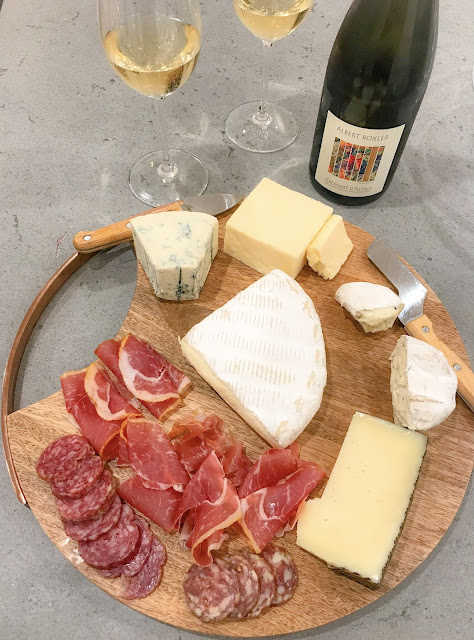
Last year we spent Thanksgiving weekend with our good friends Lucy and Drew. It was a decadent weekend, which included many feasts accompanied by many bottles of excellent wine. I shared some of those meals and pairings recently here. In addition, we also had a  delicious session with cheese and charcuterie. I saw this as an excuse to bust out some off-the-beaten-path bottles to experiment with. You know  . . . for science. 

Tasty work indeed! So if you’re looking for something a little different for the holiday season, I’ve got some bottles for you! 
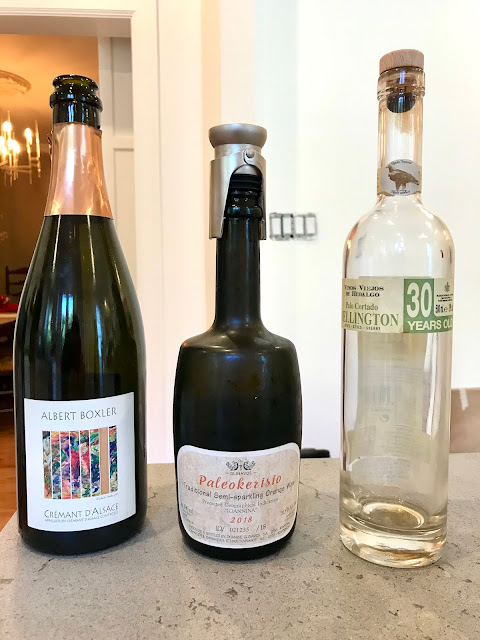


Albert Boxler Crémant d'Alsace NV
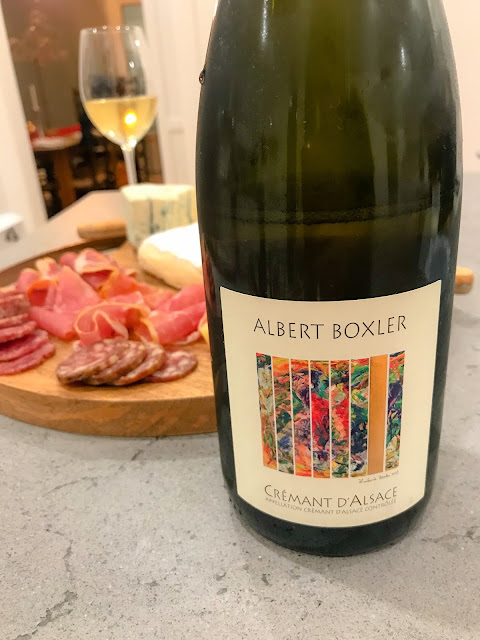


Blend: 30% Pinot Blanc, 50% Pinot Auxerrois, 20% Pinot Noir | Average Price: $36 (Sample) | ABV: 12% | Farming Practices: Organic (practicing)


Crémants make an excellent alternative to Champagne that’s often quite a bit less pricey.  Crémants are basically French sparkling wines made in the méthode traditionnelle, but from regions other than Champagne. (Check out this post for more on Crémant in general, and we’ll be taking a closer look at Crémants from Alsace next week.)  This one comes for Alsace, one of my favorite regions. The area is gifted with fantastic weather conditions that make it particularly suitable for sustainable and organic farming practices, and this bottle is an example of that.


Domaine Albert Boxler dates back to 1673 when Jean Boxler moved to the region from Switzerland. Many generations later, another Jean Boxler is at the head of the domaine, making many excellent wines using traditional techniques, including this delicious Crémant which is bottled aged on its lees for a minimum of 24 months.


Find additional details here and here.


Tasting Notes: This bubbly had a nice mix of richness at the start of the palate, with refreshing minerality on the finish. It showed notes of golden apple, a squeeze of lemon, with a light hint of toast. Even though it doesn’t say it on the label, this is an extra brut with a bright, crisp finish.


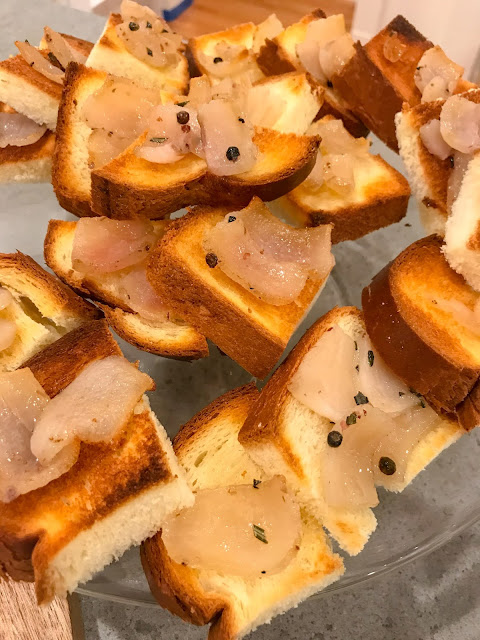
Pairings: This was excellent with the softer cheeses on our board like Camembert and truffled Brie. It was also absolutely delicious with toasts topped with lardo, as the wine cut through the fattiness of the lardo perfectly and mirrored the flavors of the toasts. We gilded the lily a bit, and topped some of these with a cheese sauce, making the refreshing wine all the more necessary.


Domaine Glinavos 'Paleokerisio' PGI Ioannina 2018


Blend: 97% Debina and 3% Vlahiko  | Price: $14 (500 ml bottle, purchased at K & L)  | ABV: 10.5%   | Farming Practices: Organic


It’s orange. It’s lightly sparkling. It’s semi-dry. This wine is quite unique. It caught my attention right away the first time I had it since I’ve never had anything else quite like it. 


Domaine Gilvanos was established by Lefteris Glinavos. He’d had ambitions for better Greek wines and left home to study enology abroad in the 1960s. In 1978, he established his winery in Zitsa, in the region of Ioannina in northwestern Greece. His son Thomas joined the company in 1990, and with him came the first in a wave of improvements to the winery thanks to investments and moves to modernize the wine-making. They’ve made it a goal to  


Sittig at 700 meters above sea level, the Zitsa appellation is located on the western slopes of the Pindos range. Thanks to this high elevation and the continental climate, this is one of Greece’s coolest wine regions in Greece. The star grape of the region is Debina, a delicate and crisp grape that tastes of “freshly-picked Granny Smith apple.” Wines under the Zitsa appellation must be 100% Debina, but this wine has a little splash of a red variety called Vlahiko as well. 


This cuvée is made in a semi-sparkling style that was traditional in Ioannina. The de-stemmed grapes remain in oak casks during fermentation for about 12 days. From my understanding, the wine is later racked several times, and ultimately the second fermentation takes place in closed tanks.


Find additional details here and here. 


Tasting Notes: The wine had notes of orange, dried apricots, apples, and hints of spice and hay. It’s slightly funky in the way of kombucha or sour beer. It’s lightly fizzy and it shows just a hint of sweetness. It’s definitely not a wine for everyone, even a little weird, but it’s completely out of the ordinary! For the price, it’s a pretty inexpensive way to have an adventure.


Pairings: The wine worked AMAZINGLY well with the blue cheese and salamis. The stronger flavors kind of helped to tame the wine.


The winery also recommends this with appetizers like foie gras and bottarga of Messologgi, dishes traditional to the mountainous Epirus region, as well as lightly sweet desserts.


Bodegas Hidalgo La Gitana Wellington 30 Year Old Palo Cortado VORS
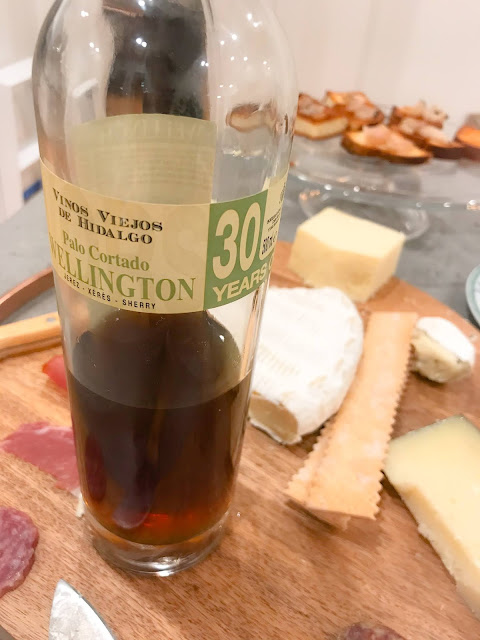


Blend: Palomino  | Average Price: $89.80 ( for 500 ml bottle) | ABV: 19%  | Farming Practices: Organic


Bodegas Hidalgo La Gitana was founded in 1792 by Don José Pantaleón Hidalgo. It has been passed down from father to son ever since and is now its eighth generation. They’re one of the only companies left in the area that is still managed by the family. The house manages 200 hectares of vines, all farmed organically. Most of them are located in the Pagos of Miraflores and Balbaina. 


The name “La Gitana” refers to their flagship Manzanila Sherry,  however, today we’re looking at one of their Palo Cortados. This is a rare style of Sherry, and honestly, I find Palo Cortado to be the most difficult category to fully understand, but I do tend to love them when I get the chance. This was a bottle I’d had stashed away in “the cellar” for a long time and was excited to share. 


I think my confusion around Palo Cortados is founded because it’s not well-defined. It’s a dry style made from the Palomino grape that traditionally started life intended for Fino/Manzanilla, but then didn’t develop flor correctly in one way or another, and so the cask would be removed from that solera. According to the Consejo Regulador, “it should have the aromatic refinement of Amontillado combined with the structure and body of an Oloroso.” I invite you to take look at this description from SherryNotes.com for further clarification. 


The age classification, 30 years VORS (Very Old Rare Sherry), indicates that the average age of the wine in the solera must be 30 years old. 


Find additional details here. 


Tasting Notes: Mixed toasted, salted nuts like hazelnuts, pecans, and walnuts, with dried apricots and orange skins. There were hints of spice, toffee, and light smoke. This one had a beautiful zing of acidity as well that helped to brighten the palate. 


Pairings: I particularly love aged sherries with aged cheeses like aged goudas and cheddars, as well as manchego. You can probably imagine that it’s also fantastic with nuts, as well as jamón. 


*****


The rest of the Wine Pairing Weekend Blogging Group (#WinePW) is exploring the wines of Greece this month, hosted by Deanna of Wineivore. (I've cheated a bit since only one wine in this post is on the theme.) Read her preview post here.  


  • Wendy is tasting Assyrtiko from Santorini paired with Greek Mac and Cheese at A Day in the Life on the Farm.
  • Camilla is Waiting for the Temperature Drop: Still Eating al Fresco and Pouring Moschofilero at Culinary Adventures with Camilla.
  • Andrea asks Do You Know Fokiano? at The Quirky Cork.
  • David is having a Greek Spaghetti Recipe and Wine Pairing at Cooking Chat.
  • Cindy is exploring how Xinomavro Thrives in Naoussa Where Key Elements Define Its Character at Grape Experiences.
  • Deanna is testing an Almost Paleo Greek Menu + an Aged Sparkling Zitsa at Wineivore.
  • Gwendolyn is pairing 2 Greek Wines with Grilled Eggplant, Black Cod, Lamb Kebabs at Wine Predator.


Domaine Sigalas Assyrtiko-Athiri Santorini with Scallops, Roasted Veggies, and Preserved Lemon Cauliflower Cream. Recipe by Nicole Ruiz Hudson. Photo by Greg Hudson..
 
I’ve never been to Santorini, but I often feel like I can taste it when I open a bottle of their wine.

This is particularly true of wines made from Assyrtiko (also spelled Assyrtico) which is naturally  high in acidity, so it tends to have a sunshiny brightness which is usually accompanied by a salty minerality. I often feel momentarily transported.

In addition to the ability to take you on a sensory vacay to the Aegean Sea, the wines of this Greek Island are interesting. Santorini is a pretty fascinating spot and it's reflected in the wines. The island is the remnant of an ancient volcanic cone and the volcano’s activity carved out dramatic cliffs and lagoons. The resulting volcanic soils contribute to the unique minerality of the wine.

As you might assume, Santorini enjoys a warm, Mediterranean climate. What you might not expect from an island surrounded by water is that it gets so little rain that it qualifies as a desert.

There are also some serious winds blowing across this island. The winds are so fierce, in fact, that they can actually stop photosynthesis. You can probably imagine that grapes hanging around in these winds would take a pretty bad beating. Growers here developed a very unique training system to protect the precious grapes. They wrap the grape vines and their canes into a basket shape called a Kouloura (I’ve also seen it referred to as a stefani), which forms a protective shield for the grapes that hang in the center. 


Picture borrowed from Domaine Sigalas' site.

The dry, windy conditions and sandy, volcanic soils also mean that this island is almost entirely free of phylloxera, since this annoying pest hates all of those things. Therefore, most vines here can uniquely remain on their own roots, rather than being grafted on, as is more typical in the rest of the world.

Altogether, the conditions on the island result in very low yields, but the grapes that do grow are of really good quality with great intensity and concentrated flavors. The sunshine means the grapes fully ripen easily, creating plenty of sugars. High altitudes and cooling winds equal great acidity.

You can probably guess that the wine history runs very deep here, due to Greece's long-ass history. There’s proof that vineyards existed as far back as the 17th century BC. The eruption of the volcano, however wiped everything on this island out in around 1620 BC. Vineyards were resurrected on the newly volcanic soils in around 1200 BC and they have been cultivated ever since. That’s about 3000 years of uninterrupted vineyard cultivation!


THE WINE AND PAIRING

Domaine Sigalas Assyrtiko-Athiri Santorini with Scallops, Roasted Veggies, and Preserved Lemon Cauliflower Cream. Recipe by Nicole Ruiz Hudson. Photo by Greg Hudson.

Today’s wine is the Domaine Sigalas Aa Assyrtiko-Athiri Santorini 2015. This Domaine was founded in 1991 by Paris Sigalas, Christos Markozane and Yiannis Toundas. Sigalas started out by making his wines at the family home, before eventually moving the to a new facility in 1998.

Their goal is to creatively blend the traditions of the region with the best of winemaking technology. They’ve also been a pioneer of organic farming in the region since 1994. They both grow their own grapes and source from local producers.

Keeping with that respect for tradition, they concentrate on native grapes, most particularly with Assyrtiko. Here it's is blended with some Athiri. This is a common combination in Santorini as the two grapes complement each other well.

Assyrtiko tends to have searing acidity, brimming with citrus and mineral notes. It also gains nutty tones as it ages, which it can do well thanks to all that acidity. It has the ability to make wines everywhere on the spectrum from super crisp and dry, to richer dessert styles.

Athiri is not as well known, but is widely planted in Greece. It’s much less acidic than Assyrtiko, and tend to show floral characteristics, so it brings a little softness as well as aromatics when the two are blended together.

The wine had a golden hue on the day Greg and I opened it. It was a 2015 bottling, some age but not particularly old, but it was more golden than I would have expected–however, nothing alarming. Assyrtiko is also an oxidative grape, which could explain it. It was also otherwise in good condition and showed a good amount of complexity.

On the nose, we picked up notes of grapefruit skin, deep lemons tones along the lines of preserved lemons, as well as golden flowers, with mineral and stones. 


Scallops, Roasted Veggies, and Preserved Lemon Cauliflower Cream. Recipe by Nicole Ruiz Hudson. Photo by Greg Hudson.


The wine was textured on the palate with a touch of cream to the mouthfeel, while still being medium bodied and really bright. There were notes of green and golden apples, kumquats and bitter melon. There were also hints of blanched almonds, yellow flowers, and a salty finish. That savory preserved lemon note persisted and became the inspiration point for our dish.

I have preserved lemons I made on hand, but you can also buy them. They have their own particular flavor, but if you can’t find any, use fresh lemon zest/juice. It’ll have a different flavor, but should still be quite tasty. I decided to use them to subtly infuse flavor into an cauliflower purée. You can adjust the texture of this purée to suit your taste–anywhere from thick like mashed potatoes, or thin and saucy by adjusting the amount of liquid you add. I opted for a thick cream consistency.

Seafood seemed in order as a nod to Santorini, as well as the citrusy minerality. We opted for scallops for the lightly creamy texture to match that in the wine. (I know I just posted another scallop dish recently, but we actually hadn’t had them in a while.) A few roasted veggies finished things off. I topped everything with additional preserved lemon and olives, as well as a healthy drizzle of the buttery goodness left in the pan after searing the scallops.

The textures of the food and wine matched brilliantly. Depending on the composition of the bite, the food brought out the briny notes in the wine at times, and the preserved lemons at others. The combination actually smoothed out the wine a bit. Greg noted that there was a hint of wildness to the wine when sipped on its own, that was tamed when sampled with the food. They totally fit.


THE GEEKY DETAILS

From Skurnik's Website: 

Grapes: Assyrtiko 75%, Athiri 25%
Terroir: Located in Imerovigli, the sub-region of Oia Santorini, Sigalas’s Assyrtiko basket trained vines (Kouloura) average 50 years of age, and are tended in black lava, volcanic ash and pumice soils. 
Winemaking: Fermentation in stainless steel tanks under controlled temperature. The wine is made up of pressed Assyritiko juice, and 100% free run juice of Athiri. 50% full cluster.
Farming Practice: Practicing organic


MONEY TALK


Wine-searcher.com
has the average price for this vintage as $21. I think that’s a good amount of complexity for the price point. I’d call this a Solid Buy heading towards an Overachiever. 


Domaine Sigalas AA Assyrtiko-Athiri Santorini 2015. Photo by Greg Hudson

OTHER POSSIBILITIES

This wine had some texture, so while yes, all kinds of seafood should work here, this would be also be lovely with a lemon chicken or even light pork dishes. Grilled Halloumi would be delicious as well!

For other options with this dish, I’d look for wines with that combination of briny minerality, texture, and freshness. A richer Albariño comes to mind. I mentioned my other recent scallop dish earlier, and it think a more textured Sauvignon Blanc (like the one from Macari) could also be a good match.


Also, be sure to check out these articles for other pairings that work with Greek wines:


Cooking to the Wine: Tetramythos Roditis with Stuffed Calamari and Salsa Verde 

8 & $20: Pork Flautas with Guacamole and Rosé


Inspiration will take you to some interesting places . . .

A recent evening in I decided to crack open this bottle of Roditis. It’s not a pricey bottle, but it inspired quite a feast. Admittedly, I already had the calamari hanging around in the freezer, but still, I ended up with a much more elaborate meal than I’d expected. And that is the fun of these experiments–to see where it all goes!

I wasn’t all that familiar with Roditis. I like Greek wines a lot, but more often than not, it’s an Assyrtiko from Santorini that I reach for. I’m going to guess that if your drinking Greek wines, that’s probably where you’re reaching for most of the time as well. It’s always fun to branch out, and one of the great things about wine is that every now and again you can have an adventure for under $20.

I’ve been diving into the background on this grape after the fact. It’s actually pronounced “Ro-deet-is,” sometimes spelled Rhoditis, and it’s more likely a collection of several closely linked pink-skinned grape clones. So there’s a lot about this grape that resists definition. (W. Blake Gray has some fun with this grape’s fuzzy details on this article on Palate Press.)

Moving on, this grape (or grapes) is grown all around Greece, but most particularly in the Patras region of the Peloponnese Peninsula. If you’ve ever had a Retsina this grape was very likely part of the blend, along with Savatiano. Not that you’d have any idea what either of those grapes tasted like beneath all of that evergreen flavor. If you’ve never had a Retsina, it’s flavored with pine resin and basically tastes like you’re drinking a Christmas tree. Strip away the pine and it turns out that there’s a really delicious wine hiding underneath.

The Greeks have been drinking the dry, crisp, un-pined expressions of Roditis for quite sometime; however, WineSearcher.com only shows a handful of examples currently available in the US. That might need to change, because the version we tried was so refreshing and delicious. I don’t mean to suggest that it was a crazy complex, thinker of a wine; but it was super drinkable and food friendly and really reasonably priced.


THE PAIRING

The bottle we opened on this particular evening was the Tetramythos Rodits Patras 2015. Greg and I picked up tons of citrus on both the nose and palate––all the parts of the lemon were in there, from pith to juice–along with grapefruit. There was also some richer lemon curd. There were also notes of snappy green apples and a little saline minerality. Light, fresh green herbs like lemongrass and parsley danced in the background and added interest to the finish. Despite all these crisp flavors, the wine was also textured and had body.


This would be a beautiful thing to drink seaside with a big plate of fried seafood. Calamari with a squeeze of lemon? Hell yeah that’d be awesome with this wine. And like I said, I did have that frozen squid hanging around in the freezer. However, those herbal notes lead me a couple of steps further beyond just deep frying the calamari.

I regularly blend up green herb sauces using leftover herbs and greens. (I recently wrote these up on NibblingGypsy.com) I was overdue to make a batch of salsa verde and thought it would make a great complement to those green notes.

For the squid itself, I was inspired to riff on a stuffed calamari dish we served in my culinary school’s restaurant. (Sadly, L’Ecole has since closed.) The beauty of this dish is that even though it looks fancy, it makes use of a lot of pantry staples–well, other than the calamari. I also had rice leftover from a previous evening and this was a great way to use it up.

Stopping right here, these would make a great appetizer for a party or a first course for dinner. However, since was going to be dinner, I decided to add one more component–really simple, saucy white beans. (To get an idea of just how simple, these were pretty similar to the white beans I made on one of our recent camping trips.)

If I’d wanted to present these more elegantly, I probably should have put a little spoonful of the beans and a dainty swoosh of the salsa verde on the plate. I like a lot of sauce though; so instead I just mounded up the beans and let the sauce flow freely onto the plate.

Boom! It turned into one very tasty evening. The salsa verde worked as I’d hoped with the green notes in the wine and the citrus notes in the wine worked beautifully with squid. Also, thanks to the wine’s body and texture, it was able to handle all the weightier elements on the plate. 


GEEKY DETAILS

Tetramythos was started by two brothers–Aristos and Stathis Spanos. They grew up near the vineyards they now own. They grow both olives and grapes and farm everything organically. The vineyard sites for this wine are located between at 600 and 1,050 meters above sea level.

I couldn’t find many details on the winemaking for this specific wine, but you can see the tech sheet here.  It is 100% Rhoditis and aged for two years before release. 


MONEY TALK

WineSearcher.com has the average price on this wine across all vintages at $13. (I bought my bottle at Bay Grape.)  I absolutely thought this was an Overachiever and a wonderful House Wine.


OTHER POSSIBILITIES

This wine was so refreshing and had that nice body–I really think that combo will make this wine a good match for so many dishes. It is a natural match for seafood (particularly for grilled or fried options) but would also work with lighter chicken and pork dishes.

As for the calamari, look for white wines with lots of citrus, snappy acidity with some body to stand up to all the components, and an herbal edge to match the salsa verde.


Older Posts Home
View mobile version

INSTAGRAM

Sign up for my mailing list!

Subscribe

* indicates required


Somm's Table 2017