|
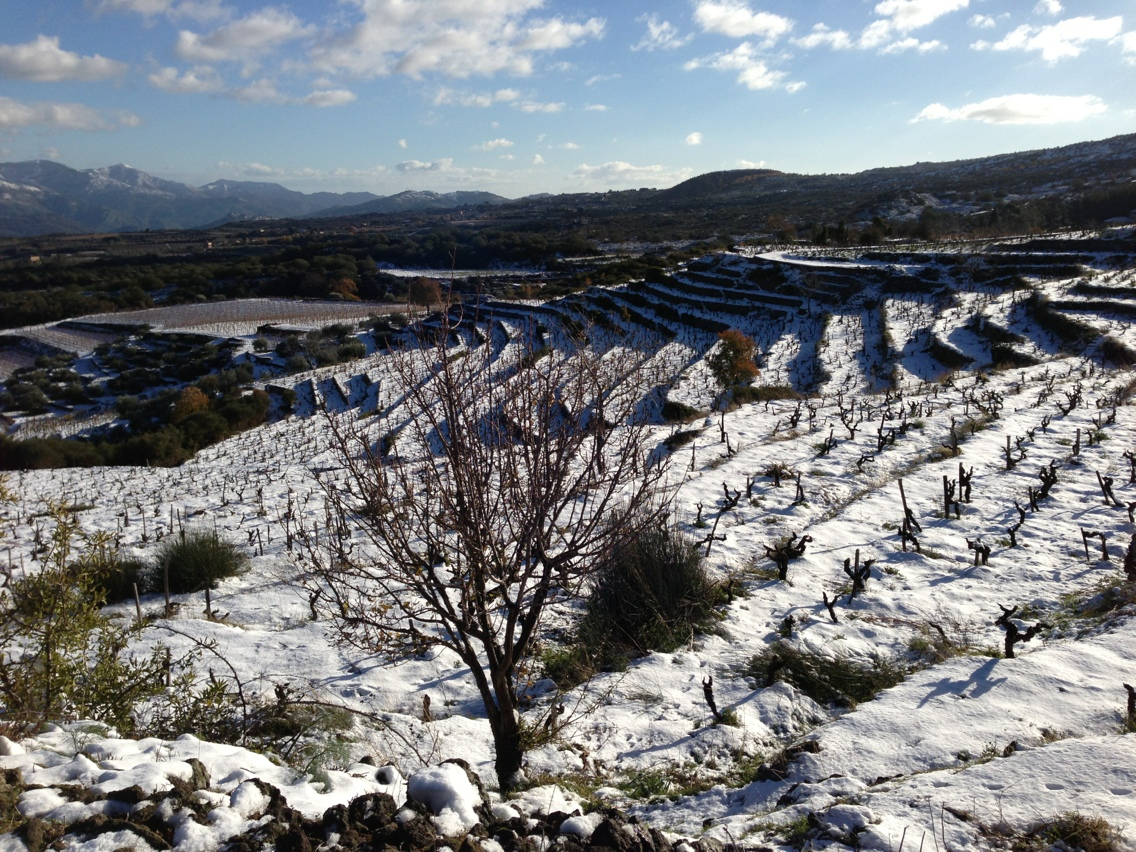
| Image borrowed from the Tenuta di Fessina website. |
If there is one class of soils that settles the question of if you can taste terroir for me personally, it has to be volcanic soils. Maybe it’s possible that the vines themselves feel the thrill of growing around volcanoes because there just tends to be an energy in wines from volcanic regions that really set them apart. Italy has its fair share of these with many areas boasting volcanic soils running up and down the country, however, the largest active volcano today is Sicily’s Mount Etna. Today we’re going to better get to know this volcanic region (a UNESCO World Heritage Site since 2013) and its grapes a bit better through the wines of Tenuta di Fessina.
Note: The wines in today’s post were provided as media samples. No other compensation was received and all opinions are my own.
This isn’t the first time we’ve explored Sicily or even Mount Etna on this blog. In fact, to get an idea of the difficulties of growing vines on an active volcano, I invite you to check out this post. The volcano definitely affects the vines as well, and it comes through in the flavor of the wines. This quote from an article on Bloomberg.com entitled Boom: Volcanic Wines Are Heating Up Around the Globe describes the effects on the wines:
Note: The wines in today’s post were provided as media samples. No other compensation was received and all opinions are my own.
This isn’t the first time we’ve explored Sicily or even Mount Etna on this blog. In fact, to get an idea of the difficulties of growing vines on an active volcano, I invite you to check out this post. The volcano definitely affects the vines as well, and it comes through in the flavor of the wines. This quote from an article on Bloomberg.com entitled Boom: Volcanic Wines Are Heating Up Around the Globe describes the effects on the wines:
Wines from the several types of volcanic soils—lava, pumice, ash, basalt, and more—can vary widely, but most share complex aromas, mouthwatering high acidity, and salty, savory, earthy flavors. The porosity of these soils stores more water, which contributes to the wines’ characteristic freshness and exuberance.
Personally, I often register a lot of minerality from volcanic wines. Sometimes it comes across as a salty factor as mentioned above, other times there’s flintiness to the wine, or even smoke or full-on charcoal, and sometimes it’s a mix. As a lover of high-acid wines myself, I definitely appreciate and love the freshness that tends to go hand-in-hand with volcanic wines.
There are some additional bonuses to volcanic soils as well. For one thing, that pesky louse, phylloxera, doesn’t do well in volcanic soils, so that’s one headache growers don’t have to worry about, and vines can even remain on their own rootstock. A lot of volcanic areas are on terrains that are difficult to mechanize, which means that they have to be worked by hand. While that particular aspect might make life harder on growers, it can work out to be a benefit for consumers since care must be taken while tending to the vines.
Of course, there is more to “terroir” than just soil. The weather, climate, elevation, and other aspects of the terrain, as well as many other factors all certainly have a part to play, but this is one soil that IMHO makes itself known. The volcano affects other aspects of the terroir as well. The crags and slopes of any mountain help to create many microclimates. On Mount Etna, this is anything but constant. Etna is an effusive volcano, which means that it's releasing gas and erupting on a pretty regular basis, rather building up pressure for many years before then having a huge explosive eruption. This is ultimately less devastating, but it also means that the landscape is being reshaped on a regular basis.
Etna currently stands at 3,326 m / 10,912 ft (some sources give the height at 3,350 m / 10,990 ft, and in truth, it’s actually constantly changing given the ash and lava), and you can probably guess that the elevation has a cooling effect. The highest of Etna’s vineyards are among the highest in Italy and even the world, and more and more winemakers are experimenting with planting vines at higher altitudes here.
There are some additional bonuses to volcanic soils as well. For one thing, that pesky louse, phylloxera, doesn’t do well in volcanic soils, so that’s one headache growers don’t have to worry about, and vines can even remain on their own rootstock. A lot of volcanic areas are on terrains that are difficult to mechanize, which means that they have to be worked by hand. While that particular aspect might make life harder on growers, it can work out to be a benefit for consumers since care must be taken while tending to the vines.
Of course, there is more to “terroir” than just soil. The weather, climate, elevation, and other aspects of the terrain, as well as many other factors all certainly have a part to play, but this is one soil that IMHO makes itself known. The volcano affects other aspects of the terroir as well. The crags and slopes of any mountain help to create many microclimates. On Mount Etna, this is anything but constant. Etna is an effusive volcano, which means that it's releasing gas and erupting on a pretty regular basis, rather building up pressure for many years before then having a huge explosive eruption. This is ultimately less devastating, but it also means that the landscape is being reshaped on a regular basis.
Etna currently stands at 3,326 m / 10,912 ft (some sources give the height at 3,350 m / 10,990 ft, and in truth, it’s actually constantly changing given the ash and lava), and you can probably guess that the elevation has a cooling effect. The highest of Etna’s vineyards are among the highest in Italy and even the world, and more and more winemakers are experimenting with planting vines at higher altitudes here.
 |
| Image borrowed from the Tenuta di Fessina website. |
The vineyards on the volcano curve around its eastern side which faces the Mediterranean, running between the towns of Randazzo on the north side and Santa Maria Licodia on the south side. Vineyard areas on different parts of the mountain have different microclimates. The north side of the volcano is colder, windier, and even gets a fair amount of snow, while the south is sunnier but also gets more rain.
The interplay between the mountain and the sea is also important. Growers celebrate the way the water from the sea reflects light back up to the vines. Most of Sicily has no issue with ripening grapes given it’s warm climate, but this effect is beneficial for those vines that keep creeping further up the volcano.
Sicily’s climate, in general, is pretty ideal for growing grapes. In addition to being warm and fairly dry, it’s also petty breezy which makes it a lot easier to keep vines healthy and free from many diseases and molds. That makes it a lot easier to grow grapes sustainably without the use of sprays. A big bonus!
The interplay between the mountain and the sea is also important. Growers celebrate the way the water from the sea reflects light back up to the vines. Most of Sicily has no issue with ripening grapes given it’s warm climate, but this effect is beneficial for those vines that keep creeping further up the volcano.
Sicily’s climate, in general, is pretty ideal for growing grapes. In addition to being warm and fairly dry, it’s also petty breezy which makes it a lot easier to keep vines healthy and free from many diseases and molds. That makes it a lot easier to grow grapes sustainably without the use of sprays. A big bonus!
TENUTA DI FESSINA

Silvia Maestrelli is the woman behind today’s wines. She comes from an entrepreneurial Florentine family. She apparently brought that entrepreneurial spirit with her when she moved to Etna in 2006 and she started Tenuta di Fessina in 2007 after falling in love with the land. She brought on consultants and collaborators, including winemaker Federico Curtaz, to help her build her project. The volcano plays an important to her vision and winemaking philosophy as she says, “I look up to Mount Etna like a daughter would look up to a mother.”

It also literally has shaped the vineyards. The winery is based in Rovitello and has seventeen acres of vineyards there (2,200 feet), as well as six acres between Milo and Santa Maria di Licodìa (3,280 feet). The vineyards in Rovitello are located between two ancient semicircular lava flows of the past that act like walls that isolate the vineyard, much like a French "clos."
Having vineyards on both sides of the mountain allows Tentua di Fessina to produce excellent expressions of the various indigenous varieties – and they work exclusively with indigenous grapes. Red grapes like Nerello Mascalese, Nerello Cappuccio, and the rare variety of Minnella, do well on the north side, while white varieties, do well on the south side. Carricante in particular is able to acquire both minerality and roundness, which complements its structural acidity.
Having vineyards on both sides of the mountain allows Tentua di Fessina to produce excellent expressions of the various indigenous varieties – and they work exclusively with indigenous grapes. Red grapes like Nerello Mascalese, Nerello Cappuccio, and the rare variety of Minnella, do well on the north side, while white varieties, do well on the south side. Carricante in particular is able to acquire both minerality and roundness, which complements its structural acidity.
I admit that I can’t quite tell from their website and press materials what farming methods they use, but as best I can make out they only intervene in the vineyards when necessary. All farming is done by hand, and as a rule all of Etna is dry-farmed. The age of their vines vary between 70 and 110 years old.

A little daydream fodder for those of us anxiously awaiting the day we can travel again – the winery has seven guestrooms inside a 17th-century structure on the property.

THE GRAPES
Tenuta di Fessina only works with indigenous grapes, so here’s a quick primer on some of the varieties in the wines we’ll be looking at today.
Carricante: An ancient white wine grape variety that’s believed to have been grown on to Mount Etna for at least a thousand years. It’s known for having high acidity and often has a marked mineral note in the best examples. As far as fruit notes, you’re likely to find any or all members of the citrus family in your glass, along with hints of herb note. Carricante is the key player in white wines falling under the Etna DOC title. A minimum of 60% is required for standard Etna Bianco, and it’s bumped up to 80% in Etna Bianco Superiore.
Catarratto: This is the most planted grape in Sicily, and it’s rare to find anywhere else. It has tends to have lower acidity than Carricante and show notes of citrus, melon, herbs, and white flowers. You’re also likely to find it in Marsala wines.
Nero d’Avola: This is Sicily’s most planted and celebrated red grapes. It tends to make wines with deep color and flavor, juicy acidity, and soft-to-medium tannins. You’ll find fruit notes ranging from bright red strawberries and sour cherries, to darker red and black berry notes. You’re also likely to find red floral notes, as well as sweet spices and licorice. Styles can range from easygoing, to much more serious and brooding bottles that beg for aging.
Nerello Mascalese: This is the second most planted red grape, but it’s popularity has been growing in recent years. It does particularly well in Mount Etna’s volcanic soils. It makes fresh, fruity wines with herbal notes, and lots of earthy minerality.
Nerello Cappuccio: You’ll usually find this grape blended with Nerello Mascalese as it can help soften some of it edges, as well as adding color and perfume. You don’t find it on its own that often. It too does well on Etna’s volcanic soils, and particularly likes the higher altitudes. It shows cherry notes on the palate, and typically has lots of acidity and tannin.
Over the last few months I’ve had the opportunity to try several wines from Tenuta di Fessina’s various lines, giving me the chance to explore many of Etna’s indigenous grapes as interpreted by one producer.
Here are a few of the wines and pairings we’ve enjoyed. I think you’ll see the volcanic notes play out in the tasting notes through minerality expressed in these wines. Also, you’ll notice that all of the wine names come from Greek and Roman references, which I find fun.
We’ve tried the white, the rosato, and the rosso from the Erse line, which is named for the Greek goddess of dew. These wines are made in a fresh style and are meant to be enjoyed young. The SRP on these is $24.99.
Whites
Carricante: An ancient white wine grape variety that’s believed to have been grown on to Mount Etna for at least a thousand years. It’s known for having high acidity and often has a marked mineral note in the best examples. As far as fruit notes, you’re likely to find any or all members of the citrus family in your glass, along with hints of herb note. Carricante is the key player in white wines falling under the Etna DOC title. A minimum of 60% is required for standard Etna Bianco, and it’s bumped up to 80% in Etna Bianco Superiore.
Catarratto: This is the most planted grape in Sicily, and it’s rare to find anywhere else. It has tends to have lower acidity than Carricante and show notes of citrus, melon, herbs, and white flowers. You’re also likely to find it in Marsala wines.
Reds
Nero d’Avola: This is Sicily’s most planted and celebrated red grapes. It tends to make wines with deep color and flavor, juicy acidity, and soft-to-medium tannins. You’ll find fruit notes ranging from bright red strawberries and sour cherries, to darker red and black berry notes. You’re also likely to find red floral notes, as well as sweet spices and licorice. Styles can range from easygoing, to much more serious and brooding bottles that beg for aging.
Nerello Mascalese: This is the second most planted red grape, but it’s popularity has been growing in recent years. It does particularly well in Mount Etna’s volcanic soils. It makes fresh, fruity wines with herbal notes, and lots of earthy minerality.
Nerello Cappuccio: You’ll usually find this grape blended with Nerello Mascalese as it can help soften some of it edges, as well as adding color and perfume. You don’t find it on its own that often. It too does well on Etna’s volcanic soils, and particularly likes the higher altitudes. It shows cherry notes on the palate, and typically has lots of acidity and tannin.
WINES & PAIRINGS
Over the last few months I’ve had the opportunity to try several wines from Tenuta di Fessina’s various lines, giving me the chance to explore many of Etna’s indigenous grapes as interpreted by one producer.
Here are a few of the wines and pairings we’ve enjoyed. I think you’ll see the volcanic notes play out in the tasting notes through minerality expressed in these wines. Also, you’ll notice that all of the wine names come from Greek and Roman references, which I find fun.
We’ve tried the white, the rosato, and the rosso from the Erse line, which is named for the Greek goddess of dew. These wines are made in a fresh style and are meant to be enjoyed young. The SRP on these is $24.99.

We enjoyed the Erse Etna Bianco 2017 (90% Carricante, 10% Catarratto & Minella) with a roast chicken dinner (mentioned here). It showed notes of bright citrus, accompanied by herbs. It rounded out in the mid-palate, before heading into a flinty finish. It was a nice alternative to Chardonnay (my usual roast chicken go-to) since it had that bit of roundness to stand up the chicken. This would also be a no-brainer for grilled seafood dishes thanks to all that minerality and citrus. (Geeky details here.)

I’ve really enjoyed the Erse Etna Rosato 2018! (Nerello Mascalese and Nerello Cappuccio.) It has a wonderful mix of juicy fruits and substantial structure. It showed bright red fruit notes, orange zest, and a slight hint of herbs. It was also quite structured and finished with a smoky, stony note. I mentioned in this recent post on rosé, that I really enjoyed it with a spread that included collard greens with smoky ham hocks, since the flavors played off of each other really well. I also recently had a bottle over a dinner with friends and tried it with Caprese salad and a light pasta dish that included asparagus with parmesan. It played nicely with everything, even the asparagus which can be tricky at times. I think it would also be a natural match for salumi. (Geeky details here.)

Erse Etna Rosso 2016 (90% Nerello Mascalese, 8% Nerello Cappuccio, and 2% Minnella & Carricante) was a medium-bodied and a nice balance of lively red fruits, earthiness, smoke, and a little anise seed. This was perfect with Eggplant Lasagna. (Geeky details here.)
Now we have a couple of high-low pizza pairings. Pizza dough has been a big project of mine during these last few months at home. Sometimes after putting in the work, I feel I deserve something a little nicer to go with it!

First up, the Laeneo Sicilia IGT 2017 (SRP $41.99, 100% Nerello Cappuccio). This wine is named for the bacchanal gatherings in honor of Dionysus in ancient Athens – and I am certainly a devotee of Dionysus. This wine showed notes of sour cherries, along with some riper red fruit notes to round it out, a little pepper, herbs, and smoky fennel salami, backed up by a little stone. It actually was a fantastic match with my sausage pizza. (Geeky details here.)
a'Puddara Etna Bianco with Sficone
And finally, my spotlight wine today is the a'Puddara Etna Bianco 2017 (SRP $65.99). This wine is dedicated to Sicily and the name is a reference from Ovid and to the Pleiades that look over Sicily.
a'Puddara Etna Bianco with Sficone
And finally, my spotlight wine today is the a'Puddara Etna Bianco 2017 (SRP $65.99). This wine is dedicated to Sicily and the name is a reference from Ovid and to the Pleiades that look over Sicily.

Nose: Grilled lemons, apples, and small white flowers.
Palate: All come back on the palate, but the fruit gets rounder and riper and is joined by notes of stone fruit. It’s complex with hints of herbs, Parmesan cheese rind, as well as flinty stoniness on the finish. It was on the light end of medium-bodied, but with a creamy texture to the midpalate lifted by plenty of fresh acidity, riding through to a flinty, stony finish.
Geeky details taken from the tech sheet.
BLEND: Carricante100%
PRODUCTION AREA: Biancavilla, Contrada Manzudda. The Biancavilla area is characterized by areas composed of small volcanoes and craters from remote eras now extinct, these led to the formation of limestone caves and a terroir composed mainly of clayey particles, lapilli leftovers, sand, and volcanic ash. There are small fractions of potassium, basaltic lavas, and ancient tuffs. The thermal excursion is sudden and wider than the north side, it is such that it reaches 86°F giving, with the fine and sandy skeleton, a vertical elegance and a unique strong minerality, that if combined with the high rates to the genotypic acidity of the indigenous varieties guarantee a very high aging potential for the Carricante, Nerello Mascalese, and Nerello Cappuccio grapes.
VINEYARD PLANTED: 1950
EXPOSITION: South
ALTITUDE: 2950 ft
VINIFICATION: Crushing without de-stemming after careful selection of the grapes in the vineyard and on the sorting belt in the cellar, soft pressing with separation of the musts, cold static decantation
FERMENTATION: direct fermentation in 3500 liter French oak barrels
AGING: Refined on the lees for 6-8 months
Alc: 12.5%
For this pairing, I decided to look to The Heart of Sicily for inspiration. I have a weakness for cookbooks and have way more than I should. In addition to actually buying them, I find it hard to resist them when someone’s giving them away, so I have a bunch that I no longer have a clue where they came from. This happens to be one of those books, but it turns out it was written by Anna Tasca Lanza whose family owns Tasca d’Almerita, another excellent Sicilian winery. The book is organized by seasons and so I picked two out of the fall section – one to pair with this wine and one to pair with Tenuta di Fessina’s Il Musmeci Etna Rosso Riserva 2012 which I’ll be sharing very soon.
Palate: All come back on the palate, but the fruit gets rounder and riper and is joined by notes of stone fruit. It’s complex with hints of herbs, Parmesan cheese rind, as well as flinty stoniness on the finish. It was on the light end of medium-bodied, but with a creamy texture to the midpalate lifted by plenty of fresh acidity, riding through to a flinty, stony finish.
Geeky details taken from the tech sheet.
BLEND: Carricante100%
PRODUCTION AREA: Biancavilla, Contrada Manzudda. The Biancavilla area is characterized by areas composed of small volcanoes and craters from remote eras now extinct, these led to the formation of limestone caves and a terroir composed mainly of clayey particles, lapilli leftovers, sand, and volcanic ash. There are small fractions of potassium, basaltic lavas, and ancient tuffs. The thermal excursion is sudden and wider than the north side, it is such that it reaches 86°F giving, with the fine and sandy skeleton, a vertical elegance and a unique strong minerality, that if combined with the high rates to the genotypic acidity of the indigenous varieties guarantee a very high aging potential for the Carricante, Nerello Mascalese, and Nerello Cappuccio grapes.
VINEYARD PLANTED: 1950
EXPOSITION: South
ALTITUDE: 2950 ft
VINIFICATION: Crushing without de-stemming after careful selection of the grapes in the vineyard and on the sorting belt in the cellar, soft pressing with separation of the musts, cold static decantation
FERMENTATION: direct fermentation in 3500 liter French oak barrels
AGING: Refined on the lees for 6-8 months
Alc: 12.5%
For this pairing, I decided to look to The Heart of Sicily for inspiration. I have a weakness for cookbooks and have way more than I should. In addition to actually buying them, I find it hard to resist them when someone’s giving them away, so I have a bunch that I no longer have a clue where they came from. This happens to be one of those books, but it turns out it was written by Anna Tasca Lanza whose family owns Tasca d’Almerita, another excellent Sicilian winery. The book is organized by seasons and so I picked two out of the fall section – one to pair with this wine and one to pair with Tenuta di Fessina’s Il Musmeci Etna Rosso Riserva 2012 which I’ll be sharing very soon.

I decided to adapt a recipe for Sficone, a Sicilian pizza, just because I couldn’t resist. This is a super cheesy version with caramelized onions and a little anchovy mixed in, although you really don’t taste them – they just add a little something to the background. When I say it’s super cheesy, I mean SUPER cheesy. It uses five different cheeses and I think I used maybe half the total quantity called for –– it was still incredibly decadent. We LOVED it! We typically go for thin crust pizzas around here, but couldn’t get enough of this thick, biscuity crust. The pairing was also wonderful. The cheese and a crust brought out the rounder side of the wine, and that hint of anchovy spoke to the salinity in the wine. Meanwhile, the citrus notes in the wine refreshed the palate between each decadent bite. The food and the wine elevated each other in the match, each making the other more luscious. This pizza pairing was on another level.


Pizza
dinner, lunch, appetizers
Italian
Servings: 6 large slices or 12 appetizer-sized slice
By: Nicole Ruiz Hudson, Recipe adapted from The Heart of Sicily by Anna Tasca Lanza

Cheese Sficone with Onions
Prep Time: 10 MinCooking Time: 2 Hourinactive time: 50 MinTotal Time: 2 Hours 10 Min
This is a super cheesy Sicilian style pizza. The original recipe called for A LOT – I used about 1/2 to 2/3 of the quantity asked for on this pie. Here I've given a range, so basically use as much as suits you.
Ingredients
For the dough
- 2 cups all-purpose flour
- 1 cup semolina flour
- 1 tsp salt
- 1 (¼ ouce) package of dry yeast
- 1 cup warm water
- 1 egg
- 2 Tbsp butter, diced
For the toppings
- 2 medium onions, thinly sliced or diced (pick your textural preference, I went with diced)
- Olive oil, as needed
- 4 anchovy fillets, minced, or 1 tsp anchovy paste
- 8 oz fresh mozzarella, sliced
- ½ cup to 1 cup shredded Emmentaler
- ½ cup to 1 cup shredded Gouda
- ¼ to ½ cup grated Parmesan
- ⅛ to ¼ cup grated Pecorino or Caciocavallo
- 2 to 3 Tbsp dried oregano
- Breadcrumbs, for topping
- Salt, to taste
- Pepper, to taste
Instructions
- Combine the flours in a bowl with the salt. Make a well in the center, then add the yeast, water, egg, and butter. Work the dough until it begins to come together, then blend in a mixer using the dough hook attachment for about 10 minutes, until the dough becomes smooth and elastic. Alternatively, turn the dough out onto a floured work surface and knead by hand. It’ll initially be wet, then start to become smooth after 3 to 4 minutes, and smooth and elastic after 10 to 15 minutes. Allow the dough to rest for about 15 minutes so that it’s easier to work with.
- Sauté the onions in a generous amount of olive oil over medium heat until they begin to turn golden and lightly caramelized – about 15 to 20 minutes. Stir in the anchovies or anchovy paste and season with salt and pepper.
- Oil a 9 x12-inch rimmed baking sheet drizzled with olive oil. Roll out the dough and shape to fit the pan. Spread the onion and anchovy mixture. Place the slices of mozzarella across the pizza, follow with the Emmentaler and Gouda, then Parmesan and Pecorino –– use as much cheese as is to your liking. Sprinkle the oregano and bread crumbs on top. Press the ingredients into the dough, cover with a kitchen towel, then put it in a warm spot and allow it to rise until doubled, about 45 minutes.
- Preheat oven to 400°F.
- Place the Sficone in the oven and bake until the cheese has melted and the crust is golden brown underneath – about 35 to 45 minutes. Remove from the oven and let stand for 15 minutes, then cut into pieces and serve.
Did you make this recipe?
Tag @thesommstable on instagram and hashtag it #sommstable
Created using The Recipes Generator

*****
For more on Sicily, check out these posts:
*****
The rest of the Italian
Food, Wine, Travel (#ItalianFWT) blogging group is exploring Italian
wines from volcanic regions. Explore these fascinating areas by checking
out their posts here:
- Camilla at the Culinary Adventures with Camilla features A Single-Varietal Carricante, an Etna Exclusive, & Lapsang Souchong-Braised Duck Legs.
- Wendy at A Day in the Life on the Farm declares Grapes Grown in Volcanic Soil Produce a HOT Wine!!!
- Gwendolyn of Wine Predator has you Meet Mt Etna’s Volcanic Wines: Sicily’s Tenuta Monte Gorna and Tenuta di Fessina with Pairings.
- Lynn at Savor the Harvest writes about Volcanic Wine in the Veneto.
- Terri at Our Good Life shares Ashes to Ashes: Volcanic Wine and Sicilian Lentil Soup.
- Robin at Crushed Grape Chronicles offers Mount Etna – The Awesome Power of Active Volcanos, and Yes, Red Wine with Fish.
- Linda at My Full Wine Glass discusses the wines of Benanti – Capturing the Soul of Mount Etna Wine.
- Susannah at Avvinare is Exploring the Colli Berici in the Veneto.
- Cindy at Grape Experiences shares Personality, Elegance, Value: Tenuta Tascante Ghiaia Nera 2017 from Etna DOC.
- Nicole at Somm's Table is Exploring Etna with Tenuta di Fessina
- Jen, our host, at Vino Travels posts Fried Eggplant Topped with Fresh Tomatoes and Ricotta Paired with I Custodi Etna Rosso.
Additional reading and sources used for this post
- Wine Enthusiast: A Beginner’s Guide to the Wines of Sicily
- The Tasting Panel: 10 Things to Know About Sicilian Wine
- Forbes: How Volcanic Soils Halted A Winemaking Scourge On Sicily’s Mount Etna
- NY Times: Etna Fumes and Spews, but the Winemaking Goes On
- Wines of Sicily
- Food & Wine: Volcanic Wine 101: What You Need to Know About This Booming Category
- What makes the wines of Etna so special?
- Saveur: 10 Fantastic Sicilian Wines
- JJ Buckley:Volcanic Soils and their Effect on Wine
- Wine; Tasted!: The Contrada system on Mount Etna
- Wine-Searcher.com
This post contains affiliate links, including these Amazon links, from which I might earn a commission at no cost to you.