Somm's Table

Perfect pairings from the other side of the equation.

  • About
  • Front of the House
  • Back of the House
  • Contact Us
Powered by Blogger.

 A creamy sauce made with braised fennel, orange, pancetta, and shrimp is a decadent match for Duca di Dolle BRT Prosecco di Valdobbiadene Superiore Brut. Plus, discover #WhatsYourProseccoSuperioreStyle and win.

– SPONSORED POST –
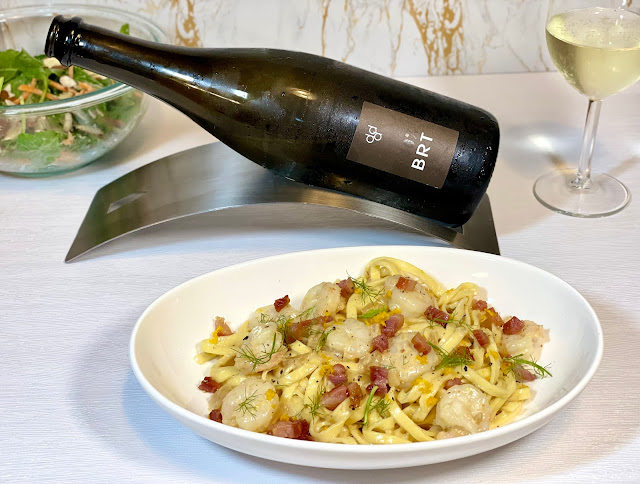


It’s always exciting when I conceive of a pairing, and it turns out EVEN MORE delicious than I expected. 


I created this recipe for a partnership with Conegliano Valdobbiadene Prosecco Superiore DOCG for an Instagram post to help spread the word about a recipe contest that’s currently underway –– scroll down for details. The pairing turned out so well that I just had to share it here as well. 


I’ve shared several posts in the past detailing the Prosecco quality pyramid, check out this post for more background. To put it simply though, Conegliano Valdobbiadene Prosecco Superiore DOCG is the original production zone and historical home of Prosecco. It’s a much, much smaller region than the wider Prosecco DOC area, which spans nine provinces in Veneto and Friuli Venezia Giulia regions. By comparison, wine under the Superiore DOCG zone must come from one of 15 small, specific communes. To make a long story short, over time, the Prosecco zone was widened so that producers could grow more grapes to keep up with demand, but the highest quality wine still comes from grapes grown in the steeply hilly terrain of the original, historical growing area. 


My task was to create a recipe to match Duca di Dolle BRT Prosecco di Valdobbiadene Superiore Brut. Many people might realize it, but Prosecco comes in a full range of sweetness levels ranging from Extra Brut, Brut, Extra Dry, and Dry. Here are the details on the grams of residual sugar per liter  for each of these typologies: 


Extra Brut:  0 - 6 g/l

Brut: 0-12 g/l

Extra Dry: 12-17 g/l 

Dry: 17-32 g/l 


This wine is Brut which is intended to be a crowd-pleasing style that can work easily throughout a meal. When comparing it to traditional method sparkling wines, like Champagne, the main flavor difference is that they will not have the toasty, nutty, brioche notes that you’ll find in those wines. The production method used to make these wines, known as the Martinotti or Charmat method, instead highlights the aromatics of the grapes themselves, bringing out the fruit and floral notes, as well as light hints of herbal flavors. The Brut style will show off the more vibrant citrusy aspects of Glera, the grape of Prosecco,  along with lightly herbal notes, all will a fresh, crisp finish. 


Duca di Dolle 


Blend: 90% Glera, 5% Verdiso, 5% Perera  |  Average Price: $10 | Abv: 11.5%


Duca di Dolle is a young, sustainably-minded company owned by the Baccini family. All grapes are grown on their 100-hectare estate (25 hectares are dedicated to vineyards, and 75 are woodlands and meadows) located in Rolle, in the municipality of Cison di Valmarino. The estate also boasts a 16th-century monastery that has been converted to a relais to host guests. 


When we opened the Duca di Dolle BRT Prosecco di Valdobbiadene Superiore Brut we were greeted with aromas of white flowers, lemons, white peach, and minerals on the nose. The fresh white flowers and crisp fruit notes continued on the palate, and the minerality turned into pronounced salinity. It was a very elegant and refreshing wine.


Find additional details on this wine here.


The Pairing:  Creamy Fennel Pasta with Orange and Shrimp 


Several ideas wound themselves together when I was conceiving a pairing for this wine. In the past, I’ve had good luck pairing Prosecco Superiore DOCG with Pasta Carbonara, and the Brut style works particularly well with creamy dishes since the bright citrusy notes help to cut through the unctuous quality of these types of dishes. At the same time, I was thinking that the combination of fennel and herbal would highlight the fruity, floral, and herbal notes in the wine. If I brought in a seafood element, like shrimp, it might also serve to tease out more of the wine’s minerality. I decided to put it all together.


I took inspiration from a recipe my husband and I fell in love with a while ago for Fennel Braised in Cream from Gabrielle Hamilton’s Prune cookbook. Through this recipe, we discovered the delicious caramelized flavors that can come from fennel when it’s been cooked slowly and just how magically those flavors can work with cream. 


Putting it all of these ideas together, I decided to chop up the fennel and cook it stove-top and basically treated them like I would onions that were being caramelized, adding orange juice during the cooking process. Toward the end of cooking, I added Parmesan, cream, and shrimp then topped it all with pancetta, and tossed it all with fresh linguini. The results were incredibly decadent. We could not get enough and it was fabulous with the wine! The bright, crisp fruit and saline minerality cut right through the richness of the pasta dish and highlighted the citrus and herbal notes from the orange and fennel.   


Scroll down for the recipe. 


#WhatsYourProseccoSuperioreStyle Recipe Contest


As I alluded to earlier, I created this dish for an Instagram post promoting a contest Conegliano Valdobbiadene Prosecco Superiore DOCG is having to promote the food friendliness and versatility of the wines, in addition to highlighting the different typologies, or categories. 


There are still a few more days left in the contest period, and it’s open for anyone in the US to participate. Simply put, all you have to do is create a recipe – it can be SUPER simple – and share it on Instagram. 


That’s the basic gist, now here are the detailed instructions: 


·  Post a recipe by 11/13/22 featuring wine from Conegliano Valdobbiadene Prosecco Superiore DOCG – be sure to check the label! Static images and videos are both fine. The full recipe can be shared via the post, or the post can point to a blog post with the complete instructions.


·  Get to know the typologies. Wines should be from the Extra Brut, Brut Millesimato, or Extra Dry typologies, and let us know why you love that style. Find more details on each at www.prosecco.it/en .


·  A successful entry will: A successful entry will: 

1) Share information on the typology. 

2) Describe why the pairing works. 

3) If you use a glass in the shoot, please be sure it is an all purpose white wine glass – it’s best for releasing the wine’s aromas. 

4) Tag @proseccocv, the respective producer, and @alltheswirl. 

#proseccosuperiore

#proseccoelevated

#coneglianovaldobbiadene

#alltheswirl

#whatsyourproseccosuperiorestyle


MUST BE OVER 21 TO ENTER


A winner for each of the 3 typologies will be announced in December.


******


*****


Check out these posts for more on Prosecco:


  • Three Nights of Prosecco Holiday Fun: Carbonara, Sabering, Friends, with a Side of Pear Endive Spears
  • Cooking to the Wine: Sorelle Bronca Extra-Dry Prosecco di Valdobbiadene Superiore DOCG with Poached Chicken with Pears and Gorgonzola
  • The Wide World of Italian Bubblies
  • Wine Geek Thanksgiving
  • Around the World Pét-Nat Party!
  • Italian Wine 101 Cheat Sheet


Come explore the bright white wines of Orvieto paired with simple springtime dinners.


Crisp, bright white wines become a necessity in the spring, and the need only increases in the hot, humid days of summer. They match all the beautiful veggies bursting forth from the ground, and they cool you down as the temperatures go up. As far as I’m concerned, they’re 100% required. 

I know a lot of you feel the same because when I was working in a wine shop, people would ask for ‘crisp white wines’ left and right in the spring and summer. I absolutely feel you. My one lament is that sometimes people get stuck on just one or two styles or grapes, and yet, there are SOOO many wonderful options out there to try. Better yet, there are lots of incredibly affordable options. Italy in particular offers seemingly endless options of delicious ‘crisp white wines.’ To help you avoid getting stuck in a rut, today we’re going to look for a new candidate for your rotation of crisp whites – Orvieto. 

Once get to know this Italian region a little bit, we’ll explore two bottles paired with easy, quick dinners, because let’s face it, as temperatures go up, we all want to spend less and less time in front of the stove.


A Snapshot of Orvieto

Map borrowed from WineFolly.com


Orvieto is a region in central Italy located predominantly in Umbria, but also spills over into neighboring Lazio. It’s named for a hilltop town of the same name. Orvieto has a rich cultural history. It was an important artistic center in the late Middle Ages and Renaissance. In addition, it’s the home of a Papal Palace, one of only three outside of Rome and its surrounding areas. 

Panorama di Orvieto.jpg
Image borrowed from Wikipedia. 

The region’s cultural and winemaking history goes back even further to the time of the Etruscans who dug caves into tuffaceous soils and created an elaborate infrastructure for winemaking on three levels, as described by the Consorzio's website:

“In the 1st level the grapes were pressed and transformed into must and it flowed, through earthenware pipes, into the second level, where the fermentation and subsequent racking took place; the wine was thus ready for maturation and storage in the III level. The result was an aromatic, very fragrant drink with a slightly sweet taste and a golden yellow color, testifying to the territory's vocation for white wines.”

The wines continued to be incredibly popular through the Middle Ages and Renaissance. They were a favorite of the Popes that resided in the Palace, and apparently, the wines were used to help pay for the works of art that adorn the Orvieto Cathedral.

Styles 

Orvieto’s wines are always white. (There is a separate appellation for reds –– Orvietano Rosso DOC.) As mentioned above, the region was known for wines with sweetness at varying levels, but as tastes have changed in more modern times, so have the styles of the wine produced, and now the grand majority in dry (secco) and made in a clean, crisp style. However, sweeter styles do still exist: medium dry (abboccato), medium sweet (amabile), late harvest (vendemmia tardiva), and botrytized (muffa nobile) sweet versions.

The dry versions can have quite a mix of fruit notes including peaches, green apple, citrus, melon, and pears. There are also often hints of white flowers, nuts, as well as minerality, and, at times, a pleasant bitter note as well.

Grapes 

The wines of Orvieto are traditional blends, with Grechetto and Procanico (the local name for Trebbiano) playing the leading roles – they must make up 60% of the blend minimum. Grechetto is considered to be the more interesting of the two grapes by far, with notes of citrus, white flowers, chamomile, and even nuttiness at times. It tends to produce small bunches with grapes of concentrated flavor. It also adds structure and body to the blend. High-quality Orvieto blends will tend to have a high proportion of Grechetto, and you will now even find varietal bottlings.

Procanico/Trebbiano is far more neutral in flavor, but it has a couple of things going for it. First, it typically has more acidity than Grechetto, so brings a lift and brightness to the blend. It’s also far more productive, but blends with too much of it risk becoming bland. Its neutral character combined with its high acidity makes it ideal for the production of brandy.

In addition to these two, you might also find Verdello (Verdelho), Drupeggio (Canaiolo Bianco) and/or Malvasia Bianca. International varieties are also grown in the region, which you will find in the Orvieto DOC wines but tend to be used in higher levels in the IGT-level wines. 


Terroir 

The area is known for its tufa soils, a type of limestone that’s desirable for growing grapes and for carving out caves to make cellars in which to store the wines. The tufa soils are volcanic in origin, and you will find other volcanic soils as well, including areas of alluvial soils, clay, and sand with marine fossils mixed in – so eventhough this is a landlocked region, you can bet these wines work beautifully with seafood.

Umbria in general enjoys a Mediterranean climate with dry, hot summers and cold winters. However, this is one of the few areas in Italy that can regularly expect to see botrytis, aka noble rot, which is ideal for the sweeter wines. 


Tiers and Labeling Terms

There are a few quality tiers and labeling terms that you might see on a label to be aware of. 

  • Orvieto DOC –  This is the basic/general Orvieto tier. Although the history of the region goes back further, it was originally delineated in 1931 and established as a DOC in 1971.
  • Superiore – Wines in the Superiore category (established in 1997) must adhere to higher quality standards with lower production yields and must have a minimum alcohol content of 12%.
  • Classico – As is the case with other regions like Chianti or Soave, the term classico indicates the wine comes from the most historic sub-area in the region. Orvieto Classico” sub-area. In this case, it’s the area closest to the city of Orvieto, by the Paglia river valley. 

I received several bottles of Orvieto as samples to try, and we’ll be taking a look at two of those bottles paired with simple dinners – both of which came together in about half an hour. As always,  all opinions are my own, and no other compensation was received. 


Decugnano dei Barbi Mare Antico Orvieto Classico Superiore 2019 with Salmon and a Tomato, Avocado, and Goat Cheese Salad


Blend: 55% Grechetto, 20% Vermentino, 20% Chardonnay, 5% Procanico | Average Price: $16 | Find additional information here. 

Wine has been made at Decugnano since at least 1212, when the lands belonged to the church of Santa Maria of Decugnano and the vineyard produced wines for the Mass as well as for local consumption. The present owner, Claudio Barbi purchased the property in 1973, after falling in love with the property. His son Enzo has since joined him in the project. 

The 30-hectare property sits at an altitude of over 300 meters (1,000 feet), has sand and clay soils that were part of an ocean floor from the Pliocene period, and contains fossilized shells of sea shells and oysters. In terms of farming, they do not utilize insecticides, fungicides, chemical fertilizers, or weed killers. They try to keep treatments to a minimum through careful attention to the vines. 

The grapes for the Mare Antico are a blend from their estate vineyards, from 25-year-old vines. 

Tasting Notes: Salted lemons and white flowers hit on the nose. On the palate, the wine was refreshing and bright, but with a little fleshy fruit on the mid-palate. Lots of citrus flavors continue on the palate, along with hints of white peach, lots of salinity, a hint of cheese rind, almond flesh, and light touches of fresh green herbs.

Pairing: We enjoyed this wine with salmon that was seared in olive oil along with a salad with tomatoes, avocado, greens, goat cheese, sunflower seeds, and a few croutons. Very simple, no recipe needed. Just toss the salad greens lightly in your favorite dressing or oil and vinegar. The wine was an easy match with the salmon and really matched the fresh flavors in the salad. The bit of texture on the mid-palate resonated with the creamier textures from the avocado and cheese. 


Argillae Orvieto Superiore 2021 with Cheesy Lemon Pasta with Shrimp and Broccolini 


Blend: Grechetto, Procanico, Malvasia, Chardonnay and Sauvignon Blanc. | Average Price: $15 | Find additional information here. 

Argillae was started by the Bonollo family, who were already well known in Italy for having started one of the country’s major spirits companies. Then in the 80s, Giuseppe Bonollo began purchasing land in Orvieto with the intent to make quality wines as well. They now have 260 hectares, 70 of which are under vine. Argillae sells quite a bit of the wine it produces in bulk to bottling companies, but they keep the best of the best to be bottled under their own label. 

They put a large emphasis on sustainability, which has informed many aspects of their operations from the architecture of the winery, the production systems, agricultural methods, and packaging. As two examples, they use a biomass boiler to produce thermal energy to heat the cellar and surrounding buildings and recycle wastewater for their uses as well. For a more detailed look at their sustainability practices, see here.

Tasting Notes: Lots of lemon and lime on the nose, along with green apples, and flowers. Notes of white peach, pear, lemon zest, and hints of herbs join in on the palate. The zippy fruit notes became more fleshy on the mid-palate, leading into an almost spritzy minerality on the finish.

Pairing: This was the second bottle from the set that I opened and a simple pasta dish formed in my brain to match the flavors we’d been experiencing from the Orvieto wines in general. I flavored the pasta with garlic,  lemon juice and zest and tossed it with a blend of cheeses, shrimp, and sautéed broccolini. The broccolini stems were cut up and started cooking in advance of the florets, and Greg wanted me to mention that he found this extra move to be particularly key to his enjoyment of the texture since otherwise, the stems can be too tough. I loved this pairing! Both the flavors and textures in the wine and food matched beautifully making it as delightful a match as I’d hoped!


*****

*****

For more posts on Umbria, see these posts:

  • Cooking to the Wine: Còlpetrone Montefalco Sagrantino and Pasta with Red Pesto & Truffle Meat Sauce
  • Memories of an Arnaldo Caprai Winemaker Lunch

*****

The rest of the Italian Food, Wine, Travel blogging group (#ItalianFWT) is also exploring Orvieto this month. Be sure to check out their posts:

  • Wendy from A Day in the Life on the Farm shares Umbrian Red Wine Spaghetti and a Book Review.
  • Liz at What‘s In That Bottle wonders Why Aren’t we all Drinking more Orvieto?
  • Robin at Crushed Grape Chronicles writes about Orvieto - the multifaceted white wine of Umbria.
  • Lynn at Savor the Harvest focuses on Appreciating an Ancient Italian Wine Made For Today’s Palate.
  • Camilla at The Culinary Adventures of Camilla is Celebrating Spring with Vignole + 2020 Barberani Castagnolo Orvieto Classico Superiore.
  • Lisa at The Wine Chef posts Umbria’s Famous White Wine, Paired With Spiced Pork Tenderloin.
  • Pinny at Chinese Food & Wine Pairings uncovers Orvieto White Wines - Hidden Treasures From Umbria.
  • Linda at My Full Wine Glass shares White wines from the heart of Central Italy.
  • Susannah at Avvinare will be Getting reacquainted with an old friend: Orvieto Wines.
  • Rupal at Syrah Queen shares The Soulful and Unique Wines of Orvieto.
  • Gwendolyn at Wine Predator...Gwendolyn Alley aims to Discover the Green Heart of Italy: Orvieto DOC in Umbria Paired with Chicken Cacciatore.
  • Terri at Our Good Life pairs Slow Cooker Short Ribs and Elicius Orvietano Rosso: A Match Made in the Heavenly Stars.
  • Jen at Vino Travels highlights Orvieto, Italy’s Classic White Wine.

Additional sources used for this post and extra reading: 
  • The Oxford Companion to Wine via Jancisrobinson.com
  • Wine-searcher.com
  • Italian Wine Guide
  • Promotional materials provided by the Consorzio  
What’s Good? by Peter Hoffman inspired me to be more curious about favorite ingredients. I adapted a recipe from the book using oven-roasted Early Girl tomatoes and eggplant and paired it with 3 sustainable Merlots.

The wines and book in this post were provided as media samples. No other compensation was received and all opinions are my own.


A recent read, What’s Good?: A Memoir in Fourteen Ingredients by Peter Hoffman, has gotten me thinking about the ingredients I use and is encouraging me to be more curious about them. Of course, I regularly try to look into the wines I drink and how they’re made and share those explorations on this blog, so I see many tie-ins there. I also try to regularly buy organic produce and meats and shop at the farmer’s market to support local farmers, but adding an extra element of curiosity can add layers to the experience.

The book is a unique look at the world of food and of the world through food. Over the course of the book, Hoffman not only shares with us his personal story and a look inside his now bygone restaurants Savoy and Back Forty, but also takes us on explorations of our foodways by digging deep into some of his favorite ingredients. He takes us along to tap trees at a maple syrup operation, inside seafood and meat systems, and shows us a view of the world from the point of view of various fruits and vegetables. He also examines the challenges facing those in the food world wanting to support sustainable practices and choose varieties of plants bred for flavor. Along the way, he also shares what the items mean to him and introduces us to some of his favorite producers as well. I love that he shows how interdisciplinary food can be. In short, food geeks have many journeys waiting for them in this read. 

These explorations the book takes inspired me to be more inquisitive about the foods I buy, and I thought I’d start by taking a closer look at one item I’ve been regularly buying to get to know it better.

Early Girls

In one chapter of the book, Hoffman shares his love for Canestrino tomatoes, an heirloom variety he loves for their density and exceptional flavor. While they’re a hybrid and not an heirloom variety, I have been bringing home pounds and pounds of Early Girl tomatoes every week from the farmer’s market these past few weeks, as seems to be the case at certain times of the year the last few years. You might notice that it’s nearly November right now, which might lead you to say “Really, tomatoes? Right now?” Well, I am in California, and here in the Bay Area it does tend to stay warm until late in the fall, and with global warming, that seems to get further extended every year. So yeah, there are tons of tomatoes at the market right now.


Early Girls tend to be round and range from golf ball to tennis ball sizes (although I generally find more of the former. They’re like little bright red globes. They’re juicy, sweet, and have a good concentration of flavor. They’re a dependable variety that ripens early and they continue to ripen and set fruit throughout the season, probably one of the reasons I’m seeing so many of them late into the fall. I learned that this characteristic of growing new fruit throughout the season makes them an “indeterminate” variety of tomato, which yields a slow and steady supply, rather than one big harvest. It can withstand large temperature shifts, and they do particularly well when dry-farmed (the ones I buy are dry-farmed) which forces these vines to develop deeper roots and produces more concentrated flavors –– much like with wine grapes! This attribute makes them particularly attractive for areas like California that are experiencing more and more drought conditions. We’re definitely water-conscious around here.

This variety was brought to the US in the 1970s by horticulturalist Joe Howland. He discovered this tasty, early-season variety developed in France. He served as chairman of Pan American Seed Company and on the board of directors for PetoSeed Company, and he secured the rights to sell the seed in the US, nicknaming it the “Early Girl.” Some modifications have been made by US seed breeders, and the tomato has been gaining in popularity ever since. So while not an heirloom, this tomato has a lot to recommend it from sustainability, economic, and flavor standpoints, with many people finding the flavor to be on par or even surpassing that of some beloved heirloom varieties. These gals are winners on many levels.

They’re also super versatile. These tomatoes are considered slicing tomatoes, so they’re great on salads and in sandwiches. However, because they’re juicy and sweet, I really like to roast them, which further concentrates the flavor and makes them jammy or slightly candied and oven-dried depending how long you let them go. They’re great like that to use as a topping, or I then use them for sauces and soup. I’ve been buying up tons of these, roasting them, and will be storing them in the freezer to use during the winter.

In the book, Hoffman combines the Canestrinos with eggplant for Pasta all a Norma, and I thought these would be perfect in that dish. I switched up the techniques slightly from the recipe he shared by roasting both the eggplant and tomatoes. This creates a few more dishes, but means you don’t have to stand by the stove for as long, and seems appropriate during this time period here that is half summer and half fall. It worked out beautifully and we got a delicious and hearty vegetarian dish where we didn’t miss the meat for a second.


The Wines: A Trio of Merlot

As it’s #MerlotMe month, I have quite a few bottles of Merlot about and the plummy red fruit flavors and moderate tannins of many make this variety a good candidate to pair with a dish like this. However, this pasta has a couple of wild card elements. First, tomatoes can be tricky to pair at times because they’re high in acid which can flatten the flavors of wine that’s less acidic. However, eggplant is pretty low in acid and can mitigate the effect. The bigger variable is the spiciness of the chile peppers in the sauce, which can also cause pairing problems. The fruitiness of New World Merlots stand a good chance of mitigating the heat, but of course, individual cuvées will vary. We had 3 bottles that I received as samples to play against to see what worked. All three are made sustainably, which only seems appropriate to pair with a recipe inspired by a book that deals so closely with issues of sustainability.  

Matanzas Creek Merlot Alexander Valley 2018

Blend: Merlot | ABV: 13.8% |  Price: $40

Matanzas Creek was founded in 1977 on the site of a retired dairy farm in the Bennett Valley region of Sonoma County. All of the winery’s fruit is sustainably grown, certified under the California Sustainable Winegrowing Alliance. They focus primarily on Merlot and Sauvignon Blanc, although they do also make some limited quantities of Chardonnay, Pinot Noir, and Bordeaux-style reds. In addition, to their grapes, they also have fields of lavender gardens. Matanzas Creek is a part of the Jackson Family portfolio of wines. 

Winemaking: The grapes for this wine were picked sourced from 14 blocks in mountains and benchland areas. (86% from Alexander Valley, 14% Bennett Valley) The wine was cold-soaked for five days and then fermented on skins for an average of 15 days. Élevage occurred over 533 Days in 32% new French oak. Additional information can be found here.

Tasting Notes: Aromas of black cherry, red plum, and black tea hit on the nose and then continue on the palate, along with flavors of sour cherry, a touch of chocolate, a little bit of pencil led, and cinnamon. The wine had medium+ body with moderate, smooth tannins, and plenty of brightness. 

How it Worked: This was our favorite of the three wines with the Pasta alla Norma. It was the most red fruited of the three, which matched nicely with the flavors in the food, and it had the most moderate tannins and the medium body worked well with the weight of the dish. It also worked the best with the spiciness in the sauce, and it become more savory and more peppery in the pairing. 


Seavey Vineyard Merlot Napa Valley 2018

Blend:  Merlot |  ABV: 14.5%  | Price: $65 

Seavey Vineyard’s history goes back to the 1870s when it was commonly known as the Franco-Swiss Farming Company. After about thirty years of producing great wines, the dual punches of a phylloxera infestation and Prohibition led the company to fold. The land was used to raise cattle and for growing grains for the next half-century until Bill and Mary Seavey acquired the land in 1979 and began to revive the original vineyards. Vines are planted on steep, rocky, south-facing hillsides in Conn Valley near Lake Hennessey. They only produce estate wines from their 40 planted acres. The grapes are farmed sustainably, certified under Napa Green as well as by Fish Friendly Farming. You can find more information on their sustainability practices here.

Winemaking: Grapes from each vineyard block were harvested and vinified separately. Grapes were harvested in the morning and promptly de-stemmed and the uncrushed berries were gently transferred into fermentation tanks to carefully manage the tannins and resulting wine texture. Following whole-berry fermentation, the wine was aged in 100% French oak barrels (35% new) for 20 months before bottling in June 2020. Additional information can be found here. 

Tasting Notes: This wine showed darker fruit notes, with black plums, blackberry, and cherry on the nose. Chocolate, a touch of iron, and licorice joined in on the palate and led into a savory finish. The wine was a touch more structured than the last, and had a fuller body and showed a little more grip on the finish, and still had plenty of acidity. 

How it Worked: This was our next favorite with the food. The tannins and fuller body competed a little bit with the weight and spice of the dish, but in general, it made a very good match. 


L'Ecole No. 41 Estate Merlot Walla Walla Valley 2018

Blend:  84% Merlot, 12% Cabernet Franc, 4% Cabernet Sauvignon | ABV: 14.5%|  Price: $36

L’Ecole No. 41 has made several appearances on the blog before. They’re a third-generation family-owned winery and the third oldest winery in Walla Walla Valley. The winery gets its name from the historic Frenchtown School building in which the winery is located. Marty Clubb is L’Ecole N° 41’s Managing Winemaker and co-owns the winery with his wife Megan. Megan’s parents, Jean and Baker Ferguson, founded the winery in 1983. L’Ecole has been at the forefront of leading the way on sustainability in Washington. They are certified by VINEA as well as Salmon-Safe. You can find more info on their sustainability and farming practices here.

Winemaking: The grapes for this wine come from the winery’s estate vineyards in Walla Wallas, split evenly between their Ferguson Vineyard with fractured basalt soils, and their Seven Hills Vineyard with wind-blown loess soils. Each lot was hand-harvested and gently crushed into 1.5 ton stainless steel fermenters. Then the wine was cleanly racked to small French oak barrels, 35% new, with four rackings over 18 months. Additional information can be found here. 

Tasting Note: This wine showed notes of dark cherry, black plum black tea, and savory herbs. Notes of black pepper, cedar, and charcoal join in on the palate. This was the most structured of the three wines, with the darkest flavor profile, due in part to the blend in the wine, and likely from volcanic soils, the grapes were grown in adding to the smoky impressions. 

How it Worked: While it didn’t make for a bad pairing, this is a wine that wants a meatier, richer pairing. The tannins and flavors competed a bit with the spice in the dish and just felt a little heavy alongside it. Have this with a peppery steak or a braised meat dish. We also enjoyed the rest of the bottle with a big juicy burger, and that was a hit!

View this post on Instagram

A post shared by Nicole Ruiz Hudson (@nibblinggypsy)


pasta, vegetarian, tomatoes, eggplant
dinner
Italian
Servings: 4-6
Adapted by: Nicole Ruiz Hudson
Pasta alla Norma (Oven-roasted Variation)

Pasta alla Norma (Oven-Roasted Variation)

Prep Time: 20 MinCooking Time: 60 MinTotal Time: 1 H & 19 M
This recipe was adapted from the recipe in What's Good? by Peter Hoffman.

Ingredients

  • 2 Japanese eggplants (each about 9 inches/20 to 25 cm long) sliced into ½-inch/12 mm rings (If rings are large, slice in half or in quarters)
  • 1 to 1.5 lbs (454 to 567 g) of tomatoes, sliced in half or quartered (Early Girls were used here, Canestrinos recommended in the original recipe)
  • 3 dried chile peppers, such as guajillo, Thai, or arbol chiles, chopped up (If you desire a less spicy sauce, remove the seeds before breaking up the chiles.)
  • 4 cloves of garlic, minced
  • ½ cup loosely packed basil, roughly chopped
  • 1-16 oz (455g) package of dried pasta of your choosing
  • 4 ounces, ricotta salata
  • Olive oil
  • Salt, as needed
  • Pepper, as needed

Instructions

  1. Preheat oven to 400°F.
  2. Generously coat the bottom of two large roasting pans (or sheet pans with a rim) with olive oil. Place the eggplant slices and the tomatoes on the pans in a single layer and season with salt and pepper. (In this version roasted the eggplant and tomatoes separately, but it should be fine to combine them, but the eggplant will likely not brown as much.) Place the pans in the oven and roast for 30 to 40 minutes, or until the vegetables have begun to brown, flipping them halfway through. Remove the pans from the oven and set them aside.
  3. Lightly toast the chiles and garlic in more oil in a large pot or Dutch oven. Add the tomatoes, eggplant, and most of the basil (reserving some to use a garnish) and stew for about 15 to 20 minutes or until the vegetables have softened further, the flavors have melded, and excess liquid has cooked off, and a sauce consistency is achieved.
  4. Meanwhile, set up a pot of salted boiling water for the pasta. Cook the pasta to al dente, drain, reserving 1 cup of the cooking liquid.
  5. Add the pasta into the pan with the sauce and toss well to combine. Add some of the reserved cooking liquid as needed, a little at a time, to achieve your desired sauce consistency. Taste and adjust seasoning if needed. Garnish with the remaining basil leaves and grate or crumble to ricotta salata on top.
https://www.sommstable.com/2021/10/whats-good-pasta-alla-norma-merlot.htm
Did you make this recipe?
Tag @thesommstable on instagram and hashtag it #sommstable


For more #MerlotMe content, check out these posts:

  • 5 #MerlotMe Nights
  • 5 "Treat Yo Self" Napa Merlots 
  • Exploring California in 5 Merlots 
  • Cooking to the Wine: Mt. Brave Merlot with Tagine Inspired Pot Roast    
  • 2 oz Pours: #MerlotMe Moments   
  • #MerlotMe Again: High-Low Duckhorn Burger Night 
  • Many Merlots Make Marvelous Mediterranean Meal
  • Experiments with Salmon and Merlot

Additional sources used for this post:
  • Specialtyproduce.com: Early Girl Tomatoes
  • Tomatodirt.com: Early Girl Tomato
  • Californiawineryadvisor.com: Matanzas Creek Winery
Older Posts Home
View mobile version

INSTAGRAM

Sign up for my mailing list!

Subscribe

* indicates required


Somm's Table 2017