Somm's Table

Perfect pairings from the other side of the equation.

  • About
  • Front of the House
  • Back of the House
  • Contact Us
Powered by Blogger.

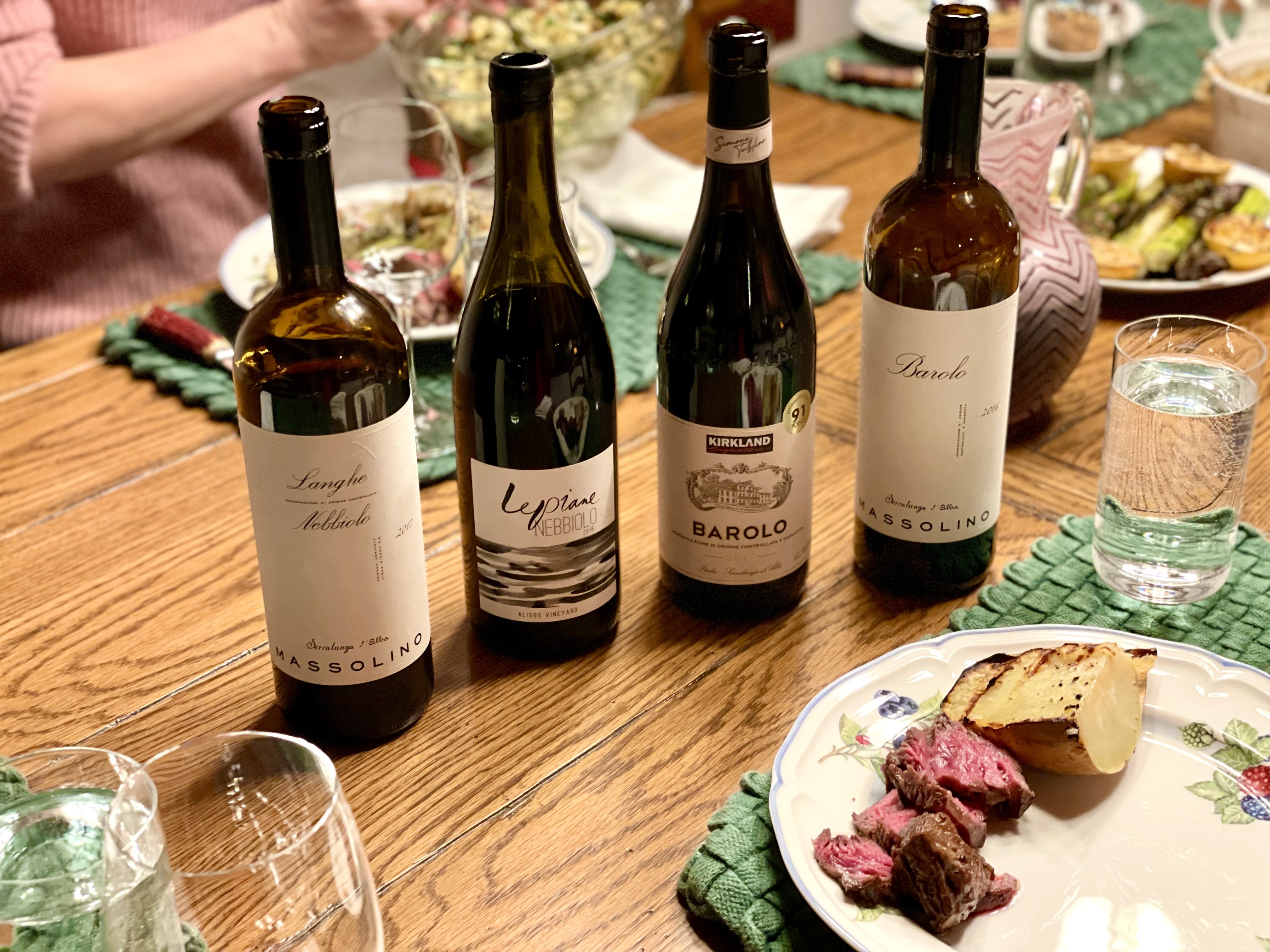
A steak dinner and a comparative tasting of four bottles of Nebbiolo – yes, please!

Please note, that some of the wines in this post were provided as media samples. No other compensation was received and all opinions are my own.


One of the great things about tasting with a group of friends is that you can open and taste a lot more bottles simultaneously without worrying that the wine will go to waste. If those friends are willing to go along with you on a wide-geeky ride, it’s also a perfect chance to do some comparative tastings. I admit that I often force friends to join me in conducting these types of experiments. Luckily, when we head off to the Culinary Cabin, only the lightest arm twisting is required. 

The Culinary Cabin is the loving name we’ve bestowed on our friends’ family vacation house in Tahoe, and the weekends we spend there tend to be all about food and wine experimentation. During our most recent trip, I “forced” my friends into a comparative tasting of four Nebbiolo-based wines “for science.” The guys in the group prepared a steak dinner to accompany the wines. Everyone was very upset.


NEBBIOLO 


Nebbiolo is Piedmont’s superstar red grape. It’s the grape behind this northern Italian region’s blockbuster wines, Barolo and Barbaresco. The grape’s trademark aromatic signature is notes of “tar and roses.” That tells you something about the combination of delicate and rustic elements this grape tends to bring together.  Tart cherries, leather, anise or licorice, earth, mushrooms, leather, and herbs are all also common flavor elements in Nebbiolo wines. I personally also often get a little orange peel in the mix. 

In addition, the grape tends the show super racy acidity and grippy tannins. While the wines tend to be deeply flavored and highly structured, the body of the wines is often sleek and can be anywhere from medium-bodied and translucent in a way that belies the punch the wines can pack in, to deep and full-bodied, depending on how it’s made and where it’s from. 

The wines often show orange color even when they’re young, but thanks to the mix of high acidity, alcohol, and tannin, the wines can easily age for decades in the bottle. In many cases, particularly in the case of Barolo and Barbaresco, the wines really need that time to chillax and can taste super tight otherwise. They’re kind of like a person that’s super anxious and wound-up in their youth, but learns to unwind and relax with age. If you don’t have the time to wait for your Barolos and Barbarescos to age in a cellar, you’ll at least want to decant them with plenty of lead time before dinner. I’ll often decant them hours in advance when I manage to think of it. The high levels of tannins and acidity also mean, in my mind anyway, that these wines are best served with a meal as these elements smooth out when enjoyed with a hearty meal. Enjoy these wines with foods that are meaty or have some fat, like creams or cheese, as these will help to calm the tannins.

We’ve taken a look at this grape several times before. Check out this post for more on the grape and this one for more on the history of Barolo. 

Nebbiolo can be a fussy grape to grow, a fact that contributes to the high prices some Nebbiolo- based wines tend to command. Nebbiolo is thought to take its name from the Italian nebbia (or nebia in Piedmontese), meaning "fog," and it really seems to relish the foggy conditions of its home region as it doesn’t seem to express itself with quite the same complexity anywhere else. (The name might also be a reference to the bloom that appears on ripe Nebbiolo berries.)

However, while it likes that fog, it also needs a good balance of sunshine as well to ripen fully, so it’s typically given the prime spots on hillsides that get the most sun exposure. It’s a diva. 

Map borrowed from Winefolly.com.

Barolo and Barbaresco might be the celebrity icons of Piedmont, however, they’re not the only show in town. It’s grown across Piedmont, as well as in Valle d’Aosta and Lombardy. While Barolo and Barbaresco tend to be pricey, thankfully, there are other Piemontese appellations making Nebbiolos that are both easier on the wallet and are approachable at a much earlier stage. Here are three: 

  • Roero DOCG – This region is just across the Tanaro river from Barolo and has sandier soil. It’s known for making high-quality Nebbiolos that tend to be lighter and a bit fruitier in style with less intense tannins.
  • Nebbiolo d’Alba DOC – This zone covers much of the territory of Roero but then extends further, crossing the Tanaro south of Alba to Diana d'Alba. It has similar characteristics to Roero.
  • Langhe Nebbiolo DOC – Langhe is the hilly subregion of Piedmont where Barolo and Barbaresco are located.  ("Langhe" is the plural form of langa, a local word for a long, low-lying hill.) Grapes that go into Langhe Nebbiolo might come from areas just outside the borders of Barolo and Barbaresco. The wines might also be made from grapes from younger vines or from less favored plots that lie within the two famed appellations. Wines not adhering to all of the requirements of the two prestige appellations might also fall into this classification. As such, these wines are sometimes thought of as “baby” Barolos and Barbarescos. Given this, prices on Langhe Nebbiolo can vary quite a bit.

Since we’re going to look at a bottle of Langhe Nebbiolo further down, we’re going to go a little deeper here. Production rules are meant to give winemakers more flexibility than they have in making Barolo and Barbaresco, so there are no minimum aging requirements and the wines will tend to spend less time in oak than in the other two. (Basic Barolo must be aged for at least three years with 18 months in oak, and basic  Barbaresco is aged for a minimum of two years with at least 9 months in oak.) Winemakers might also leave the juice less time macerating on the grapes than in the case of the other two, making a less extracted, easier-drinking style. Sometimes, winemakers use the Langhe Nebbiolo appellation simply to make declassified  Barbaresco and Barolo wines, allowing them to sell more wine without compromising their elite labels. Production rules also allow for up to 15 percent of other indigenous grape varieties, like  Barbera and Dolcetto, but most are also made entirely from Nebbiolo.


THE FOOD: A RIBEYE CAP STEAK DINNER

The guys did most of the cooking on this particular trip. One of our hosts, Northern Drew, was the head chef, Greg and Southern Drew were the sous chef. (Each Drew is so-called dependent on where in the state of California they live.) 


On this particular evening, they made a feast centered around Northern Drew’s favorite cut of beef: ribeye cap. This is the outer muscle of the ribeye roll, which is the source of ribeye. It’s richly marbled and also super tender, so it’s kind of like a ribeye crossed with a filet mignon. (For more on this cut, read J. Kenji López-Alt’s ode in its honor.)  The guys prepared it sous vide and finished it on the grill, seasoned with salt and pepper. 

In addition, they made a slew of veggie sides including grilled asparagus, roasted cauliflower topped with gremolata,  sautéed cabbage, and  roasted sweet potatoes. We also had horseradish sauce to enjoy with the beef.


It doesn’t directly relate, but there might’ve also been a Basque cheesecake prepared by my friend Dee for dessert. 


This meal did not suck. 


THE WINES


We had two Barolos (both were decanted), one Langhe Nebbiolo, and a bottle from California with this fabulous steak dinner. Here’s what was in the line-up. 


Massolino Barolo 2016
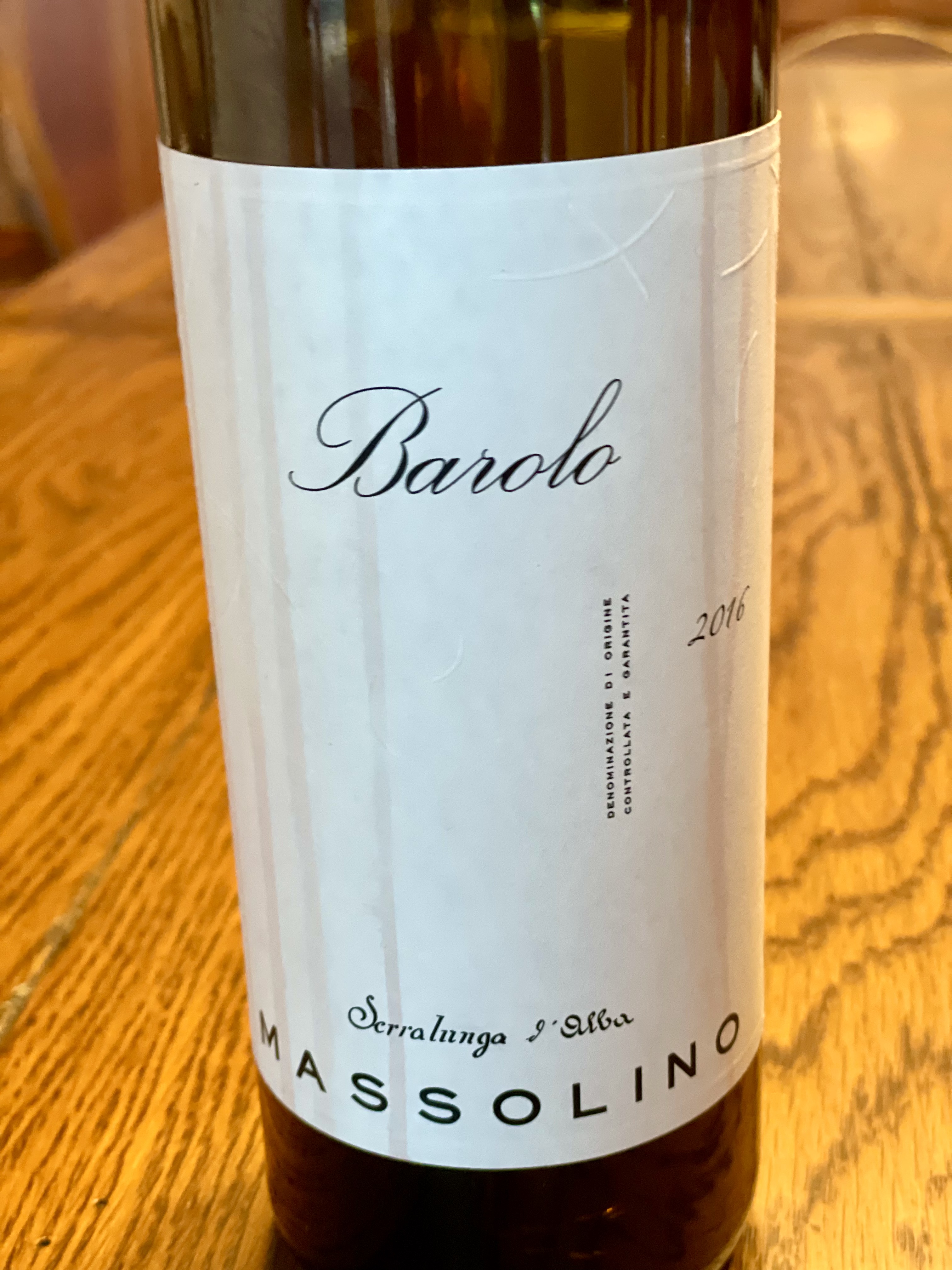

Average Price: $55 (sample)  | ABV: 14.%

The Massolino family’s history in the commune of Serralunga d’Alba dates back to 1896 when Giovanni Massolino founded the estate. Giovanni was the very first person to bring electricity to the village. His son, Giuseppe,  built their wine cellar, and he along with his sister Angela, extended the estate. Giuseppe was also one of the founders of the Consortium for the Defence of Barolo and Barbaresco in 1934. Giuseppe had six children and three of them – Giovanni, Camilla, and Renato – followed their father into the family business. They continued the estate’s expansion and purchased three of their cru vineyards: Margheria, Parafada, and Vigna Rionda. Franco, Roberto (both oenologists), and Paola represent the current generation. Their vineyards are farmed sustainably. 

Winemaking: Their Barolo DOCG represents a blend of their vineyards, each bringing different characteristics offered by each terroir. There is a blend of soils with a tendency toward limestone. This is traditional Barolo with long fermentation and maceration in oak fermenters (“tini”) at temperatures around 30°C; the wine is aged in large Slavonian oak casks for up to 30 months before being left to mature in bottle. Additional details can be found in the tech sheet here or here.

Tasting Notes: This is a classic Barolo showing the characteristic “tar and roses,” along with cherries, white pepper, and licorice. This wine showed an elegant and pretty side of Nebbiolo, showing a pleasant bright, tangy quality to the fruit, accompanied by the structure grippy tannins. One of the Drews noted that it tasted like his mental image of what he wants Barolo to taste like.  In comparison to Langhe Nebbiolo that we’ll see further down, the fruit quality was deeper, rounder, and plusher.

Pairings: This wine was generally friendly to the food on our table. No surprise, it was stellar with the steak, but it was also surprisingly ok with the asparagus, which is not a wine-friendly vegetable. 

The winery also offers the following recommendations: “It achieves its best expression when served with red meats, particularly game, and with dishes dressed with truffle. It is also excellent with fresh egg pasta and meat sauce, and with risotto, as well as medium-mature cow’s milk and goat’s milk cheeses.”


Kirkland Barolo 2017 


Price: $20 | ABV: 14%

Since Costco doesn’t share the details of the winery behind the wines, there’s no background info to share. However, as has been my general experience with their wines, this was a very solid representation of the style at a price point that can’t be beaten. The fact that it says “Kirkland” on the bottle might rule it out as an option to take to most dinner parties, but it should definitely not keep it from showing up on your dinner table. The price makes Barolo a possibility for a weeknight dinner. This is also a great option if you’d like to get an idea of what Barolo is all about without breaking the bank. 

Tasting Notes: This wine displayed the earthier side of Nebbiolo. It was the earthiest of the bunch. I picked up a little bit of brett when I first opened it up, but this quickly blew off, and then the nose became a bit shy. It showed notes of cherry, bay leaf, mushrooms, and thyme on both the nose and palate, all lifted by bright acidity. Unsurprisingly, this wine didn’t show the finesse of the Massolino Barolo, but it definitely delivers good value at $20. 

Pairings: Of course, this wine liked the steak, as they all did. However, I failed to take notes on how it went with the various veggies. This wine should also go with anything involving mushrooms.


Massolino Langhe Nebbiolo 2017


Average Price: $29 (sample) | ABV 14.5% 

The grapes for this wine come from several municipalities. As you might guess, it’s made for earlier consumption. 

Winemaking: The wine undergoes a medium period of fermentation and maceration (approximately 15 days). It ages in large Slavonian oak barrels for over a year. Additional details can be found in the tech sheet here and here.

Tasting Notes: A good representation of the fresher side of Nebbiolo. It showed notes of bright strawberries, cherries, and even a hint of cranberry on the nose and palate, along with floral notes and freshly tilled earth and stony minerality. While this was certainly a lighter expression in comparison to the Massolino Barolo, Nebbiolo’s structure wasn’t lacking and the wine still showed good density and grip.  

Pairings: Good with the steak of course, but this one paired quite well with bites involving horseradish as well. It was also quite good with many of the veggies. The wine became lighter and brighter alongside the roasted cauliflower with gremolata. 

Here are additional pairing recommendations from the winery: “Ideal throughout a meal but at its best when served with rich, tasty dishes, ranging from fresh-egg pasta with meat or vegetable sauces to grilled or roasted red meats. It is also excellent with soft and delicate blue cheeses.”


Lepiane Nebbiolo Alisos Vineyard 2015


Price: $49 (sample) 

I’ve shared a couple of wines from Alison Thomas’s Lepiane line in the past, so I’ll refer you here and here for more details on this one-woman operation in Santa Barbara, California. To be honest with you, I’m not typically the biggest fan of California Nebbiolos, but I thought it would be fun to have one in the line-up and this is usually one of the better examples, IMHO. Sadly, the wine wasn’t showing so well on this particular day, but I don’t really think it was its fault. I’d Coravin’d this bottle to AGES before and I think the gas cartridge had been running low because the fruit in the wine was a little flat, it was a touch oxidized, and overall, it lacked the vibrancy I’d previously experienced with it. 

Winemaking: Elevage occurred in a 600L neutral barrel for 33 months before being bottled without any fining or filtration. An additional 20 months of bottle aging allows this wine to show its beautifully complex nature. Organically farmed. Additional details here.

Tasting Notes: Since the wine wasn’t showing so well this evening, my tasting note is from my previous tasting of the wine. The wine reminds me of fall with notes of dried flowers, orange zest, and cranberries on the nose. The fruit is bright on the palate and joined by notes of black pepper, herbs, and the characteristic “tar and roses.”  

Pairings: It was good with the steak, of course. It was also good with the sweet potatoes, but it did not like the cauliflower. 


Go forth and explore the many sides of Nebbiolo!

*****

For more posts related to Nebbiolo, check out these posts:

  • Italian Wine 101 Cheat Sheet
  • Cooking to the Wine: Fontanafredda Barolo and Braised Short Ribs with Mushrooms
  • Touring & Dining at Marchesi di Barolo
  • An Anniversary Celebration with La Spinetta Vürsù Gallina Barbaresco and Braised Spatchcocked Duck
  • Cozy Date Night In with Gnocchi with Easy Pork Ragù


*****


The writers of the Italian Food, Wine, and Travel (#ItalianFWT) blogging group have been exploring the wines of Langhe this month. Check out their posts here:

  • Wendy Klik highlights Beef and Pork Ravioli, A Book Review and a Nebbiolo from Langhe on A Day in the Life on the Farm 
  • Camilla Mann pairs Spicy Mussels Chorizo + 2017 Villadoria Bricco Magno Langhe Nebbiolo at Culinary Adventures with Camilla 
  • Linda Whipple entices with Of Nebbiolo, Salami and a Langhe Farmer’s Dream at My Full Wine Glass
  •  Jen Martin gives us a glimpse with an Overview of the Langhe Wines at Vino Travels
  • Gwendolyn Alley introduces us to the “Queens of Langhe: Mother Daughter Duo Anna and Valentina Abbona of Marchesi di Barolo” on Wine Predator.
  • Host Cindy Rynning entices us to Explore a New-to-You Wine – Nas-Cëtta from the Langhe in Piemonte” at Grape Experiences.

Additional sources used for this post and extra reading: 

  • JancisRobinson.com
  • Wine-searcher.com
  • Winefolly.com - Nebbiolo: The Grape of Barolo and So Much More
  • NY Times.com - Your Next Lesson: Langhe Nebbiolo
  • Winefolly.com: Nebbiolo
  • Forbes.com: The Serralunga Style Guide - Barolo Power (Part One)
  • WineScholarGuild.org: Barolo Communes


Marchesi di Barolo is the home of Barolo as we know it today. We had a chance to visit, taste, and enjoy the wines with the regional cuisine.

Note: This experience was comped as a member of the wine industry. No other compensation was received and all opinions are my own. 


We arrived at Marchesi di Barolo, right in the town of Barolo itself, on a foggy, rainy day just as harvest was wrapping up in 2018. We’d just driven up from the Ligurian coast and headed straight to the winery for our appointment, and between the drive and the rain, we were a little disheveled when we got there. What a wonderful experience it turned out to be, though! We had a chance to tour the historical winery, after which we sat down to an amazing lunch pairing a selection of the wines with traditional dishes of the area. 

Luckily, the car ride and the rain didn't get us down!

I highly recommend this as a stop if you ever find yourself in Barolo as it helps to put the whole area’s history into historical context. The wines of the Barolo region are probably the most celebrated of the Piedmont region, and among the most famous of Italy in general, but they weren’t always made in the style we know them as today. The grape of Barolo is Nebbiolo and it’s known for making robust still wines that can age for many years as they’re both high in tannins and acidity. (To get to know the grape a little better, check out this post.) However, up until the early 19th century, Barolo was made as a sweet, sparkling wine. Hard to believe nowadays!

Marquise de Barol.jpg
Image borrowed from Wikipedia.

The change in styles came thanks to the vision of a French woman – Marchesa Giulia Falletti di Barolo. The Marchesa was born Juliette Colbert and married the nobleman Marchese Carlo Tancredi Falletti di Barolo in Paris 1806. The Falletti estate in Barolo dates back to the 12th century, and the couple decided to move to nearby Torino after their arrival from France after their marriage. Acquainted with the wines her birth country, Julie saw the potential for making an ageable still wine from the estate’s Nebbiolo vineyards and persuaded her husband to do so. She had an intuitive understanding of the grape and the land, and their estate’s wines became known as “the wine from Barolo”, and became renowned. 

Barrel with the family crest at Marchesi di Barolo.

The couple never had children, but both were both very philanthropically inclined and viewed the poor as their adopted children. Julie had grown up during the French Revolution and been scarred by the atrocities she’d seen affecting people of all classes. Falletti had had similar ideals about justice and a desire to do good from a very young age, so the couple seems to have been very well matched in this respect. Together, they established schools, funded projects to improve and beautify Torino, set up organizations to help the poor, and co-founded the Sisters of Saint Anne which was dedicated to education and tending to the poor and those in prisons. After her husband’s death, Marchesa Giulia continued to do philanthropic work for the rest of her life and founded an orphanage near the winery in Barolo. Since the couple died without an heir, per the wishes of Marchesa Giulia, the family assets were donated to charity and a non-profit foundation was created in their name, “Opera Pia Barolo”, helping the needy of Torino. Proceeds from the wine from their Barolo vineyards continue to fund the charity today. 

In 1929, local winemaker, Pietro Abbona purchased the cellars formerly owned by the Marchesi and eventually acquired all their vineyard holdings as well. Since 2006, The estate has been under the direction of Pietro’s great-grandson and fifth-generation winemaker, Ernesto Abbona and his wife Anna, along with their two children. Today, the estate encompasses approximately 430 acres of vineyards in the Langhe which are sustainably farmed. The cellars are located in the village of Barolo, overlooking the Renaissance castle of the Marchesi Falletti di Barolo.

Here are a few more images from our visit:


The winery has extensive offerings and after our tour of the winery, we had the chance to taste quite a few alongside regional dishes. This was such an amazing experience, and the pairings really demonstrated how different wines can work wonderfully with the same dish while highlighting different elements of that dish. Even wines from the same grape but from different sites or cuvées will express themselves in diverse ways that work with the food in distinctive ways.


Join me in reliving this meal and get to know some of the expressions of Piemontese grapes.


Course One: Vitello Tonnato with Gavi and Roero Arneis

Vitello Tonnato is a dish typical of the Piedmont region, and of Northern Italy in general. (You can find a version of it in this post.)  It involves cold slices of veal covered with a creamy tuna sauce. It might sound odd at first, but it’s really good! Think of it as a light surf and turf served on one plate. It paired beautifully with their white wines, although it brought out different aspects of each wine. 

Gavi 2017 


100% Cortese | Average price across vintages: $21 

Tasting notes: It showed notes of gold apples, lemon, green melon, and white flowers. There was a light, pleasant bitter note on the finish. It was light-bodied but had some almond-like roundness on the mid-palate, making it an easy-drinking wine with some layers.

How it worked:  The food resonated with the freshness of the wine, and more mineral notes came out alongside the tuna and capers.

Other pairings recommended by the winery:  Classic wine for delicious appetizers, seafood and fish. Thanks to its structure and minerality it is the ideal companion for rice salads, vegetable pies, light first courses and seafood dishes. It goes well with fresh soft cheeses.

Roero Arneis 2017


100% Arneis | Average price across vintages: $19

Tasting notes: Gold apples, melon, beeswax on the nose. It showed deeper fruit and headier floral aromas, such as honeysuckle, when compared to the Gavi. On the palate, crisp green apples, herbs, and white flowers also joined the party. 

How it worked: The wine expressed deeper, fruit flavors next to the food, with the more rounded green melon notes coming out. It resonated with the creamy texture and body of the dish.

Other pairings recommended by the winery: It is traditionally combined with delicate appetizers but with intense flavors such as veal with tuna sauce, flans, pasta with vegetables, rice salads, stewed, boiled or baked white meats. It is an ideal companion for raw or marinated fish.


Course 2:  Ravioli del Plin with Two Barberas and Two Barolos


Ravioli del Plin, also called Agnolotti del Plin, are a type of pasta typical of the area that are usually filled with meat. Plin means “pinch” and the pasta get their name from how they’re sealed shut. We usually saw them topped with a simple butter sauce or a light gravy-like sauce. Here they were topped with butter and sage. We fell in love with these at this meal. Greg in particular, as he went on to order them at every meal he possibly could while we were in the region. 

These paired beautifully with their Barbera wines, and again, each worked with the dish in a different way. In this case, they essentially worked in opposite ways, but both were delicious. (I’ve covered Barbera before, so please check out this post for more on this grape.)

One more pic of the plin since we loved them so much.


Barbera d’Alba Ruvei 2016


Blend: 85% Barbera, 15% Nebbiolo | Soil: Clayey limestone soils, alternating with layers of marl. | Aged for 6 months in Slavonian Oak. |  Additional info here | Average price: $21

Tasting notes: This wine was very fresh and pretty on the nose, with notes of strawberries, cherries, and flowers. It was light, fresh, and elegant on the palate as well, with the bright red fruit notes, pink flowers, light stones, and a hint of spice. 

How it worked: This wine remained very much itself with the food, not changing very much in the pairing, but providing a fresh juxtaposition to the richer element in the dish. This is the wine to pick if you want to refresh the palate between sips or if it’s a warmer day.

Other pairings recommended by the winery: A wine for the whole meal, complete on every occasion. It goes well with tasty appetizers, first courses with rich condiments and main courses of meat, boiled or roasted, but it also exalts the traditional soups. It is the ideal companion for snacks with fresh cold cuts and hard cheeses.


Barbera d’Alba Peiragal 2016


100% Barbera |  Soil: Calcareous Sand, Clay, from a rocky slope. |  Aged for 1 year in barriques. |  Additional info here | Average price: $25

Tasting notes: This was a deeper and spicer expression of Barbera. It showed notes of red plum, raspberry, black cherry, and sweet cigar smoke on the nose. Moist tobacco, vanilla, and spices all joined in on the palate. Greg noted a candied ginger note as well. I’d bet that if you want a Barbera to age, this would be a good choice.

How it worked: This wine grew more velvety and luxurious with the Plin, matching the silky texture of the butter sauce. This is the wine to pick if you want to bring out the richer side of the dish, or to combat a chilly day. 

Other pairings recommended by the winery: It goes very well with typical Langhe appetizers, veal in tuna sauce and vegetable flan, with first courses with rich condiments and second courses of meat, boiled or roasted, but it also exalts the traditional soups. It is the ideal companion to moderately seasoned tome and hard cheeses.


Barolo Tradizione 2013


Grapes for this wine come from vineyards in Castiglione Falletto, Barolo and Monforte d’Alba | 2 years in Slavonian Oak, and then continues to age in bottle before release. | Additional info here | Average pice: $49                                                  

Tasting notes: This wine showed notes of tomato leaf, red plum, and tobacco on the nose. On the palate, these flavors were joined by orange skin, and black tea. 

How it worked: The wine became more velvety and silky alongside the food, similar to how the Barbera Peiragal worked.


Barolo Commune di Barolo 2013


A blend of their historic estate vineyards – their “grand crus" – within the municipality of Barolo, namely: Cannubi, Sarmassa, Coste di Rose, Castellero, Boschetti, Preda, Vignane and Ravera. Each is vinfied separately and aged in small oak barrels, then it is blended in traditional large Slavonian oak, and finally aged for another year in bottle. We were told that this was the chef’s favorite. |  Additional info here | Average price: $50

Tasting notes: On the nose, it showed aromas of roses, cinnamon, black tea, and cherry. More savory notes of tomato leaf and dried herbs came in on the palate. 

How it worked: Even more herbs came out when combined with the food, and the wine seemed to grow more robust in the pairing. 


Course 3: Slow-cooked Veal Shoulder Cooked in Barolo with Veggies and a Parade of Barolos


Here we have a dish with deeper, meatier flavors to go match a few different Barolo cuvées.


Barolo Sarmassa 2013

This comes from the same stony vineyard as the Barbera d’Alba Peiragal. The soil is made up largely of clay and limestone, but with a lot of rocks and stones mixed in.  These soils produce more compact grapes, but they tend to ripen evenly and show greater intensity of flavor.  We were told that the name means something along the lines of “the fighter” for the struggle the vines have to go through. The wine is aged for two years, a part in Slavonian oak barrels and the other part in French medium-toasted oak barrique. The two parts are then blended in traditional big oak barrels and the wine completes its fining in the bottle before release.  |  Additional details here | Average price: $126  ($87 across vintages)                                                                                                                                   

Tasting notes: The wine showed notes on the nose of steeped black cherry, a touch of caramel, and black tea. It was more savory on the palate with lots of herbs joining in, as well as black licorice. 

How it worked: This was wonderful with the veal shoulder and the herbal notes in the wine resonated beautifully with the food. 


Barolo Coste di Rose 2013


This comes from a slope with a 40% incline, with moderately calcareous soils that are rich in quartzite sand, fine limestone and just a small amount of clay. These soils produce a lighter, more aromatic wine. They think of it as their “Summer Barolo.”  |  Additional details here |  Average price: $48                                                                                               

Tasting notes: This was a very elegant expression of Barolo with notes of raspberry, black cherries, black tea, and flowers on the nose. Tobacco, orange peels, and cloves came out on the palate. 

How it worked: The wine helped lighten the food and refreshed the palate. Notes of licorice also emerged when sipped alongside the food. 


Barolo Riserva 2010


The grapes for this wine come from their best estate vineyards. The wine is aged for 3 years in the traditional Slavonian oak casks. The wine is then aged an additional 3 years in the bottle prior to been released under the name of Riserva. | Additional details here  | Average price: $106  ($78 across vintages)                                                                                                 

Tasting notes: It showed lots of tobacco notes, cherries, orange peel, and rose petals on both the nose and palate. There was also an element of black tea that had been steeped for just long enough, as well as hints of clove. 

How it worked: The wine had a velvety texture and grew even more so with the food. A magical combo! 


Other pairings recommended by the winery for their Barolos: Goes perfectly with traditional egg pasta from Langhe, tajarin and ravioli del plin; with roasts, boiled, braised and with game. It is the ideal companion for goats and aged hard cheeses.


Dessert:  Panna Cotta with Fruit Gelée and Moscato 


Moscato d'Asti Zagarra 


Additional information here | Average price: $16

Tasting notes: This wine had a beautiful nose of orange blossoms and a touch of cream on the nose. On the palate, there were honeysuckle blossoms and apples. It was lovely and delicate, with a pleasant sweetness.  

How it worked: The wine became more floral and light paired with the panna cotta and fruit gelée. Some of the sweetness dissipates a bit and the flavors of the wine and fruit blended together beautifully. 


Other pairings recommended by the winery: This sweet and aromatic wine goes well with desserts at the end of a meal and the classic hazelnut nougat. Ideal companion in moments of celebration, it is a pleasant thirst-quenching drink at any time of the day, especially after sports.

*****

For another expression of Nebbiolo, check out An Anniversary Celebration with La Spinetta Vürsù Gallina Barbaresco and Braised Spatchcocked Duck.


And for more posts related to our Italian road trip check out:

  • Exploring Castello di Brolio & On Location Pairings From the Home of Chianti Classico
  • Cooking to the Wine: Barone Ricasoli Brolio-Bettino Chianti Classico & an Italian Twist on Pulled Pork  
  • Classically Contratto: Beautiful Wines from Italy's Oldest Sparkling Wine House
  • Contratto Millesimato and Vitello Tonnato Two Ways
  • One Afternoon in Lugana at Podere Selva Capuzza 
  • The History of Amarone at Cantina Valpolicella Negrar, and Domìni Veneti Amarone Classico with Decadent, Braised Lamb Shanks    
  • The Sweet Side of ILatium Morini: Sette Dame Recioto di Soave Classico with an Old-Fashioned Strawberry Cake 
  • Cooking to the Wine: Pezzuoli Lambrusco Grasparossa di Castelvetro with Antipasto Pizza 
  •  Brunello, a Book, and a Boston Butt: Frescobaldi CastelGiocondo Brunello di Montalcino with Italian Braised Pork
  • An Afternoon at CastelGiocondo
  • Lunching and Tasting at Fattoria dei Barbi


*****

The rest of the Italian Food, Wine, Travel (#ItalianFWT) blogging group is exploring the wines of Barolo. Be sure to check out the rest of their posts:

  • Barolo in His Blood: Aldo Clerico and Bagna Cauda by Gwendolyn, Wine Predator
  • Beef and Mushroom Pie with a Renato Ratti Marcenasco Barolo 2017 by Wendy of A Day in the Life on the Farm
  • Beef Pie and Barolo Wine by Terri of A Good Life
  • Cascina Bongiovanni Pernanno Barolo con Bistecca Tagliata by Li at The Wining Hour
  • Family Favorites: Spaghetti Bolognese + Bruna Grimaldi Camilla Barolo 2016 by Culinary Adventures with Camilla
  • Touring & Dining at Marchesi di Barolo by Nicole at the Somm's Table
  • Visiting with An Old Friend, Barolo from Ciabot Berton by Susannah at Avvinare
    Older Posts Home
    View mobile version

    INSTAGRAM

    Sign up for my mailing list!

    Subscribe

    * indicates required


    Somm's Table 2017