Somm's Table

Perfect pairings from the other side of the equation.

  • About
  • Front of the House
  • Back of the House
  • Contact Us
Powered by Blogger.

 A creamy sauce made with braised fennel, orange, pancetta, and shrimp is a decadent match for Duca di Dolle BRT Prosecco di Valdobbiadene Superiore Brut. Plus, discover #WhatsYourProseccoSuperioreStyle and win.

– SPONSORED POST –
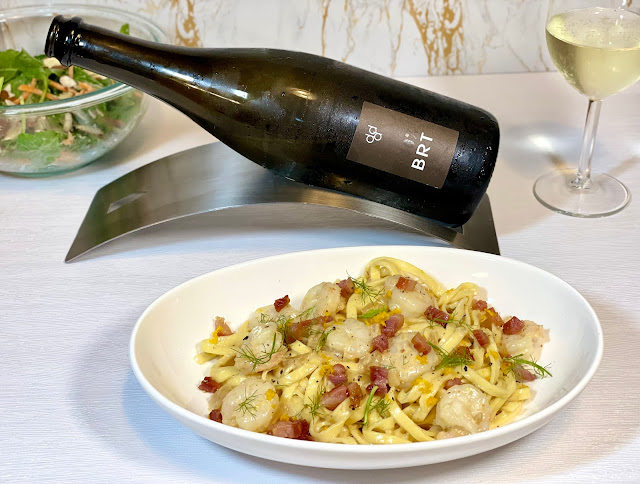


It’s always exciting when I conceive of a pairing, and it turns out EVEN MORE delicious than I expected. 


I created this recipe for a partnership with Conegliano Valdobbiadene Prosecco Superiore DOCG for an Instagram post to help spread the word about a recipe contest that’s currently underway –– scroll down for details. The pairing turned out so well that I just had to share it here as well. 


I’ve shared several posts in the past detailing the Prosecco quality pyramid, check out this post for more background. To put it simply though, Conegliano Valdobbiadene Prosecco Superiore DOCG is the original production zone and historical home of Prosecco. It’s a much, much smaller region than the wider Prosecco DOC area, which spans nine provinces in Veneto and Friuli Venezia Giulia regions. By comparison, wine under the Superiore DOCG zone must come from one of 15 small, specific communes. To make a long story short, over time, the Prosecco zone was widened so that producers could grow more grapes to keep up with demand, but the highest quality wine still comes from grapes grown in the steeply hilly terrain of the original, historical growing area. 


My task was to create a recipe to match Duca di Dolle BRT Prosecco di Valdobbiadene Superiore Brut. Many people might realize it, but Prosecco comes in a full range of sweetness levels ranging from Extra Brut, Brut, Extra Dry, and Dry. Here are the details on the grams of residual sugar per liter  for each of these typologies: 


Extra Brut:  0 - 6 g/l

Brut: 0-12 g/l

Extra Dry: 12-17 g/l 

Dry: 17-32 g/l 


This wine is Brut which is intended to be a crowd-pleasing style that can work easily throughout a meal. When comparing it to traditional method sparkling wines, like Champagne, the main flavor difference is that they will not have the toasty, nutty, brioche notes that you’ll find in those wines. The production method used to make these wines, known as the Martinotti or Charmat method, instead highlights the aromatics of the grapes themselves, bringing out the fruit and floral notes, as well as light hints of herbal flavors. The Brut style will show off the more vibrant citrusy aspects of Glera, the grape of Prosecco,  along with lightly herbal notes, all will a fresh, crisp finish. 


Duca di Dolle 


Blend: 90% Glera, 5% Verdiso, 5% Perera  |  Average Price: $10 | Abv: 11.5%


Duca di Dolle is a young, sustainably-minded company owned by the Baccini family. All grapes are grown on their 100-hectare estate (25 hectares are dedicated to vineyards, and 75 are woodlands and meadows) located in Rolle, in the municipality of Cison di Valmarino. The estate also boasts a 16th-century monastery that has been converted to a relais to host guests. 


When we opened the Duca di Dolle BRT Prosecco di Valdobbiadene Superiore Brut we were greeted with aromas of white flowers, lemons, white peach, and minerals on the nose. The fresh white flowers and crisp fruit notes continued on the palate, and the minerality turned into pronounced salinity. It was a very elegant and refreshing wine.


Find additional details on this wine here.


The Pairing:  Creamy Fennel Pasta with Orange and Shrimp 


Several ideas wound themselves together when I was conceiving a pairing for this wine. In the past, I’ve had good luck pairing Prosecco Superiore DOCG with Pasta Carbonara, and the Brut style works particularly well with creamy dishes since the bright citrusy notes help to cut through the unctuous quality of these types of dishes. At the same time, I was thinking that the combination of fennel and herbal would highlight the fruity, floral, and herbal notes in the wine. If I brought in a seafood element, like shrimp, it might also serve to tease out more of the wine’s minerality. I decided to put it all together.


I took inspiration from a recipe my husband and I fell in love with a while ago for Fennel Braised in Cream from Gabrielle Hamilton’s Prune cookbook. Through this recipe, we discovered the delicious caramelized flavors that can come from fennel when it’s been cooked slowly and just how magically those flavors can work with cream. 


Putting it all of these ideas together, I decided to chop up the fennel and cook it stove-top and basically treated them like I would onions that were being caramelized, adding orange juice during the cooking process. Toward the end of cooking, I added Parmesan, cream, and shrimp then topped it all with pancetta, and tossed it all with fresh linguini. The results were incredibly decadent. We could not get enough and it was fabulous with the wine! The bright, crisp fruit and saline minerality cut right through the richness of the pasta dish and highlighted the citrus and herbal notes from the orange and fennel.   


Scroll down for the recipe. 


#WhatsYourProseccoSuperioreStyle Recipe Contest


As I alluded to earlier, I created this dish for an Instagram post promoting a contest Conegliano Valdobbiadene Prosecco Superiore DOCG is having to promote the food friendliness and versatility of the wines, in addition to highlighting the different typologies, or categories. 


There are still a few more days left in the contest period, and it’s open for anyone in the US to participate. Simply put, all you have to do is create a recipe – it can be SUPER simple – and share it on Instagram. 


That’s the basic gist, now here are the detailed instructions: 


·  Post a recipe by 11/13/22 featuring wine from Conegliano Valdobbiadene Prosecco Superiore DOCG – be sure to check the label! Static images and videos are both fine. The full recipe can be shared via the post, or the post can point to a blog post with the complete instructions.


·  Get to know the typologies. Wines should be from the Extra Brut, Brut Millesimato, or Extra Dry typologies, and let us know why you love that style. Find more details on each at www.prosecco.it/en .


·  A successful entry will: A successful entry will: 

1) Share information on the typology. 

2) Describe why the pairing works. 

3) If you use a glass in the shoot, please be sure it is an all purpose white wine glass – it’s best for releasing the wine’s aromas. 

4) Tag @proseccocv, the respective producer, and @alltheswirl. 

#proseccosuperiore

#proseccoelevated

#coneglianovaldobbiadene

#alltheswirl

#whatsyourproseccosuperiorestyle


MUST BE OVER 21 TO ENTER


A winner for each of the 3 typologies will be announced in December.


******


*****


Check out these posts for more on Prosecco:


  • Three Nights of Prosecco Holiday Fun: Carbonara, Sabering, Friends, with a Side of Pear Endive Spears
  • Cooking to the Wine: Sorelle Bronca Extra-Dry Prosecco di Valdobbiadene Superiore DOCG with Poached Chicken with Pears and Gorgonzola
  • The Wide World of Italian Bubblies
  • Wine Geek Thanksgiving
  • Around the World Pét-Nat Party!
  • Italian Wine 101 Cheat Sheet


It’s a bright, sunny day outside in the Bay Area as I look out my window while writing this post. Sure, you still need a jacket on hand most of the time–but that’s true most of the year here. Spring is in full swing and has been for a while. These lovely sunshiny days calls for lighter fare and crisper wines. Cue: enter Picpoul Blanc.

This is a bright, zippy white grape that hails from the south of France. One can see right away how this grape would match perfectly with the coastal, Mediterranean cuisine of the region–it tends to have vibrant citrus flavors, sometimes laced with pretty floral notes. Its natural mouthwatering acidity gives the grape its name which translates as “stings the lip." Alongside that acid, these wines still tend to have body, with a roundness that gives them a tangy quality. It’s absolutely perfect for quenching your thirst on a hot day, not the least because Picpoul wines (also spelled Piquepoul) tend to be available at extremely wallet friendly prices.

The AOC Picpoul de Pinet is devoted entirely to this grape and is the largest white wine appellation in the Languedoc. I’ve covered several other wines from the Languedoc (like this one on
Corbières and Minervois) but this appellation runs along the coast, separated from the Mediterranean Sea only by the Bassin de Thau, an 11 mile long  lagoon. The area is not all that large but it has varied topography that grows more jagged and hilly as you travel north, and rolls more gently as you approach the sea. Apparently, the climate here is so mild and lovely that flamingos happily make it there home–some don’t even bother traveling during the winter months.

It would seem that Picpoul seems content with the region as well, since it’s been a resident for quite a long time. According to Jancis Robinson’s Wine Grapes, the earliest mention of Picpoul Blanc was in 1667. (Mentions of other versions of Picpoul go back further.) The soils in the area tend toward limestone and alluvial soils, with some significant sandy patches. It’s a good thing too that Picpoul likes the sand–this helped it survive the devastation of phylloxera, as this little bug does not care for sand at all.

Picpoul does also come in Noir and Gris varieties as well. The Gris version is nearly extinct, but the Noir is commonly used in blends. (I briefly mentioned a really fun varietal Picpoul Noir bottling in this post.)


THE PAIRING

Our wine today is the Font-Mars Picpoul de Pinet 2016. This was sent as sample for participation in this month’s French Winophiles event, and I was excited to receive it as I was already familiar with Font-Mars’ Rosé (read about it here) and bought several bottles throughout the summer last year for tasty, budget friendly refreshment.

Font-Mars is a family estate in an area where the co-ops dominate.The de Clock family, who own the estate, originally came from Holland. Jean Clock first came to France and settled in Bordeaux in 1679 and cultivated vines in that region. Several generations later,  Leon de Clock married Camille de Vulliod. Le Château Font-Mars (and there really is a beautiful Château) had been owned by Camille’s family. Leon undertook the management of the vineyards and domaine, and now their son Jean-Baptiste de Clock owns and manages the estate. 


Greg and I picked up notes of lemon, both zest and juice, green apple, and white flowers on the nose, with a little pink grapefruit, as well as white peach. It was rounder on the palate with more peachiness and floral notes. There were tangy Meyer lemons in the mix alongside the grapefruit and lemon, with notes of honeysuckle, and unsweetened canned pineapple juice. It was racy with medium+ acid, a supple medium body, and very moderate alcohol at 12.5%.

We definitely were feeling seafood for this wine, however, we thought it would hold up to something with a little more weight like tuna or salmon. The roundness of the texture also had us thinking of the sweet, creamy texture of certain shellfish like calamari, shrimp, or scallops. I liked the idea of something fried with this as it had body as well as acidity.

I landed on crab cakes for this meal. I kept them pretty simple but added lemon and orange juice and zest to capitalize on those notes in the wine, as well as a smattering of light, fresh green herbs. These crab cakes became low-carb by total accident. I’d run out of breadcrumbs and used almond flour as a substitute. The nutty component turned out to be a lovely complement in flavor. Note, however, that while the crab cakes had a wonderful light yet meaty texture, they were on the delicate side, so handle them gently.


Note: Bottles were sent as samples for participation in this event. No monetary compensation was received and all opinions are my own.

We wanted something fresh and bright to accompany the crab cakes. Greg thought of bringing in green apples and shaved fennel, for that lightly floral licorice-y quality it has, and tossed it all with some carrots and green in a simple lemon dressing.

Because crab cakes jut scream for that extra bit of dipping sauce, I opted to make a rémoulade––well, two rémoulades actually. I couldn’t decide between the more herby-briny French version, and the spicier Louisiana version, so I made both. The French version  (pictured) was probably the better match, but we also just liked the little kick of spice from the Louisiana style and ended up kind of mixing them together on the plate. 


This meal worked so well together! In this case, the combo really elevated the wine, taking it up a notch from a simple table wine. Greg said he thought it might have been the most he’d ever enjoyed a crab cake. It’s possible he was trying to flatter me, but I happily took the compliment. 


THE GEEKY DETAILS


Taken from the producer’s website:

Terroir : Clay and chalk
Grape variety : Picpoul
Harvest : White grapes are picked with full organoleptic maturity in the middle of September, at night in order to preserve all their qualities of coolness.
Winemaking : De-Stemming cold pellicular maceration, pneumatic pressing, racking of the must and fermentation at low temperatures (15°-17°C/59°-63°F) during 20 days with daily control of specific gravities. Fining and filtration before bottling in the domain.

Drink within 2 years, serve between 12° and 14° C/ 54°-57°F.


MONEY TALK


The SRP on this is $15 (Wine-Searcher.com has the average price at $13) making this a very easy House Wine to enjoy all spring and summer long.  


OTHER POSSIBILITIES


I’ve already listed a few of the other dishes we considered above, and it’s no surprise here that the producer recommends this with seafood or as an aperitif. Languedocadventure.com also notes that Picpoul, “neutralizes the salt and iodine in shellfish and other crustaceans, and are also surprisingly good with rich cheeses and charcuterie.”

In addition to this sample, I also received the Domitia Picpoul de Pinet 2016, which we had the same night we got them with sous vide salmon in butter-garlic-herb sauce with potatoes and leeks (find that recipe here) and that also worked quite well. Here is my Instagram post on @NibblingGypsy of that meal.


Have been exploring #PicpouldePinet — zingy, easy drinking whites that are perfect for everyday drinking since they typically don’t break the bank. Here we paired one from #Domitia (#sample) w #Salmon topped with a garlicky butter sauce with leeks and potatoes. Check out @thesommstable tomorrow for a recipe paired with another #Picpoul. . . . The wine was really crips with green and gold apples. lemons, white flowers, a little green melon, lemon zest, and light green herbs. . . . The French Winophiles will also be discussing this grape on Twitter tomorrow morning at 8 am PT/ 11 am ET. Join us by following #Winophiles @languedocwines #languedocwines. ___________________________ #wine #vino #winestagram #winegeek #winenerd #corkdork #winelovers #winelover #winepairing #drinkwine #wineanddine #forkyeah #homecooking #foodgawker #foodandwine #wineoclock #zipkick #foodietribe #fabandfrugal #sommstable #salmon #seafood #winelife
A post shared by Nicole Ruiz Hudson (@nibblinggypsy) on Apr 20, 2018 at 12:22pm PDT


For another wine option, pick a white or rosé wine that has vibrant fruit with lots of acidity, that also has some body.

If you try this wine with another pairing you really enjoy, or vice versa, please share. I always want to hear from you!


Older Posts Home
View mobile version

INSTAGRAM

Sign up for my mailing list!

Subscribe

* indicates required


Somm's Table 2017