Somm's Table

Perfect pairings from the other side of the equation.

  • About
  • Front of the House
  • Back of the House
  • Contact Us
Powered by Blogger.

We're exploring Hunter Valley Semillon from Tyrrell's, a benchmark producer and historical winery, paired with salmon steaks marinated in Australian flavors. 


Last month we started an exploration of Australia’s Hunter Valley with a trip down memory lane of the brief months we spent living in Sydney and a visit to Hope Estate. Today we’re continuing the journey with a look at my other favorite stop from the visits we made to the Hunter Valley: Tyrrell’s.

It was hot and muggy out when we visited Tyrrell’s Wines on Christmas Eve in 2009. Walking outside felt like moving through soup. My mother-in-law Carolyn and my good friend Marc were both visiting, taking advantage of the final weeks of our stay in Oz. Thinking that wine tasting would be an activity that could please everyone in the group, we headed up to the Hunter Valley, but the intensity of the summer’s heat and humidity was formidable and it did us all in. We ended up cutting our day short and I recall us all being kind of grumpy and sticky on the drive back to Sydney. The fact that Tyrrell’s stands out as a bright spot in the day says a lot. The wines were good enough to cut through all the bad moods and stuck in my memory as my favorite winery visited during our time in New South Wales. 

Marc, Greg, and Carolyn at Tyrrell's on the day we visited. Everyone has a bit of a sheen from the heat, but we hadn't yet melted at this point in the day.

Happily, these days I’m also able to fairly easily find their wines stateside. 


HUNTER VALLEY’S TERROIR


Last month we took a look at the history of Australia’s oldest wine region – check out this post for more background. This month we’ll take a look at the terroir. 

Hunter Valley’s climate is a bit of an anomaly for a wine region. We simply weren’t unlucky in picking an unfortunate day to visit the area – the heat and humidity are defining characteristics of the region’s climate. This isn’t a combo you usually look for in a fine wine region. Grapes like a temperate climate that allow them enough heat and sunshine to allow them to ripen, balanced with time to cool off so as to maintain acidity. Grapevines also shut down in extreme heat.  For this reason, most fine wine regions sit between 30° and 50° latitude. The Hunter Valley is right at the edge of this range, sitting at a latitude of 32/33°S.

Zeroing a bit further. Map courtesy of Wineaustralia.com.

Wet conditions can also bring problems. First off, disease pressures from things like molds and fungus go up in wetter conditions. Also, if grapes take in a lot of water from rain close to harvest time, the juice inside can become diluted and less flavorful. 

Luckily, there are several mitigating factors to help conditions in the Hunter Valley. Cloud cover and gentle breezes from the Pacific Ocean tend to roll into the area from the coast in the afternoon. Evenings also grow cooler during the fall and winter. It also tends to rain quite a bit during the growing season, which also helps to cool things off and give the grapes a break. Thankfully, most of the rain comes during the summer, although rain at harvest can definitely be a problem. As you might guess, climate change is also a definite concern in this area.

This image is of Tyrrell's Old Patch Vineyard (borrowed from their site). It was planted in 1867, making it almost 150 years old. It is the oldest vineyard in NSW and one of the oldest in the world. 

The terrain for most of the Hunter Valley is made up of gently sloping hills with the Hunter River and its tributaries running throughout it. Many of the most prestigious vineyards are located in the foothills and valley of the Brokenback Range, which is part of the Great Dividing Range. The terrain of the Upper Hunter area is considerably flatter than other sections. The Goulburn River (a major tributary of the Hunter) runs through the region and helps to provide water for irrigation in the drier parts of the region. 

The Hunter Valley sits on an ancient seabed, giving it rich and diverse soils. Volcanic soils also run through various parts of the region. Pokolbin, where our winery today is located, has red volcanic soils on sites on higher ground that is particularly good for Shiraz. White grapes like Sémillon and Chardonnay tend to be planted on white sands and loam located on the lower ground. 


A BIT ABOUT SÉMILLON

Semillon wine grapes.jpg
Image of Sémillon grapes borrowed from Wikipedia. 

Sémillon is an interesting grape. Wines made from this variety tend to undergo complete personality changes as they age, even more so than most other grapes. When they’re young, the wines show lots of citrus, green apple, and peach, along with notes of blanched almond, beeswax, or a lanolin component that gives the grape a lot of texture and mouthfeel.  As the wines age, the flavors deepen and become riper, deeper, honeyed, and more tropical, and the nutty flavors become toastier. They’ll also often start to taste like they spent time in oak, even when the wine never got close to a barrel. 

The Hunter Valley is a benchmark region for the grape. (In general, we look to Bordeaux and Australia for the premier examples of this variety.) The style the Hunter Valley is known for doesn’t seem like it should be possible under the growing conditions – super zesty, bright, and crisp. The typical Hunter Valley Sémillon (HVS) is picked early, handled gently to reduce skin and seed extract, fermented at cold temperatures in stainless steel, and is then transferred to bottles as soon as fermentation stops. As a result of being picked early, the wines tend to be lower in alcohol – around 10 to 11%. Wine Australia describes the HVS in this way:

When first bottled, Hunter Valley Semillon is almost water-white in appearance with aromas of citrus, grass, straw, lanolin, and subtle green herbs. It’s crisp and delicate with a chalky minerality. Patience pays great dividends, however, and the finest examples with high acidity and low alcohol transform after as little as five years in bottle, revealing honeyed, toasty, grilled nut characters – almost as if the wine has spent time in oak (even though it hasn’t). It’s these wines that make Hunter Valley Semillon one of the wine world’s great collectible wonders. Prices of these age-worthy Semillons are well within reach of most wine lovers and, under the right conditions, the transformation that occurs over time is substantial. The key point of difference in aged Hunter Valley Semillon is that the best examples will retain an identifiable stamp of primary fruit and a nucleus of fine acidity even after decades in the cellar.

The acidity is so racy in Hunter Valley Sémillons that they were often referred to as Hunter Rieslings – don’t let this confuse you, it is a different grape. The typical style here is dry, however, the grape is susceptible to botrytis and the humid conditions in many parts of the Hunter Valley are perfect for it, so excellent sweet versions are also made here.  


TYRRELL’S WINES
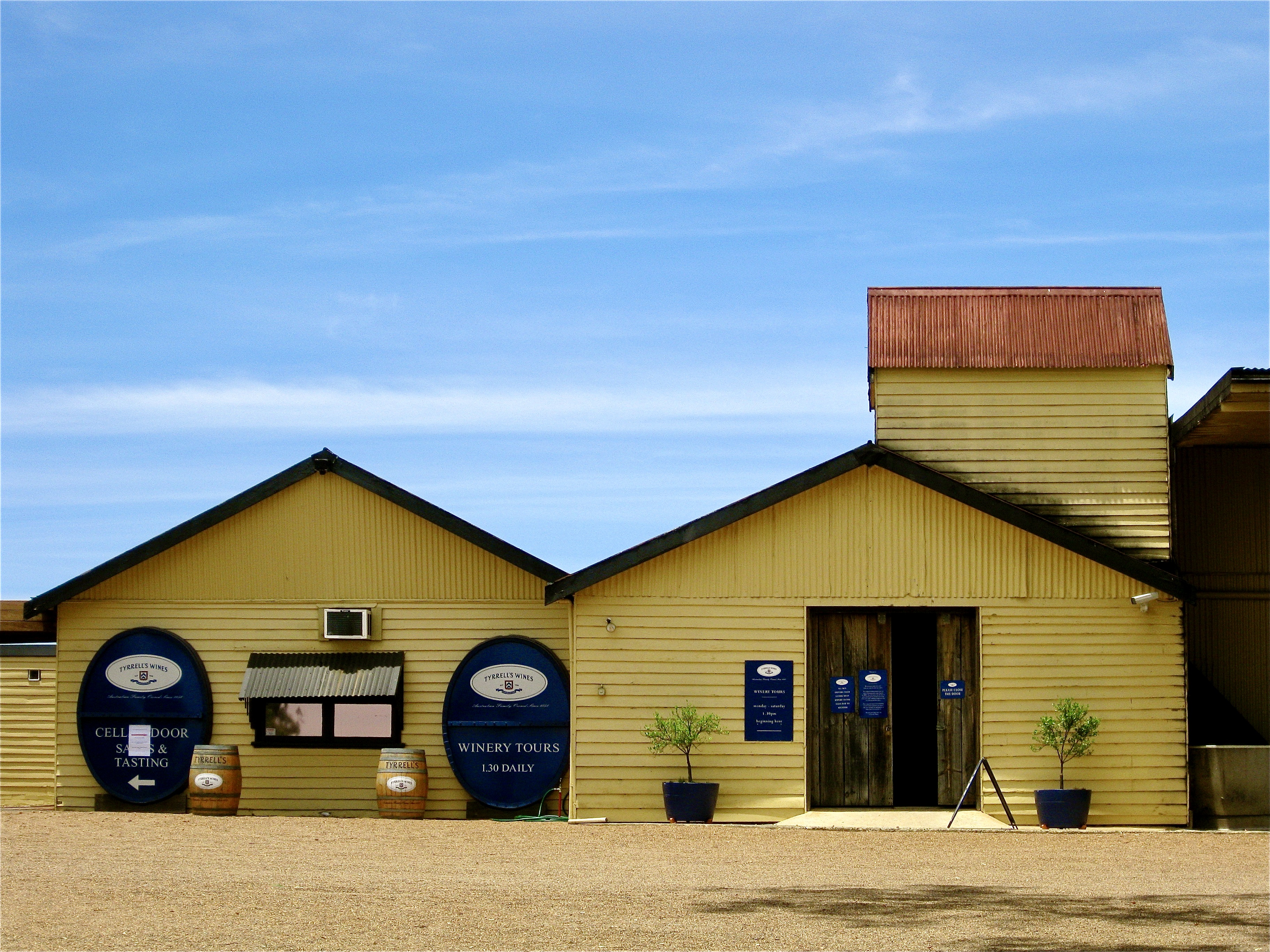


Tyrrell’s history dates back to the early days of wine production in the Hunter Valley, and by extension, Australia. It shares the position of being the second oldest continuously owned and operated family winery in Australia. Edward Tyrrell settled on the original property and began planting Shiraz and Sémillon in 1858. He harvested the grapes for his first vintage in 1864. The company has been handed down through four generations and is now managed by Bruce Tyrrell. He began working at the winery in 1974, at the age of twenty-three alongside his father Murray. 

Throughout his long career, he has become a major force in Australian wine. In 2006, Bruce Tyrrell was recognized with an Order of Australia medal for his contribution to the Australian wine industry; improving grape quality, research, tourism, and export opportunities. In 2009, he was named a Hunter Valley Living Legend at the Hunter Valley Wine Industry Awards. He is also currently a Director of the Hunter Valley Wine and Tourism Association and the Hunter Valley Research Foundation. His children Jane, John, and Christopher are all currently working in the business, taking it into its fifth generation.

Tyrrell’s puts a large focus on sustainability and has built a program that takes into account sustainable vineyard management and seeks to reduce energy usage, water consumption, and waste. They established their Environmental Management System in 2009 and they lay out the following stats showing their improvements in energy usage since that time:

Since 2009, we’ve achieved a 68 percent reduction in our fuel usage and a 70 percent reduction in our consumption of coal-fired electricity, which adds up to a 70 percent reduction in our total greenhouse gas emissions, the equivalent of more than 2,700 tonnes of carbon dioxide. This translates to a 32 percent reduction in our greenhouse gas emissions per liter of wine produced.

In recent years, they’ve also focused on reducing waste and note that their recycling program has resulted in a 60 percent reduction in the amount of solid waste sent to landfill. They also dry-farm whenever possible, with about 90% of their vineyards being unirrigated. Wastewater is collected and recycled. These are only a few examples of their sustainability efforts. They lay out their practices in great detail on their website here. (I always appreciate it when a winery takes the time to share the nitty-gritty of their sustainability practices.)

They also point to the fact that they have a high percentage of old vines that are healthy and continue to produce quality wine as a good indicator of the sustainability of their vineyard management practices – 36% percent of their vines are more than 50 years old and 11% are more than 100 years old. 

The grapes for their Hunter Valley Semillon come from a selection of their top Sémillon vineyards around the valley, with an average vine age of 40 years. The wine is made very much in the classic style for the region – grapes are gently pressed and then fermented in stainless steel tanks. The wine then spends a short amount of time on its lees to gain extra complexity and mouth feel. It sees no oak during fermentation or maturation. Additional details for the current vintage here and for the 2015 vintage here.

We recently opened a bottle of Tyrrells’ Hunter Valley Semillion 2016 and at six years old it was still in firmly in its youthful vibrancy and hadn’t started to move into the secondary characteristics, showing the longevity of this grape. On the nose, it showed notes of lemon, lime, green apple, and blanched almond. All those notes came back on the palate with the citrus notes expressing themselves in both juice and a bit pith. The wine had the characteristic lanolin/beeswax texture that gave it a medium body and it had a chalky minerality carried through the finish. There was also plenty of acidity to keep things vibrant. The alcohol level was characteristically low at 11%. As the wine warmed up, notes of white peach emerged and the wine’s mouthfeel plumped up and broadened a bit more.  

I think this is a great example of the style at a great price. I can’t recall what I paid for this bottle as it was a couple of years ago, but the price usually hovers around $20ish. (Wine_searcher.com lists the average price for this vintage at $24, and $18 for all vintages.)  I can’t help but wish I’d purchased another bottle to open in a few more years to see where it goes. 

I often see Tyrrell’s wines at K & L  and on Wine.com, or use Wine-Searcher.com to find additional options.


THE PAIRING: SEARED SALMON STEAKS WITH LEMON MYRTLE, LIME, & MACADAMIA OIL 


Usually, when I share a “Cooking to the Wine” post, I taste the wine and then create a recipe from scratch to match the wine based on that tasting. This time I thought I’d show how you can do essentially the same thing by selecting a recipe and tweaking it just a bit to match the wine. In this case, I decided to explore a cookbook I bought during our time in Sydney – Rainforest to Table - A Taste of the Bush by Jill Richardson. The books seek to help the reader incorporate native Australian herbs, spices, and fruits in contemporary cooking. The nice thing is that nowadays, it’s much easier to get your hands on many of the ingredients the book discusses via a simple search on the internet. Amazon has quite a few. 


Since this wine seemed like it would be a safe match for many kinds of seafood, I decided to start in that section of the book. I very quickly found a recipe for tuna steaks that featured lime juice, herbs, and macadamia nuts, all of which seemed like they’d resonate with elements I tasted in the wine. Zesty lime was a shoo-in, and macadamia nuts seemed like a good choice since they’re a lighter-tasting nut, much like the blanched almond. I made a few tweaks based on the availability of ingredients and what I thought would work with the wine. The original recipe called for stronger use of chilis, but I chose to tone this down as spicy heat is often tricky to pair with wines. As it turns out, I think this wine could have handled a bit more, so feel free to turn it up a bit if you’d like. I thought the wine’s texture would match nicely with a meatier fish like tuna. Unfortunately, the grocery store was out of tuna steaks, so I went with salmon instead and these worked quite well – feel free to use either.

Lemon myrtle, the herb the recipe showcased, comes from a sub-tropical rainforest tree. The leaves are the part most commonly used, as is the case here, but the flowers and seeds can also be used. The leaves are most typically dried and used ground. It has a strong lemon/lime flavor with warm, savory herbal notes. If you can’t find it, lemongrass should make a good substitute.

Backhousia citriodora flowers 01.jpg
Image borrowed from Wikipedia.

The company that produced the book makes a Lemon Myrtle Lime and Chilli infused Macadamia Oil that was included in the original recipe and sounds delicious. 

I loved this pairing. The lemon myrtle, lime, and macadamia nuts all mirrored flavors in the wine, just as I’d hoped they would, and the herbs along with the greens in the accompanying simple salad brought out herbal notes in the wine. The char on the grilled salmon provided a nice counterbalance to all of the citrusy flavors and resonated well with the wine's beeswax texture.  

*****

*****

The rest of the World Wine Travel (#WorldWineTravel) Blogging Group is exploring white wines from New South Whales this month. Check out the rest of their posts for more great pairings:

  • Jeff with Food Wine Click is sharing "Why Does WSET Love Hunter Valley Semillon?"
  • Wendy with A Day in the Life on the Farm shares "Yellow Tail Wine Round 2 and the Weekly Menu"
  • Terri of Our Good Life shares "Simply Summer's Best: BBQ Pork Steaks and Rock It Like a Redhead Sauvignon Blanc"
  • Nicole at Somm's Table shares "Tyrrell's Hunter Valley Semillon and Seared Salmon Steaks"
  • Gwendolyn Alley of Wine Predator shares "Burning Man 2022: Waking Dreams, Secretly Abandoned Spaces, Minstrel Cramp, and the Fox in the Henhouse"
  • Deanna with Wineivore shares "Korean Bar Snacks with Biodynamic Somos Orange Verdehlo Wine"
  • Cam of Culinary Adventures with Cam shares "A Sémillon from New South Wales + A Snack from Japan"
  • Robin at Crushed Grape Chronicles, shares "Semillons from New South Wales Australia – comparing the young and the old"


Additional sources used for this post and extra reading:

  • Wine-searcher.com
  • Jancisrobinson.com
  • HunterValley.com
  • Australia.com
  • Winecountry.com.au
  • Australianwine.com
  • Winefolly.com: Semillon
  • Australianwine.com: Bruce Tyrrell – Making History
  • Oz Clarke: Grapes & Wines: A Comprehensive Guide to Varieties and Flavours 
  • The World Atlas of Wine

Join me for a year-long exploration of the wines of L'Ecole No. 41.


Please note, that while the wines were provided as samples as part of this collaboration, no other compensation was received and all opinions are my own. This post also contains Amazon Affiliate links, from which I might earn a commission at no cost to you.

It’s rare that one gets the chance to really get to know a winery’s (or really any company’s) product line thoughtfully and over time. Last year, I had the unique opportunity to get to better know the wines of L’Ecole No. 41 through an ambassadorship program. Each month, I’d receive a wine, or sometimes, more, and would then join in a zoom call with the other participants and the team at L’Ecole to learn more about that month’s topic. I, along with the rest of the participants would then share a post about the wine(s) on social media. For my part, I shared my pairings on my @nibblinggypsy Instagram feed. Via this process, I not only got to taste a wide range of their offerings but also got to know a few members of their team and learned about their operations. 

I was already fairly familiar with L’Ecole going into this. I believe I first tried one of their wines years ago while taking my first sommelier course where they were presented as an example of Washington’s wines. I’ve also had the chance to try their wines over the years as part of #MerlotMe month, but this experience certainly widened my appreciation.

I became a bigger fan with each wine I tasted. I’m happy to say there wasn’t a bad wine in the whole year’s worth of wine. Of course, I had my favorites, but every single one was well-made, and they tended to be elegant and balanced with lots of freshness. They were also very fairly priced. Pretty much every time the price of a wine was shared, there’d be rumblings of amazement and approval throughout the group of participating wine bloggers and influencers. They make wines at a range of price points, but the wines always seemed to be a great value for whatever the price point was – usually they over-delivered. I got the sense that this was a point of pride. They want to make delicious wines at good prices.

I’m sure many of us want to feel that we’re supporting good, conscientious companies with the dollars we spend. This is another area in which L’Ecole wins points thanks to their commitment to sustainability, which we will look at more closely in a moment. 

In addition, their wines are fairly easy to find. Since I often focus on small wineries, I know that’s not always the case, but that shouldn’t be a problem with L’Ecole’s wines, at least within the US. They’re a medium-sized producer and they have good distribution. I can also often find their wines on Wine.com, and of course, you also find them via their website. 

Today, I thought I’d share my experience with L’Ecole No. 41 via a month-by-month look at the wines I tasted along with their pairings. 


A Brief  Intro to L’Ecole No. 41 

L’Ecole has been a pioneering winery in Washington State from the start. It was the third winery in Walla Walla and the 20th in the state. Their first vintage was released in 1983. It’s owned by Marty and Megan Clubb, and was founded by Megan’s parents, Jean and Baker Ferguson. The winery gets its name from the historic Frenchtown School building in which the winery is located. 

Here are a few more quick facts to introduce them:

  • I mentioned that they’re a medium-sized operation – they make between 40 and 46k cases per year – and they like it that way. They find they’re in a sweet spot that allows them the control of a smaller winery but are also able to have good distribution and reach. 
  • L'Ecole 41 has long made being earth-friendly a big priority and they are certified sustainable as well as Salmon-Safe. They've also recently revamped the part of their website that explains all of their sustainability practices, which you can find here. 
  • Black Label vs. White Label: 
    • Wines with the black label are their “heritage line” and they're their regional wines representing Columbia Valley.
    • Wines with a white label are from their estate vineyards in Walla Walla. 

Now let’s get to the wines and pairings. Where possible, I’ve included extra tidbits and extra pairings recommended by their team members. I occasionally joined the calls from the road or other places where I wasn’t able to take notes, so the level of detail varies.


Cab and Steak for the Holidays X 2

Before the collaboration had officially begun, I was sent a couple of sample bottles as a sort of invitation to the program. We enjoyed one of those bottles, the Cabernet Sauvignon Walla Walla Valley 2017 ($41, current vintage), with Greg’s parents over the holidays in December of 2020.  Since the program didn't officially start until February, will count this as an early start.


We had a simple steak night with roasted cauliflower seasoned with harissa and smoked paprika. The steak was prepared sous vide then seared. The wine was fresh and bright, but also had lots of dark fruit notes. It made for an easy and delicious dinner.

Tasting Notes: Blackberry and black cherry on the nose, along with cocoa and a light sprinkling of herbs. There was a nice balance of fruit and structure on the palate (I generally found that to be the case with their wines), with bright acidity and tannin that were firm but not overpowering. Warm spice notes and white pepper joined the fruit on the palate, along with stony notes on the finish. 


Skip ahead to Valentine’s Day 2021. I went in a similar direction with their Cabernet Sauvignon Columbia Valley 2017 ($30, current vintage) and prepared a London Broil and topped it with a smoky mushroom sauce with hasselback potatoes on the side. I shared that recipe on NibblingGypsy.com here.  

I’m not going to lie, if you give me a big red, my tendency is to put it with meat of some kind. Very often it’s a steak as we’ll see several times here. 

Tasting Notes: There were enticing notes of black cherry, plums, chocolate, and spice on the nose. These all continued on the palate, but the chocolate was dark and mixed with espresso. It was an elegant wine with lots of brightness and smooth tannins. 

This wine is built for aging, and Marcus Rafanelli, their winemaker, recommended decanting this wine for 20 to 30 minutes in advance of drinking, and I would agree, although it was already starting to show nicely within a few minutes of opening.

Additional Pairings: Other pairing suggestions from the team included osso bucco, braised meats, pot roast, and lentils. 


March: Cabernet Franc - Merlot Walla Walla Valley 2018 with Sausage Mac and Cheese


I brought a bottle of their Estate Grown Cabernet Franc - Merlot Walla Walla 2018 ($39) with us on one of our trips to the Culinary Cabin in Tahoe. It was cold and snowy outside, so comfort food was needed and it's hard to imagine any food more comforting than mac and cheese! This was a baked, casserole-style version flavored with sausage and topped with crunchy bacon on top. 

The wine was fruity enough to handle the light spice from the sausages and had a lush silky texture that matched the creaminess of the cheesy pasta. Super yummy!


April: Syrah Estate Seven Hills Vineyard Walla Walla Valley 2018 with Carne Asada Stuffed Arepas 


Greg and I headed to the Santa Cruz Mountains for a hiking weekend getaway. Our original plan had been to camp, but then we found a cabin via AirBnB. Since camping had been the original intent, the cabin was pretty no-frills. It had a small kitchen, but I tried to make life easy on myself by buying things to cook that had done some of the work for me and didn’t require too many ingredients, like Trader Joe’s pre-seasoned carne asada. I also roasted some bell pepper and onion strips in olive oil, salt, and pepper. All of these goodies were used to stuff arepas, which only requires adding water and salt to the Harina PAN (cornmeal) to make the dough. You’d be surprised at how easy arepas are to make! One of Trader Joe’s pre-packaged salad kits completed the meal. 

This paired sooo well with the Syrah Esate Seven Hills Vineyard 2018 ($39, current vintage). The meat had a lot of citrus in the flavoring which matched perfectly with the wine's super bright acidity. At the same time, char on the meat and on the arepas sang with smoky notes in the wine. The combo was even better than I'd expected and I couldn't get enough of the two together. It was one of my favorite combos of the year! 

Tasting Notes: Raspberry, black cherry, white pepper, dried herbs, black tea, and roses on their stems all showed on the nose. The fruit was luscious on the palate, with a mix of red and black fruits, smoke, espresso, cedar, and tapenade made from a mixture of green and black olives. It improved with air, so decant if you can. 

Additional Pairings: Marcus recommended this wine with grilled meats and mushroom risotto made with beef stock. Other recs from their team included bean stew, goat, grilled oyster mushroom tacos, and lasagna.

Behind the scenes details: 2018 was a particularly good vintage with perfect timing throughout the growing season, so the grapes ripened evenly and got good hang time. The wine saw 20% stem inclusion to add structure and tannins, and 20% whole cluster. The average age of the vines is 25 years.


May: Chenin Blanc Old Vines Yakima Valley 2020 with Coconut Shrimp


We all get the urge for crispy fried things from time to time, right?! I got the urge for some coconut shrimp and brought some home from Whole Food’s freezer section. While the shrimp heated up, I roasted some zucchini and tossed it in a sweet and sour chili sauce. The whole dinner came together in about 30 minutes. 

I chose to pair these sweet and crispy shrimp with L’Ecole’s Chenin Blanc Old Vines Yakima Valley 2020 ($18, current vintage), a delightful wine with a mix of tart and ripe fruit notes. It made for a solid pairing with the shrimp, but I think a little rice would've made it even better by balancing out the sweetness in the sauce. As was, the sweetness of the sauce overpowered the wine a little bit. It’s ok though because we’ll see the Chenin again later in the year for another shot at pairing. 

Tasting Notes:  Aromas of green melon, white peach, honeysuckle, and tangerine skin on the nose. These all came back on the palate, along with ginger and green apple. This was bright with a rounded beeswax texture on the mid-palate.

For more on Yakima, see this post. 


June: Grenache Rosé Alder Ridge Vineyard, Horse Heaven Hills 2020 and Turkey Chili


Greg got a hankering to make some chili and I was all for it!  It was a turkey chili, but other than that, I wouldn’t be able to tell you what went into it as he tends to riff when he cooks, throwing in a little of this, and a little of that. 

We paired it with the Grenache Rosé Alder Ridge Vineyard 2020 ($21, current vintage). I really loved this rosé and it made for a yummy and refreshing pairing with the chili. It had enough fruit to balance out the heat while being refreshing and it perked up our palates in between bites of the lightly spiced bites of chili. It was also substantial enough to stand up to the bold flavors.

Tasting Notes: The wine showed a beautiful purity of fruit with lots of peaches, raspberries, and strawberries along with a few flower petals and a hint of orange zest on both the nose and palate.. It's super bright and tangy with a zesty finish.


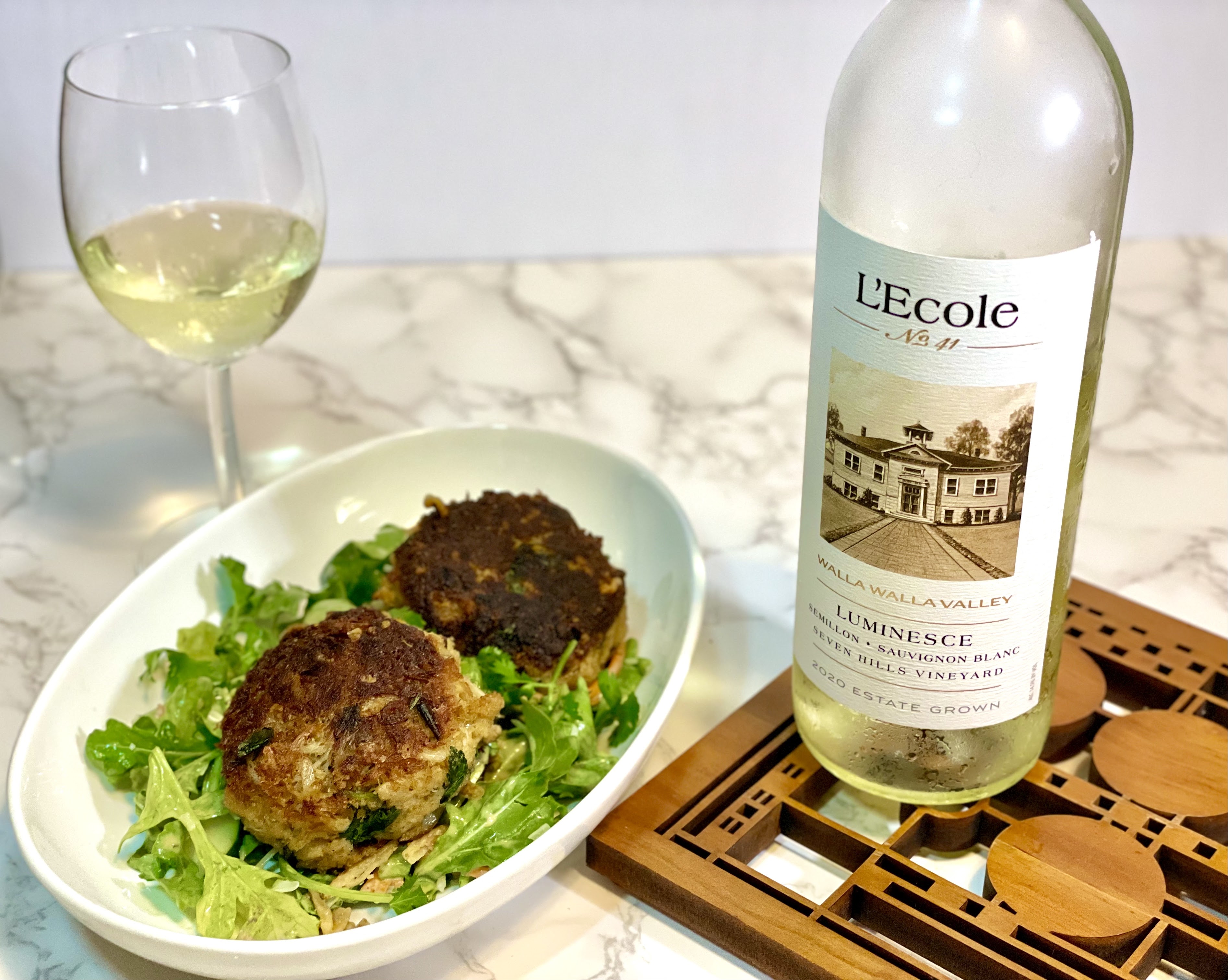
July: Luminesce Semillon - Sauvignon Blanc Seven Hills Vineyard, Walla Walla Valley 2020 and Crab Cakes


Blend:  62% Semillon and 38% Sauvignon Blanc 

Here’s an excellent pairing for sunshiny days. Luminesce ($22) is L’Ecole 41’s take on a classic Bordeaux Blanc blend with Sémillon, which brings texture, and Sauv Blanc, which adds brightness. This combination of attributes made it a perfect match for crab cakes, with their mixture of creamy and crispy textures. I used this recipe from Delish magazine for this round, then served them with a sauce made with Kewpie Mayonnaise and wasabi sauce (not pictured), and a salad. The wine’s balance of texture, citrus, and hints of herbal notes was a PERFECT match with the crab cakes –  a lip-smacking pair! Another of my favorite matches of the year. 

Tasting Notes:  The showed notes of key lime pie, lemon, white flowers, and a touch of minerality on the nose. Grassy green herbs joined in on the palate, along with notes of blanched almonds. It was rounded on the mid-palate moving into a crisp finish.


August:  Syrah Columbia Valley 2018 and Tri-Tip


I’m always jealous of people’s grills in the summertime. We live in an apartment, so I have to improvise the best I can. In this case, I once again used my sous vide circulator to cook up some seasoned Trip Tip and then seared the meat to finish it. I then served it with a side of mixed zucchini, sautéed mushrooms, onions, and potatoes. 

You’ll notice that I almost always prepare small and medium cuts of meat sous vide. I think this is hands down the easiest way to cook steak cuts as it takes all of the guesswork out of the process. (Cuts that you want to be fall-apart tender are best prepared via other methods like braising.) Below you’ll find a simple non-recipe for this tri-tip preparation. 

This round of meatiness was paired with the  Syrah Columbia Valley 2018. It made a beautiful match, although I suspect that this wine will be even better in a few years.  

Tasting Notes: There were notes of blackberry, smoke, and hints of vanilla on the nose. Tart blackberries continued on the palate along with black cherries, plums, touches of black pepper, herbs, licorice, craggy stones, and espresso granules, with a few flower petals mixed in. 

Trip Tip Sous Vide Non-Recipe: 

I rubbed the meat with garlic powder, shiitake powder, and black pepper, doused it with soy sauce, and added garlic to the cooking bag. I cooked it at 129.5 °F for 2 hours, then removed it from the cooking bag, patted it dry, and seared it in a large pan. I sliced up the tri-tip and served it topped with the leftover cooking juices. 


September: Frenchtown Columbia Valley Red Blend 2019 with Pork Chile Verde and Pizza


Blend:  45% Merlot, 17% Syrah, 18% Cabernet Sauvignon, 4% Grenache, 10% Malbec, 6% Petit Verdot 

The Frenchtown Columbia Valley Red Blend ($22) is such a happy, friendly wine. It’s very easygoing and bound to match decently well with a ton of different things. I got this impression after tasting it and decided to test the theory with a pairing gamble. Back in San Diego once again, my mother-in-law made chile verde with pork one night. I would normally gravitate towards a full white wine to pair with all of the green notes and spices in this dish. I decided to experiment with the Frenchtown Red instead and was very pleasantly surprised with how well it worked. 

This is a medium-bodied red with smooth easy tannins, both attributes which helped it to work with a lighter meat like pork. It is also pretty plush, fruit-forward, and a bit juicy which helped it to pair with the hits of spice.

Later on, we had another bottle with a pepperoni pizza, which also made for a very happy pairing!


Tasting Notes: Thanks to all of those different grapes, there was a whole host of fruit notes in here, with a mix of red, black, and blue fruits that were ripe but bright. There were lots of red cherries on the nose, with red licorice, and a mix of white and black pepper Roasted red plums joined in on the palate, with hints of herbs, lavender, and spice mixed in. I already mentioned that it was medium-bodied with smooth tannins. I thought it offered a lot of bang for the buck.

Behind the scenes details: The Frenchtown Red is an entry-level red and is always a blend of grapes, but might be different each year – it's kind of a snapshot of a particular vintage. The 2019 was a blend of Bordeaux and Rhône grapes including Merlot, Cab, Malbec, Petit Verdot, Syrah, and Grenache. Frenchtown is the name of the district where L’Ecole’s historical schoolhouse is located. It used to be called the “Recess Red” and many people still ask for it by that name. 


October: Merlot Me Month


October is Merlot Me Month and L’Ecole No. 41 made two appearances last year, so I’ll just go ahead and direct you to this post for more on the Estate Merlot Walla Walla Valley 2018 and this post for more on the Merlot Columbia Valley 2018, but it was fun to see the different expressions of the grape side by side. The Columbia Valley showed more plush fruit notes, whereas the Walla Walla, which is grown in a vineyard sitting on basaltic rock, showed more dusty minerality, smoke, and structure. You can see a similar comparison between the 2014 bottlings in this post.


I also got to enjoy the Estate Merlot Walla Walla Valley 2018 with a burger and it was pretty great.


As I mentioned earlier, L’Ecole has made several Merlot Me appearances in the past. Check out these posts for more pairing ideas:

  • Many Merlots Make Marvelous Mediterranean Meal
  • 5 #MerlotMe Nights
  • Experiments with Salmon and Merlot
  • What's Good?: Pasta Alla Norma & Merlot


November:  Perigee Vintage Comparison with Shawarma Chicken and Flank Steak 


Blend 2018: 50% Cabernet Sauvignon, 16% Merlot, 16% Cabernet Franc, 9% Petit Verdot, 9% Malbec.                                  
Blend 2015: 56% Cabernet Sauvignon, 16% Merlot, 14% Cabernet Franc, 7% Petit Verdot, 7% Malbec.

In November, we did a vintage comparison between the 2015 and 2018 ($56, current vintage) vintages of L’Ecole 41’s flagship Perigee Estate Seven Hills Vineyard, Walla Walla Valley, a Bordeaux blend of all estate-grown fruit from their Seven Hills Vineyard. Again, comparisons are always fun! In this case, looking at two different vintages as it gives you a chance to see how different conditions affect a wine and also gives you a glimpse of where a younger wine might go. 2018 was a cooler vintage and the wine showed more red fruits and brighter acidity. By contrast, 2015 was a warmer vintage and displayed deeper, darker fruit notes with more robust tannins. The two tasting notes are next to each other below for a more detailed comparison.

I paired the lighter, and brighter 2018 with a Shawarma-spiced chicken loosely based on this recipe from Olive Magazine along with butternut squash that I roasted alongside, as well as baba ghanoush and homemade pita bread. The wine paired particularly well with the smoky spices in the chicken and the weight of the wine and the food matched nicely. It wasn’t half bad with the herbed butternut squash as well. I put a lot of lemon in this batch of baba ghanoush, which probably kept it from matching as well as it might have normally, but I think it would go well with a more typical, smokier style of the dip.

The 2015 was in a good place and just opening up after 6 years, but still seemed like it has quite a few more years to go. I couldn’t help but myself but to return to steak with this one. This time it was flank steak topped with mushrooms and served with a side salad. I find mushrooms to generally be a good idea when pairing with wines with a bit of age on them.


2018 Tasting Notes: Predominantly red fruits showed on the nose – bright cherries and raspberries – along with dried herbs and a little menthol.

2015 Tasting Notes: Black cherry with brambly herbs, tobacco, black tea, esspresso showed on the nose, with notes of roses and lilacas coming out as the wine opened. It was rich but bright on the palate, with blackberries, blueberries, and black plum skin on the palate, along with mocha, cigar box, chocolate, licorice, and cassis. Lots of espresso. The wine showed grippy tannins and brawny structure. Decanting is definitely recommended 

Later on, I also got to participate in a tasting looking at the component varieties that go into Perigee, and I kind of wish some of those were sold bottled on their own as well!


December: Wine & Chocolates and Shrimp Stir Fry


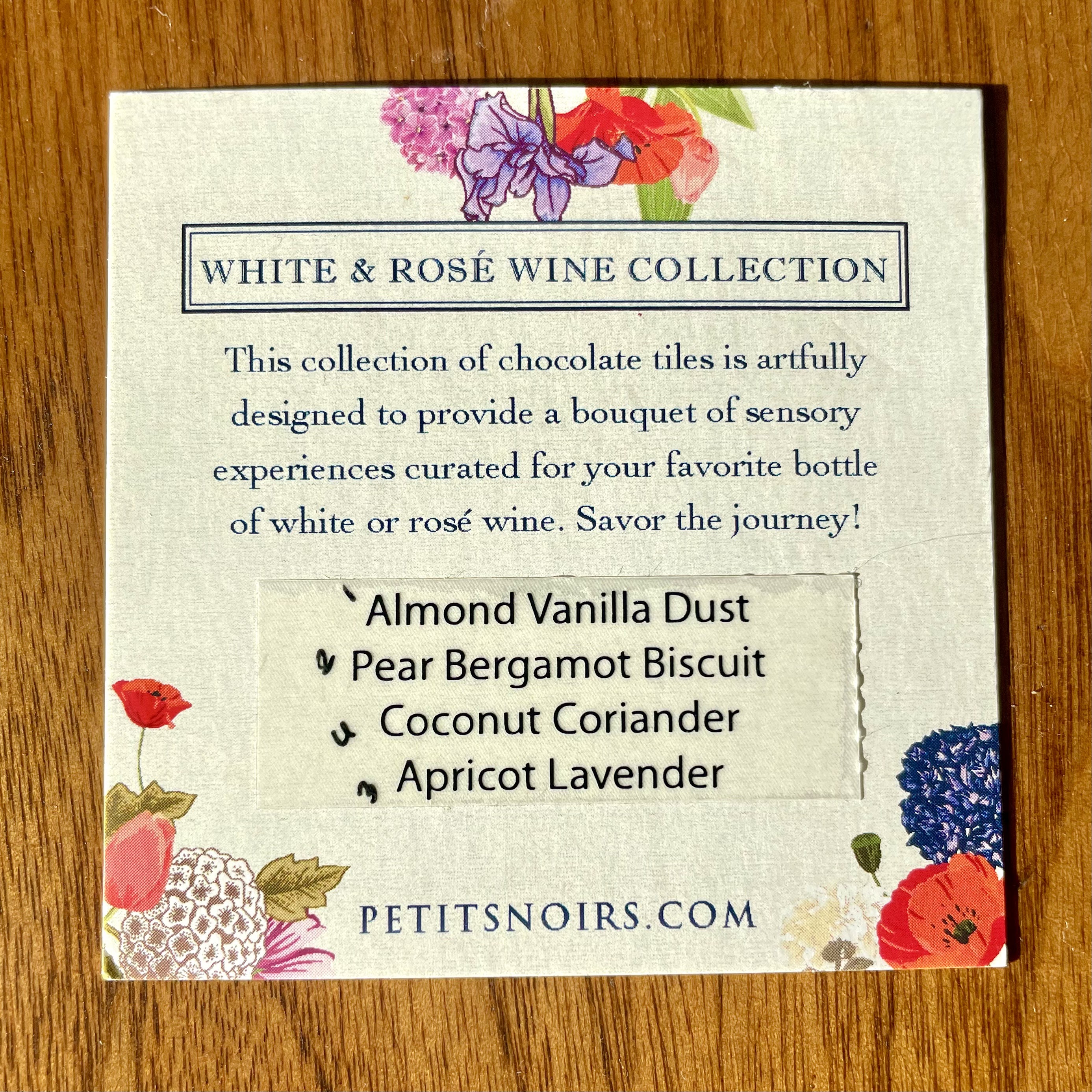
In December, I had a chance to try one of the lovely gift sets they’d put together for the holiday season. I received the wine and chocolate gift set, which included bottles of the Old Vine Chenin and the Syrah Walla Walla Valley with chocolates from Petits Noirs, also made in Walla Walla, selected to match. 


I’m a little picky about pairing wine and chocolate together – I personally don’t think they go that well together because most chocolate is too sweet to go with most dry wines. IMHO, pairings work best when the chocolate is dark and not that sweet, and the wine is fruit-forward. I find white wines to be particularly tricky, but I was still interested to try the flavor blends with the Chenin Blanc. 

I can't find the specific notes I took on the pairings, but I did wrank my preferences on the accompanying card.

This also gave me a chance to try the Chenin Blanc in another savory pairing. This time I paired it with a shrimp stir-fry with lots of veggies. This time, the sauce was less sweet than the one I served with the coconut shrimp back in May, and it worked much better. 


I still haven’t tried the Syrah with its corresponding chocolates, but I expect those to work well and will update this when I do. 


That wraps up my excellent year of exploring L'Ecole's wines, although I still have a few bottles left to play with and will share those experiments in the future.


Tasting the wines of Golden Cluster by Jeff Vejr at Les Caves Wine Bar in  Portland Oregon left my mind bent and my palate absolutely delighted. Here we take a closer look at three of the may wines we tasted, paired with grilled cheese sandwiches!


I love wine tasting. That’s pretty obvious by now. Very rarely, however, does a tasting experience leave my mind bent, flipped, completely turned inside out, and absolutely delighted. That’s how I felt after tasting with Jeff Vejr and his Golden Cluster family of wine brands. 

It was mere happenstance that I ended up on this tasting journey. Greg and I just returned from a road trip around Oregon and Washington. By coincidence, we overlapped for one day with my friend Ron and his girlfriend Amy in Portland. Ron is hands-down my very wine-geekiest friend, and I think that says a lot coming from me, a proud wine geek. He looks at things in very out-of-the-box ways and goes deep into research. (You can read an article he wrote about intersections between Beethoven and wine here.)  We always have a lot of fun drinking and eating together, and I always learn a ton. Such was the case on this particular evening. Ron had made an appointment to taste with Jeff Vejr at Les Caves, the wine bar he co-owns in the Alberta Arts District of Portland. When we realized we’d be overlapping, he arranged for us to join in the fun. And it was A LOT of fun. 

Note: Our tastings were comped, but no other compensation was received and all opinions are my own.

Les Caves Wine Bar

Let’s begin by setting the scene. Les Caves is a cozy little spot located in what was originally the boiler room of the Victoria Theater (1910 -1965). After the theater closed, the building went on to be used by a series of churches of various denominations up through the mid-2000s. Nowadays, if you make your way around back and down a couple of flights of stairs, you’ll find this tiny, elegant, rustic wine bar. 


We were there the weekend before it was due to reopen after Covid, and they’d used the downtime to renovate the space and add a new outdoor area as well, one flight up from the original bar area. 


A Guided Tasting of Golden Cluster Wines Paired with Grilled Cheese Sandwiches

Jeff guided us through an extensive tasting of his wines. We enjoyed the first few wines in the original bar space and then moved up to the new outdoor area for the rest. We got to enjoy them alongside a selection of tasty grilled cheese sandwiches Les Caves has on offer. 

We tried three grilled cheese sandwiches: 
- The Alsatian with Muenster, smoked uncured ham, and mustard powder.
- The Georgian with mozzarella, adjika paste, and paprika.
- The Italian with Provolone, organic roast beef, and Italian seasoning. (Currently, their menu shows a variation of this one called the Bologna with mortadella.)

Every single wine was interesting and enjoyable. It also became clear very quickly that Jeff has an extremely curious mind and each wine was an exploration of grape, clone, historical vineyard site, or experimental technique, and sometimes multiple explorations were all going on at once in a bottle. (It made total sense why Ron was attracted to this spot.) 

Jeff started Golden Cluster in 2013, after visiting David Hill Vineyard & Winery in Forest Grove, where he encountered Semillon vines that were over 48 years old at the time. Semillon was one of his first grape loves, and while he’d been in the process of starting other wine projects, he decided to change tracks to work with those grapes. The name is an homage to the grape, which is known as the “golden” grape and makes “golden” wines in Sauternes. (The name also pays homage to Charles Coury who planted the vineyard in question, but that's a longer story.)

Previously, he’d spent time working at wineries in Europe dealing specifically with old vines. During our visit, he described himself several times as a history buff, and that love of old vines fits right in. He also worked or assisted at various wineries in Oregon and Washington while preparing to start his own project.  In an interview on Les Caves de Pyrene, Jeff gave further background on himself:

I am a 3rd generation American, who was raised in the fiercely independent state of New Hampshire. Growing up on a self-sustaining farm taught me the value of taste, hard work, the beauty of seasons, and an appreciation for the history all around me. These lessons and experiences have culminated in my wine project called Golden Cluster here in Oregon.

Golden Cluster is now actually a group of brands, some with only one or two wines in the line. In a way, each represents a theme of exploration. Those other lines include Coury, Dionystic, Müller?, Olmo, On Wine Hill, Ordeaux, Oregon Brand, Syrahcha, The First Row, and Vinous Obscura. 

Over the course of the evening, we tried about thirteen, and each one was its own special unicorn. There were wines made from rare grapes, some I’d never heard of,  and some made in ways I wouldn’t have thought possible. Jeff mentioned that he takes a lot of inspiration in coming up with new techniques for handling wine from chef friends and techniques they use in the kitchen. A lot of the techniques he described ran in the face of everything I’ve been taught about wine. 

He sometimes finds ways to use grapes that anyone else would consider to be irrevocably flawed . .  . and yet the wines worked. This really spoke to me, as I’m the type of person that finds all kinds of bizarre ways to use things that would typically be considered trash in the kitchen to make new things. (Most people would probably consider my freezer a trash heap from all the bags of random scraps waiting for reincarnation.) He finds a way to make delicious wines with grapes that would be trash or compost and pays the growers that would’ve likely lost income. 

It would be overwhelming for both you and me to spotlight all of those wines and what makes them all bizarre and interesting in one post, so I’m going to limit myself to three wines here. 


Golden Cluster 'COURY' Old Vine Semillon Willamette Valley 2018 


Price:  $28 ABV: 14.24%     Grapes: 100% Semillon

Tasting Notes: Lots of stone fruits, dried flowers, and powdered honey on the nose. The wine was super complex and layered on the palate with more stone fruits some, dried, along with some tropical fruits, ginger, curry powder, and hints of deeper citrus tones like Meyer lemon and orange skin. Despite the nose and honeyed notes, this is a dry wine. In many ways, it reminded me of Savennières, wines from the Loire Valley made from botrytized Chenin Blanc grapes that are vinified to dry. 

Mind-bending Properties:  Grapes that make you go EEEWWW!? 

The grapes come from a historical vineyard with own-rooted vines. Sadly, this particular vintage had a lot of issues. This wine was affected by botrytis late in the season, but that’s not weird for Semillon. In Sauternes and the other sweet wine regions of Bordeaux,  Semillon is prized for its susceptibility to botrytis, or noble rot, which under the right conditions, dries out the grapes and concentrates the flavors and makes them more complex. Noble rot is one thing, but powdery mildew is another thing completely – this is one fungus that is never prized. And yet the grapes for this wine were heavily infected. The lead-in for this wine on the Golden Cluster’s website describes it this way:

A wine that shouldn’t exist, but does.  This 2018 Semillon is an anomaly. It will probably never be repeated.  It is one of my proudest moments as a winemaker, because I did not give up on it. 

Jeff painted a picture of these grapes as they fermented which made them sound like complete sludge. We’re always told that great wines are made in the vineyard and this does not sound like an auspicious start. So what do you do if you have grapes like these but you’re determined to make a wine from them? Wash the lees. I’d never heard of lees washing before, and I believe Jeff told us that he basically made up the name, so I don’t think this technique has spread far beyond Golden Cluster’s doorstep. Basically, he added the lees from completed, clean Muller-Thurgau and Pinot Gris fermentations to the wine and dumped the Semillon lees out, repeating the process twice. He told us that that process changes the porcini mushrooms flavors you would get from the powdery mildew infected grapes and converts them to dried fruit notes. The website also notes that the process “works wonders to damaged fruit without having to result in using any of the 'chemical' solutions often used as a last resort.”  Whatever he did, it worked. This was a beautiful and fascinating wine. 

It was also completely different from the 2019 version of the wine, which did not suffer the same problems. That vintage was more in line with a dry Hunter Valley style Semillion from Australia and was much brighter and lighter on the palate, with stone fruit notes that tended more towards white peach, and the mixed citrus notes had tart hints of grapefruit mixed in.

You can read more about this wine and how it was made here.

Grilled Cheese Pairing: This wine worked with all of the grilled cheese options, but I think the Alsatian was my favorite. 


Vinous Obscura Grand Bazzar Willamette Valley 2019


Price: $25 ABV: 12%    Grapes: 14 unique varieties 

Tasting Notes: Orange skin, honey, honeysuckle, candied grapefruit, and tangerine on the nose. These all continued on the palate, along with dried golden flowers, sumac, turmeric, and hints of game. 

Mind-bending Properties: It's a mysterious, beautiful mess. 

It’s an orange wine made from 14 different grapes (unspecified) all coming from the same vineyard (redacted), some botrytized, made in a dual fermentation. There’s a lot to wrap your head around there. This is another wine that supposedly looked terrible during fermentation, but he didn’t want to quit on it. He decided to handle the aromatic and non-aromatic grapes differently. The aromatic grapes in the mix were left in contact with their skins for 14 days. The non-aromatic grapes did not see skin contact. He compared this to his version of an Arnold Palmer, each half contributing a different aspect to the whole. I do love an Arnold Palmer.

You can read more about this wine and how it was made here.

Grilled Cheese Pairing:  I thought this was absolute magic with the Georgian grilled cheese. 


Vinous Obscura Paint, Dye, or Give Color Saperavi Columbia Gorge 2020

Price: $28 ABV: 13.5%    Grapes:  100% Saperavi

Tasting Notes: This wine was quite aromatic on the nose with hints of orange skin and cinnamon, mixing with fruit notes of grapes and berries, game, pepper, and purple flowers. All of these continued on the palate, with even more spice notes mixing in. Earthy notes of stones and clay hit on the finish. Despite the intensity of aromas and flavors, this was not a heavy wine. It still had plenty of freshness. 

Mind-bending Properties: There’s Saperavi in the US? Oh, and it’s matured in Oregon-made Amphorae. 

I learned a lot about this grape during our conversation. Saperavi is best known as one of the premier grapes of the country of Georgia. Jeff specified that the vineyard these come from (redacted) has the only Saperavi currently planted west of the Mississippi River. I’ve never seen a bottling from the US, period. The vineyard also has all five clones of the grape that are available in the US, four are included in this bottling, as the vines of the fifth are still young, but will be included in the future. 

Jeff mentioned that it is one of the oldest domesticated wine grapes and that it’s only one or two generations removed from the wild. I wasn’t able to confirm this but as Georgia has a claim to one of the oldest winemaking traditions in the world, so it seems like it tracks.

The wine’s name takes inspiration from the grape itself as Saperavi means “dye.” It’s a teinturier grape, which means that it is one of the few red grape varieties that has colored flesh, not just colored skins. As such, it produces deeply colored juice. 

In Georgia, wines are traditionally fermented and matured in qvevri, earthenware vessels shaped kind of like an egg with the narrow side pointed downwards that are intended to be buried in the ground. (Cement eggs are another style of fermentation vessel that has the narrow end pointed upwards. Jeff pointed out that they’re essentially opposites and distribute the lees – as well as grapes skins, stems, and seeds if left in – differently, creating different textures in the wines.) 

The material of the vessel also plays a major role. Clay and cement vessels have a different effect on wine than wood or stainless steel. Among other things, clay is porous so it allows for a small amount of oxygen transfer, unlike stainless steel, but it doesn’t add any overt flavor to the wine the way wood does. 

This American version of Saperavi is fermented in amphorae, which have a shape somewhat similar to qvevri, but with a flat bottom so they can sit on the ground. (Originally, they also all had handles so they could be used for transport.) These amphorae are made in the US, specifically in Oregon, by Andrew Beckham’s Novum Ceramics the first commercial producer of terra cotta Amphorae for winemaking and brewing in North America. These amphorae add an extra layer of terroir, since the vessel comes from the same region as the wine.

You can read more about this wine and how it was made here.

Grilled Cheese Pairing: This was the last wine we had that night, so I only got to have a nibble of it with the Georgian grilled cheese, but in my mind, it would’ve been great with the Italian as well. 


This was such a memorable evening. We arrived at around 7 PM and pulled ourselves out of there after 1 AM, and we could’ve kept on talking and sipping except that it had gotten so late. I highly recommend a stop at Les Caves. While the wine bar has many wines on offer, you’ll typically find at least a couple from the Golden Cluster Lines. 

*****

The rest of the Wine Pairing Weekend  (#WinePW) Blogging Group is exploring Amphora-made wines this month. I admit only ones of these fits the bill, but I was extremely excited about the experience, 

Be sure to check out the rest of the group's posts:

  • A Clay-Made Dinner: Ceramic Grill and Amphora Wine by Food Wine Click!
  • A Surprising Find: Amphora Wines in Temecula, California by Our Good Life
  • Hundred Suns Wine's Amphora-Aged Gamay Noir, Flame-Grilled Foods, and Our First Post-Pandemic Dinner Party by Culinary Adventures with Camilla
  • Küp Calm & Pair on: Turkish Amphora Wines by The Quirky Cork
  • Made in Clay From Near and Far, Wine and Food by Wine Predator...Gwendolyn Alley
  • Memories of My First Amphora Aged Wine from Josko Gravner by Avvinare
  • Tasting and Pairing Amphora Wines by Cooking Chat
  • Tomato and Eggplant Tian paired with Two Amphora Wines from Portugal by A Day in the Life on the Farm
This post contains affiliate links, including these Amazon Associate links, from which I might receive a commission at no cost to you.
Older Posts Home
View mobile version

INSTAGRAM

Sign up for my mailing list!

Subscribe

* indicates required


Somm's Table 2017