Somm's Table

Perfect pairings from the other side of the equation.

  • About
  • Front of the House
  • Back of the House
  • Contact Us
Powered by Blogger.

Wine came to Mexico before anywhere else in the Americas, and yet their industry is really just starting. It's up and coming quickly, though. We're exploring two bottles that represent very different sides of their business and sipping them alongside a delicious serving of birria. 


This post contains wines that were provided as samples. No other compensation was received for this post and all opinions are my own. It also contains affiliate links from which I might gain a commission at no cost to you.

The first time I recall ever encountering Mexican wines was on an excursion to Ensenda wine country while on a cruise to Baja Greg and I went on in our early 20s. It was one of the better memories I have of that particular cruise, but to be honest, it had less to do with the wine and more to do with the fact that a day in wine country is almost always lovely. This was way before I knew anything about wine, but of the three or four wineries the excursion took us to, only one (L.A. Cetto) stood out as being any good. Of course, this could have been due to the particular selection of wineries. I mentally cataloged the topic of Mexican wines as “interesting, but still needs work.” 

Flash forward more years than I’d like to admit. I’ve now seen more and more quality Mexican wines cross my path. One or two would make it onto the shelves while I was working in a wine shop. A friend would pour one for me at a tasting. I’d see a few more examples represented at trade tastings. Then one of my tasting groups (in the before times) dedicated a session to Mexican wines during which I was able to taste a full line-up that included a wide range of grapes and styles and got a sense of where their wine industry had progressed to, and it seemed like they’d come a long way. Of course, this is still a region in development, but one that’s definitely worth paying attention to. 


A Brief History of Wine in Mexico

Map borrowed from WineFolly.com


The funny thing is that while Mexico’s wine industry is still emerging and developing, it was actually the first place wine was made in the Americas. The Spanish conquistadors first brought over vitis vinifera vines in the 16th century – the species of grapes most commonly used to make wine is not indigenous to the Americas and required a lift getting over the ocean. The vines were planted, however, the breaks were pushed on the growth of the new industry when Spain realized it had a good thing going as the main supplier of wines to “New Spain.”  The trading was so profitable for Spain that King Carlos II went so far as to outlaw the commercial production of wine in 1699 so that the new would have to keep on importing it. Most wine grapes that had been planted were used to make brandy.

Wine production continued – albeit at a trickle – thanks to the Catholic Church, as it was legal for them to continue to make it for ceremonial purposes. Therefore, while the industry hung on by a thread, it did hold on. Things essentially remained this way until Mexico gained its independence from Spain in the 19th Century. 

The very first vineyards in Mexico were planted around the town of Parras de la Fuente which translates as 'vineyards of the spring. ' This region is located in north-central Mexico in Coahuila. Since Mexico’s climate overall is very hot – much hotter than is normal for a grape-growing region – it’s necessary to find microclimates that offset the heat. The vineyards in Parras de la Fuente are located in the Sierra Madre Oriental mountains, at an altitude of around 5,000 feet (almost 1,525 meters), making it much cooler than the coastal regions. It also helps that it’s pretty arid – grapes definitely prefer a “dry heat.”

The wine industry was not destined to stay centered in the Parras Valley. The first grapes were planted in Baja  Today, the overwhelming majority of Mexican wine (85 to 90%) is made in Baja California. Baja benefits from being a little farther north and closer to the ocean, so cooling ocean breezes provide relief from the heat. It has a Mediterranean climate, but it’s fairly dry here as well, so the majority of vineyards do require irrigation. Overall, the region tends to have granitic alluvial soils similar to what you might find in France’s Northern Rhône Valley.  Ensenada is the center of the industry, but the region has developed to the point that there are major sub-regions including Valle de Guadalupe, Valle de Calafia, Valle de San Vincente, and Valle de Santo Tomás. 

As Mexico’s modern wine industry is still in development, it’s still pretty much the wild, wild west. There are no signature grapes as of yet – over 120 different varieties are grown. There also isn’t much in the way of regulation; the wineries basically have to self-regulate. The lack of rules also means that there is a lot of experimentation. You’ll find a lot of blends here, many of which might seem unusual and you won’t see in other places. Winemakers feel free to put things together to see if they taste good. The infrastructure is still building, but things are growing quickly. In 2006 (around the time we went to Ensenda, give or take a couple of years), there were less than 25 wineries in the whole country. Now, there are over 120 in Baja alone. There are a few big producers (like L.A. Cetto, which I mentioned earlier), but the majority of wineries are pretty small. 


The Food

Birria has been all the rage in recent years. While I don’t necessarily mean to feed the hype for the sake of it, I do really love the stuff. It’s got sooooooo much flavor and it’s 100% comfort food at the same time. It’s a very traditional dish that originally came from the state of Jalisco that involves stewing meat in a very flavorful broth flavored with chili peppers and lots of herbs and spices. Goat is the meat most traditionally associated with birria, but lamb and beef are also commonly used. There are even plenty of vegetarian versions out there. The meat and the resulting stew, or consomé, can then be served in different ways. The two can be served together with a side of tortillas, or the meat can be used to fill tacos or tortas, probably with a side of the consomé for dipping on the side. 


We fell in love with the quesabirria (basically a birria quesadilla) at Nido Backyard, a restaurant here in Oakland, and we can’t help but get it pretty much every time we go. On our last trip to San Diego, some friends introduced us to Tuetano Taqueria, which serves it up a slew of different delicious ways. 
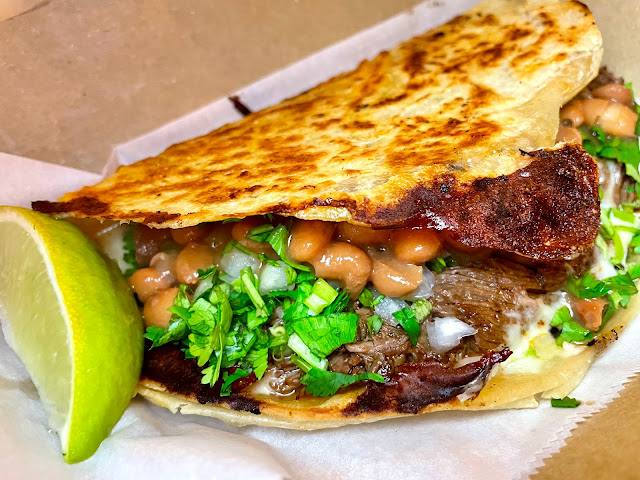


Birria quesadilla with beans

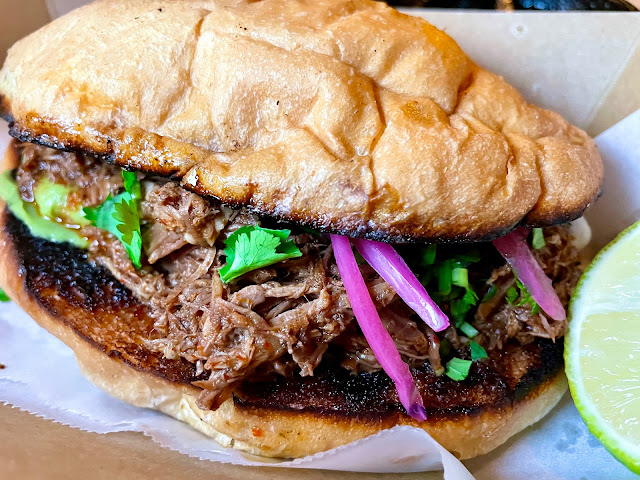
Birria Torta
 Birria taco with a side of bone marrow.

At some point last year, I decided to try making Birria de Res (beef) at home. I worked with a few different recipes I found online, but predominantly crossed this recipe from the NYT Cooking and this one from GimmeSomeOven.com to help me adjust things for prep in my Instant Pot. (I believe I used a combination of chuck roast and oxtail for the meat.) It turned out deliciously and yielded lots of leftovers, so I was able to store quite a bit in the freezer and doled out the goodness over a few months. 

In the process, I was also able to play around with serving it in different ways. In addition to eating it as a stew and in tacos etc., one day I brought home a bunch of tamales from a vendor at my local farmer’s market. I ended up marrying the two together, and now this might be my absolute favorite way to eat a tamale. 


Having lots of leftovers also gave me the chance to try the dish with different wines, and on two occasions, we paired the birria with Mexican wines. It was an easy match for both bottles, although each worked well in different ways. 


The Wines: Two Very Different Representatives

The two wines we’ll be looking at today represent different facets and extremes of what you might find. The first is from the Parras Valley from a historical winery and is made in the international style. The second is a natural wine from a young winery in Baja.


Casa Madero 3V Red Blend Parras Valley, Coahuila 2018 


Blend: Equal Parts Cabernet Sauvignon, Merlot, and Tempranillo |  ABV: 13.7% |  Average Price: $27 (Sample) | Find additional details here and here.

Casa Madero is the oldest winery in the Americas. Its history goes back to 1597 when King Felipe II of Spain awarded Don Lorenzo Garcia a land grant, along with the right to produce wine and brandy for the crown. The winery was born under the name Hacienda de San Lorenzo. It would then go on to change hands several times and was eventually purchased by Evaristo Madero in 1893, giving the winery its current name. 

It’s located in the Parras Valley in the Sierra Madre Mountains (as discussed above), and thanks to the high elevation of the vineyards at 5000 feet, the grapes enjoy warm days and cool nights. The winey has continued modernizing and moving forward. It was also the first Mexican winery to have organically certified vineyards and now has several certified sites. 
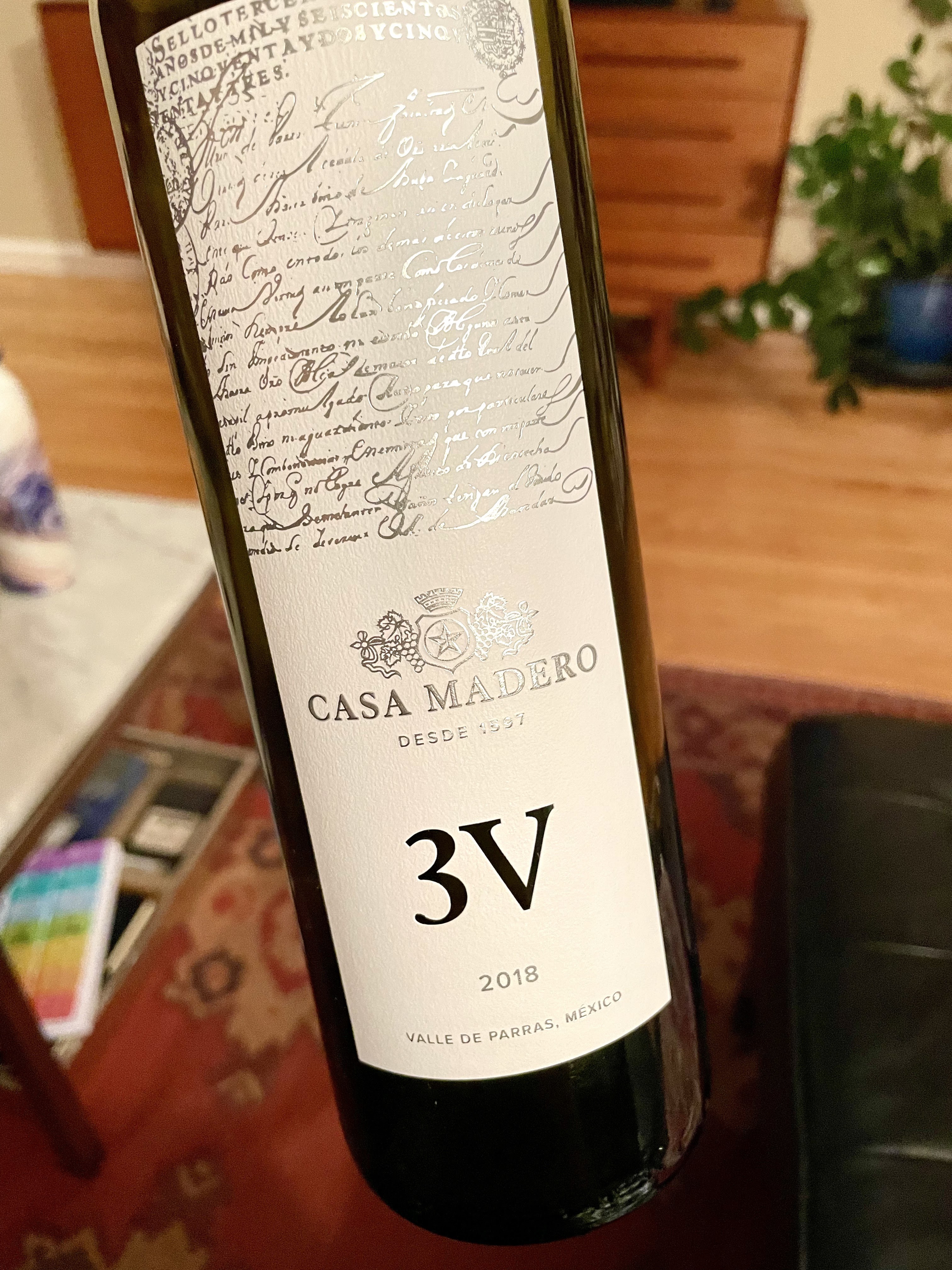

Tasting Notes: Warm, ripe fruit notes strawberry fruit leather, blackberry, black cherry, and red plum sauce. Dusty earth notes are mixed in, along with white pepper, pencil lead, hints of cocoa, and tobacco. The palate mixes Old World earthiness with the ripe fruit of the new world. The wine was medium+ to full-bodied with smooth but grippy tannins. I decanted this wine in advance. 

Pairing: It was excellent with birria tacos. The depth of the wine matched the depth of flavors in the food beautifully, and it became silkier alongside the food as the meatiness helped to further smooth out the tannins.

This wine was sent to me as part of a collaboration with Big Hammer Wines. They offer fine wines at discounted prices. While this particular bottle is sold out, you can find the 2019 bottling here. You can also find a curated list of my selections here. Use the discount code NICOLE15 for $15 off any purchase. (Limit to 1 use per customer.)


Bichi No Sapiens Baja California 2019


Blend: Unknown. Possibly Dolcetto, possibly Carrignan. | Average Price: $34 | Find additional details here.

Established in 2014, Bichi is at the much younger end of the spectrum. Nonetheless, they’ve made a splash in a very short period of time. This is a winery that gets natural wine fans very excited. Located in Tecate, the winery was started by Noel Téllez and his brother, chef Jair Téllez, who moved to Baja from neighboring Sonora. Noel, who left his job as a lawyer to work on the winery, is now the sole proprietor. The name Bichi means “naked” in the Sonoran Yaqui dialect and it reflects a hands-off approach to their winemaking. It’s also captured in the (literally) cheeky labels picturing luchadores and luchadoras wearing nothing but their birthday suits.


Bichi farms 10 hectares of their own Tecate vineyards biodynamically and they collaborate with organic farmers in Tecate and around San Antonio de las Minas in the Valle de Guadalupe. They seek out interesting vineyards to source from. In the case of the No Sapiens, the dry-farmed, own-rooted source vineyard is planted with a mysterious grape variety that remains unidentified. The farmer thinks it could possibly be Dolcetto from plantings brought over from Italy in the 1940s, while the Téllez family thinks it could be Carignan from Spain. In the winery, grapes are destemmed by hand and gently foot stomped, and fermentations are carried out by wild yeast. 

I first came in contact with Bichi’s wines several years ago, and I think the No Sapiens was the first one I tried. The first versions I tasted were at the "natty AF" end of the natural wines – too funky for my personal tastes. On top of that, I remember the necks of the bottles being clogged up with sediment. I don’t mind some sediment, but this was a bit much. I didn’t get the hype. But things have come a long way in just a few vintages,  as more recent tastings were much, much nicer. The wines were still a bit funky, but pleasantly so, and those elements blended in with the pretty fruit notes. 

Tasting Notes: Fruity and funky. Black cherries, pepper, licorice, flowers petals, and dusty barnyard notes on the nose. On the palate, it was bright, juicy, and generous up front, moving into more gamey notes towards the finish. There was a bit of brett, but it was integrated with the other flavors. The wine was medium to medium + in body, with fine tannins, and lots of freshness. I recommend decanting.

Pairing: This was another great pairing for the birria, although this wine brought out the gamier side of the stew. The wine’s gamey side blended into the food and became less pronounced in the combination. A delicious combo!

*****

Other Possibilities 

If you're looking for additional pairing suggestions to go with birria and can't your hands on a bottle of Mexican wine, have no fear. The bold, meaty flavors in birria should work happily with quite a few red wines, but since there is a mixture of spice and earthiness, look for a red that combines elements of rich, ripe fruit to balance the spice, and elements of earthiness or a meaty quality to further tie in with the flavors.

We also tried this Seven Hills Cabernet Sauvignon Columbia Valley 2015  from Washington state, which also worked well thanks to this combination of flavors. I tend to find that Washington wines generally have a good balance of fruit and earthy elements.


*****

More Mexican Wines

At the beginning of this post, I mentioned that one of my tasting groups dedicated a session to Mexican wines. I thought I'd drop the basic tasting notes I took at that session here to show some fo the range of wines. Starred wines were favorites. 


Casa Magoni Chardonnnay - Vermentino Valle de Guadalupe 2016

Blend: 80% Chardonnay, 20% Vermentino
Stainless steel, a little bit of neutral oak at the finish just to round it out .
Nose: Creamy nose, with a light herbal note.
Palate: Crispy apples and lemon lime, rounded out by herbal notes on the finish. 

Bodegas Henri Lurton Le Chenin Valle de Guadalupe 2016 *

Nose: Creamed apples and peaches, light tangerine, and touches of honeysuckle 
Palate: Similar notes continue on the palate, along with a little hay, a bit of dusty earth, nice freshness. 

Solar Fortun 'O Positivo' Valle de Guadalupe 2014 *

Blend: 50/50 Cabernet Sauvignon and Syrah 
Nose: Dusty smoke, singed cedar, and a dusting of cocoa.
Palate: Mixed Berries and cherries, ripe but bright (more acid than expected), a bit of dust, strawberry leather. 


Corona Del Valle Tempranillo Baja California 2015

12 month in oak, 30% new French
Nose: A little vanilla, cherry, strawberry candy, baking spice.
Palate: Definitely more oak here,baking spices, dusty strawberry, cherry, raspberry, vanilla
Would like to see it in about 3-5 years.


Infinito Cabernet Sauvignon Baja California 2013

30% new oak
Nose: Orange spice, cherry and red plum.
Palate: These continue on the palate along with red currant, light spice, and deep berries, black tea.

Corona del Valle Tempranillo - Nebbiolo Baja California 2015

Nose: A touch of a high-toned floral note, sweet spice, black cherry, red currant, red berries, sweet tobacco, cold stones
Palate: These notes continued on the palate along with black tea. The oaks still needs time to integrate. 
 

Bodegas Henri Lurton Le Nebbiolo Valle de Guadalupe2015

Nose: Dusty red raspberries, blackberries, cedar, sour cherry, tar, char.
Palate.  Inky and tarry, with lots ripe fruits and tooooooonnnnnnnnnnnnsssssss on tannins
Needs more time for the tannins to calm down a bit. Decant.


*****

The Wine Pairing Weekend (#WinePW) Blogging Group is exploring the wines of Mexico. Check out the rest of their posts:

  • Wendy from A Day in the Life on the Farm will share “Mexican Foods and Wines always provide for a Perfect Fiesta”
  • Susannah from Avvinare is “Discovering Mexican Wine”
  • Jen from Vino Travels is taking “A First Look at Mexican Wines Including Italian Grapes”
  • Carlos from Carlos’ Food & Wine is serving up “Mexican wines featuring sparkling wine risotto & grilled hanger steak with mushroom-red wine sauce”
  • Camilla from Culinary Adventures with Camilla is sharing "Outside the Pigeon-Hole: Pairing Mexican Wine with Thai Cuisine"
  • Gwendolyn from Wine Predator Gwendolyn Alley features Sparkling Wine from Mexico For #TacoTuesday”
  • Robin of Crushed Grape Chronicles shares “Mexican Wines – 2 wines from the central Mexican highlands of Querétaro #WinePW"
  • Linda from My Full Wine Glass is “Saying ‘hola’ to Mexican Tempranillo and sparkling wine”
  • Martin from ENOFLZ Wine Blog will share “Exploring Mexican Wine Beyond Baja”
  • Liz at What’s in that Bottle posted “Salud a Los Vinos de Mexico!”
  • Terri from Our Good Life pairs "Grassfed Ribeye with Steak Butter and Grilled Oyster Mushrooms Paired with Monte Xanic Cabernet Sauvignon"
  • Cooking Chat  paired “Roasted Beet Pesto Pasta with Mexican Merlot”

Additional Sources and Extra Reading:
  • Wine Enthusiast: Baja and Beyond: Everything You Need to Know About Mexican Wine
  • Wine Enthusiast: With Distinctive Terroir and Varied Microclimates, Mexico’s Baja California Aims to Preserve its Character
  • Wine-searcher.com
  • Winefolly.com: An Overview of Mexican Wine Country
  • Meet the New Visionary of Mexican Natural Wine


Today we’re getting back to my roots via wine and food! And really, what better way is there to go?!

My background is made up of a crazy mix of components – I’m quite proud of this. My mother’s father was Lebanese, and I think I  undoubtedly look the most like this part of my lineage. I think my genes show up in my food preferences too. If I could have a bottomless bowl of hummus next to me at all times, I’d be a very happy girl. I never met my grandfather –– he died when my mom was still a kid –– but we would visit my great aunt and great uncle every time we’d travel to Venezuela, where my grandfather and his family had immigrated to, when I was a kid. 

Even when she was very old and could no longer hear well or move with ease, my great aunt would always have a big spread of Lebanese mezze ready and waiting when we’d come for a visit including kibbeh, falafel, hummus, baba ganoush, tabouli, stuffed grape leaves, stuffed cabbage leaves, tzatziki, pita bread, feta, and on and on. The flavors burrowed down into my blood and soul. Fun facts, my great aunt can also be credited with giving me my first sip of Champagne and, reportedly, for teaching me to cheat at cards. I no longer cheat at cards (or do I?), but the Champagne habit stuck. While she’s no longer with us, I think she’d be happy to know she left her mark. (Actually, she once accidentally cut me with her diamond ring, so she also literally left a mark – hah!)


Since one doesn’t immediately associate middle eastern countries with fine wine production, I was really excited when I was first introduced to Chateau Musar, the first Lebanese wine I ever tried. It helped me discover that were still continuing wine traditions in this part of the world I have ties to, even if I've never been there. Chances are that if you’ve heard of one Lebanese winery – or any middle eastern winery – it’s probably Chateau Musar. It’s not Lebanon’s oldest winery, and there are increasingly new players on the Lebanese wine scene, but for now, Chateau Musar remains the most famous Lebanese winery internationally.


A BRIEF HISTORY OF WINE IN LEBANON

Even if we don’t immediately associate wine with middle eastern countries today,  Lebanon has a claim to being one of the earliest locations for wine production, dating back to about 7,000 BCE. The land of Canaan, and then Phoenicia, which followed it, were located in and around modern Lebanon. The Phoenicians were well-known for their viniculture, as well as for being traders, and the spread the doctrine of the vine far and wide, but modern Lebanon was really the heartland. At the end of last year, a 2,600-year-old Phoenician wine press was unearthed at Tell el-Burak that is particularly well preserved. 

The Bekaa Valley is a pretty ideal spot for growing grapes, and it continues to be where the grand majority of Lebanon’s wine grapes come from today. Elevation has a major role to play here, and without it, conditions would likely be far too hot for quality grapes. Bekaa Valley is actually more of a plateau than a valley, with an average altitude of 1000 m above sea level. The surrounding mountains are key as they provide protection from deserts to the east and rains blowing in off the oceans to the west. Mount Lebanon creates a rain shadow and helps to keep the area dry and sunny, averaging 300 days of sunshine a year. These conditions make it pretty easy to farm via organic, sustainable methods. Without disease pressures, there’s no real need for chemicals. With such idyllic conditions, it’s really no wonder that the Romans decided to erect a temple to Bacchus right here in the Bekaa valley. It’s still well-preserved – yet another reason for me to want to visit someday!

Bacchus temple in Baalbek.jpg
Image courtesy of Wikipedia, Link.


Despite their long history of winemaking, Ottoman rule pretty much brought it to a halt, just as it occurred in so many other countries in the region. Winemaking was allowed for religious purposes, so a few Lebanese Christian orders were permitted to continue to make wine. In 1857, Jesuit missionaries at Chateau Ksara planted Cinsault vines they brought in from French-governed Algeria. Other French wine grapes soon followed, along with newer production methods, starting the first flickers of the modern Lebanese wine industry. 

This allowed Lebanon’s Christians, mainly Maronites and Greek and Armenian Orthodox, to produce wine and in 1857 the Jesuit missionaries of Ksara introduced new vine varieties and production methods from French-governed Algeria, laying the foundations of the modern Lebanese wine industry. Several more wineries began to pop up shortly afterward.

The Lebanese wine industry benefited from French connections again in the 20th century. The French governed Lebanon in between the World Wars after the fall of the Ottoman Empire, and this French presence created a huge demand for wine and brought further know-how for how to make it. The French withdrew their forces in 1946, but after World War II, Lebanon, in particular Beiruit, continued to be known and a cosmopolitan center of business in the region. The new wine culture thrived against this backdrop, and it continued until civil war broke out in 1975. 

Interestingly, Chateau Musar was the only winery that managed to continue to thrive during this period, however, the rest of the wine industry began to flourish again when the fighting ended again in the 1990s. The French once again played a role as major French wine families took an interest in developing wineries in the Bekaa Valley. The industry has been developing quickly with the number of wineries growing from 40 to nearly 80 in the years between 1996 to 2020, despite numerous hurdles arising over the years. 

The wine industry there has been facing another difficult moment, though –– 2020 was particularly rough in Lebanon. The country was already facing an economic crisis, protests, and revolution. Then on August 4th of last year, a major explosion in the Port of Beirut caused at least 207 deaths, 7,500 injuries, and left an estimated 300,000 people homeless. All the while, the COVID-19 Pandemic was raging, putting more strain on an already extremely strained medical system and economy. 

The wine industry is a small ray of hope in the midst of a lot of turmoil.

For more on the current state of the Lebanese wine industry, see these articles from Wine Enthusiast and Bloomberg. A new documentary called Wine & War exploring the history of wine in the Middle East in general and in Lebanon in particular, premiered at the Sonoma International Film festival this year. I haven’t seen it yet, but I certainly, hope to soon.


CHATEAU MUSAR

Gaston Hochar founded Chateau Musar in 1930 when he was just 20 years old. He was inspired by his travels through Bordeaux, as well as Lebanon’s own ancient winemaking history. He set up his family’s 18th-century castle in Ghazir overlooking the Mediterranean, about 20km north of Beirut. (I mean, what else are you going to do with a spare castle on the coast?!) The majority of their vineyards are located in the Bekaa valley, about an hour away.   

His wines impressed the Frenchies that were stationed in Lebanon in between the wars, and he became good friends with Major Ronald Barton, whose family owned (and still does) Châteaux Léoville-Barton and Langoa-Barton, creating further ties with Bordeaux.

Gaston set things off to a good start, but the next generation really put the winery on the map. Gaston encouraged his sons to participate in the winery from a very early age. Serge Hochar, Gaston’s eldest son would become the winery’s winemaker, and his brother Ronald would go on to take over the financial and commercial side of things. As Ronald put it (per the winery’s website), “My brother looked after the liquid, I look after the liquidity,” and each would play a crucial role in the winery’s longevity. 

Serge Hochar trained as a civil engineer, then decided to study oenology at the University of Oenology in Bordeaux. He became the winemaker in 1959 after declaring to his father, “I want to make the wine my way, I want it to be known world-wide – and I want you to quit!” Gaston gave way and Serge created the house’s unique style. He spent 18 years perfecting the formula for Chateau Musar’s Red.  He was charismatic, celebrated, and something of a philosopher winemaker, and he was mourned around the world when he passed away in 2014.

For his part, Ronald Hochar gets a lot of the credit for the winery’s business success, making savvy decisions during difficult times. He kept Musar’s trucks running during the war against all the odds, while Serge kept the wine production going. To say that harvesting the grapes was difficult during this time is a huge understatement – at times they could only be harvested during pauses between shellings. Getting the grapes to the winery was a whole other ordeal.   

The family also had the foresight to develop foreign markets, another key reason Chateau Musar continued to do comparatively well during these difficult war years when no other Lebanese winery could really get a leg up. Ronald’s son Ralph worked with the on-trade sector in the United Kingdom until early 2017 and is now focusing on South East Asia from Chateau Musar’s UK office. His daughter Elsa produced a documentary film about the winery.

The style Serge created for Chateau Musar is extremely unique. They were making natural wines far before the term existed, and in many ways, they embody the good, the bad, and the ugly of the term. The wines intentionally show wide vintage variation, at times showing great elegance and depth, and a wild, feral, funkiness at others. I've experienced both ends of the spectrum, so it can be a bit of a gamble. That said, when they're good, they can be super good, very complex, and interesting. 

They use native yeast fermentations and a bare minimum of sulfur. The wines are all unfined and unfiltered. They were also the first Lebanese producer to have their vineyards certified organic in 2006, and are also vegan. 

They make three tiers of wines plus an Arack, an anise-flavored spirit made from grape alcohol. The top-tier Chateau Musar line is notable for the aging regime. Both the red (blends of Cab Sauv, Cinsault, and Carignan) and white wines (made with native grapes Obaideh and Merwah) are aged for a total of seven years before release, while the rosés (also predominantly Obaideh and Merwah, with a splash of Cinsault) are released three years after harvest. The wines develop interesting, savory flavors in the aging process with oxidative notes in the whites and rosés. This line is known for continuing to age well across all colors, and they greatly benefit from decanting. They’ve become coveted cult wines, and usually, run in the $50-$60 range at release. 

The next tier is the Hochar Père et Fils Red is a single-vineyard blend (Cinsault, Grenache, and Cabernet Sauvignon) that is aged for 4 years and is typically in the mid the low to mid $30s. The Jeune line is their entry-level hovering around $20ish, and are unoaked, fruity wines, made from their younger vines, and the wines are intended for earlier drinking. I’m taking a look at the red in this line.


BRINGING THE FEAST & THE WINE TOGETHER

It occurred to me that I had never actually had a Lebanese wine with Lebanese food. As I mentioned, the Lebanese spread is one of my very favorite meals. When my mom asks me what I’d like her to make me when I go home to visit, it’s always either this or Venezuelan Pabellón. (Both over the course of the stay if possible.) I also buy myself middle eastern food pretty regularly, and I can make a pretty decent spread of mezze myself. I’ve also had the opportunity to have wines from Chateau Musar’s various tiers a fair number of times over the years. Still, the wine and the food had never met at my table. I figured it was about time to change that.


I opened a bottle of the Musar Jeune Bekaa Valley 2016 (click the link for additional details, average price: $21 13.5% abv), a blend of 50% Cinsault, 30% Syrah, and Cabernet Sauvignon 20%. This is from the entry-level line and intended for early drinking, and the winery's website suggested that it can be enjoyed right out of the bottle. Nonetheless, I decided to decant it anyways and I do think it helped the wine open up. I was greeted by aromas of warm raspberries, plums, and black cherries, warm earth, light herbs, and white pepper. Similar notes appeared on the palate, with dusty, candied raspberries, ripe red plums, as well as some dried fruit notes along the lines of strawberry leather. The generous fruit notes were mixed with savory hints of black olives, thyme, pencil lead, white pepper, and allspice (which had to be coming from the fruit, as this wine sees no oak aging). The wine was medium + to full in body, showed medium acidity, and medium + tannins that were smooth and supple. I found this bottle to be really delightful and excellent at the price point. As much as I've enjoyed Musar's high-end wines, this is definitely a much more accessible bottle that seems to be about direct pleasure, whereas I see the higher-end Musar wines as "thinky" wines.


Just to illustrate the point of the vintage variation with these wines, the last time I have a relatively clear memory of trying this wine was a bottle of the 2013, and that one left me with the impression of being rustic, earthy, with grippy tannins, and had mostly black fruits (in my memory anyways). This one gave an overall feeling of warmth with generous spiced fruits falling mostly into the red camp. 

Coming back to the present, I treated myself to a Lebanese feast. I decided to make about half the spread to pair with this wine and purchased the rest to have a feast for two at home. I made kibbeh, spiced meat croquettes, made in this case with a combo of beef and lamb, along with hummus, and buckwheat tabouli. I’m not allowed to share my mom’s kibbeh and hummus recipes, however, so I used this one from The Mediterranean Dish for the kibbeh. I make the hummus to taste at the point, using a lot of garlic and lemon, but Ina Garten’s recipe is pretty close to my mom's (although we make it without the hot sauce). I first made this Buckwheat Tabouli when my MIL came for a visit while she was avoiding gluten a while back, but I find I like the toothsome texture or the buckwheat and its nutty flavor, so I opted to make it this way, rather than using the usual bulgur wheat. I purchased tzatziki and baba ganoush, as well feta and pita bread. 

Normally, when I’m making a mezze spread for company, I divide the work out over a few days. It had been a while since I’d tried to make everything (although this was only a partial spread) on the same day. I’d forgotten how much work it is when you do it all at once! Most of this isn’t difficult, but many things involve quite a few steps. If making a spread like this for friends, I'd recommend distributing the work across a few days, as it makes it much more manageable. It might look something like this:

  • 2 to 3 days before – Make hummus and/or baba ganoush
  • 1 day before – Prep and form kibbeh and/or falafel. You can also spread the work of making kibbeh over 2 to 3 days as well by splitting the work into 3 phases: making/prepping the meat components, forming the kibbeh, and frying the kibbeh. 
  • Day of – Make tabouli and/or tzatziki, and fry kibbeh or falafel. 

Of course, you can also buy some or all of the components as well! 

The wine was soooooo good with the kibbeh. The allspice notes in the food and the wine really sang together. The baba ganoush I bought turned out to be mediocre at best, but it got a lot better with the wine, as the smoky note in this dip really resonated with the wine as well. Everything else worked ok, but having either the kibbeh or baba ganoush involved in a bite really helped tie things together.


*****

To read more about wines from places with ancient wine traditions that are now reemerging, check out these posts:

  • Cooking to the Wine: Recanati Marawi with Black Cod and Papaya-Cucumber Salad, Part 1
  • Cooking to the Wine: Recanati Marawi with Black Cod and Papaya-Cucumber Salad, Part 2
  • An Armenian Feast with Friends Paired with Armenian Wines: Modern Wines from an Ancient Place
  • You're Invited to Sip the Wines of the Ancient World
  • A Sneak Peek at the Wines of the Ancient World with the #WinePW Crew
  • Memories of Golan Heights Winery with a Side of Meatball Shakshuka Part 1
  • Memories of Golan Heights Winery with a Side of Meatball Shakshuka Part 2
  • Tasty Moldovan Food & Wine Explorations
  • Celebrating Moldova National Wine Day with More Food and Wine Explorations
  • An Ode to Godforsaken Grapes
  • Stranger Grapes with Eric Danch of Danch & Granger Selections


*****

The rest of the Wine Pairing Weekend blogging group (#WinePW) is exploring Middle Eastern Wine and Food Pairings this month, hosted by Wendy of A Day in the Life on the Farm. 

  • Robin of Crushed Grape Chronicles is Celebrating Sauvignon Blanc Day at the table with St. Supéry and easy Middle Eastern Dishes 
  • Pinny of Chinese Food and Wine Pairing is Drinking Serious Wine from Israel's Domaine du Castel and Eating Causal Israeli Food
  • Nicole of Somm’s Table is "Indulging My Lebanese Cravings with Chateau Musar Jeune Rouge" 
  • Susannah of Avvinare shares Israeli Wine From the Judean Hills and Tabbouleh Salad
  • Terri of Our Good Life talks about Kofte Kebabs and Ben Ami Cabernet Sauvignon: a BBQer’s Bliss. 
  • Andrea of The Quirky Cork visits Lebanon and Syria, a Crossroads of Wines and Flavors 
  • Cam of Culinary Adventures with Camilla is sharing Man'oushe + Château Musar Lebanon Jeune Red 2017 
  • Wendy of A Day in the Life on the Farm made up a  Mezze Platter with Middle Eastern Wines
  • Jane of Always Ravenous is "Pairing Middle Eastern Flavors with Wine" 
  • David of Cooking Chat is serving Sesame Free Hummus with Wine from the Middle East 
  • Gwendolyn of Wine Predator shares So Africa’s Organic Reyneke Syrah and Chenin Blanc with Instant Pot


Additional sources used for this post and extra reading:

  • Broadbent: Chateau Musar
  • Vinepair.com: Why Wine Insiders Are Obsessed with Lebanon’s Château Musar
  • The Oxford Companion via Jancisrobinson.com
  • Wine of Lebanon
  • Wine-searcher.com
  • The Business Year: Chateau Musar
  • Eater: We Should All Be Drinking More Lebanese Wine
  • Whetstone Magazine: Wild Yeast and Native Grapes in Lebanon
  • The World Atlas of Wine
  • The Wine Bible


This post contains Amazon Affiliate links, from which I might earn a commission at no cost to you.


I ❤️ Cru Beaujolais. These wines check so many boxes in what we’re often looking for in a wine, with food-friendliness likely topping that list of virtues. These wines just have so many different uses at the table. It’s also very nice that they tend not to break the bank.

We love all kinds of wines, but medium-bodied reds are probably the broad category we go through the most at home. We usually enjoy our wines with food and these just work with such a broad range. I love big reds as well, but they require a little more thought in pairing because they can easily overpower the wrong dish. These wines are also kind of seasonless. I believe in drinking whatever you want year-round, but there are points at the height of summer where I just can’t bear to even think about drinking a big red. On the flip side, while I do drink white and rosé wines in the winter, on really chilly nights I tend to gravitate towards red.

Cru Beaujolais also have this nice added feature that they kind of straddle fruity and earthy flavor profiles, which means they’ll go solidly well with a particularly wide range of foods. Looking for one bottle to pair with lots of different flavors at the table? Want to fill your rack with wines that will just work with dinner without having to give it any thought? Grab some Cru Beaujolais!

This map borrowed from WineFolly.com


I’ve covered France’s Beaujolais region a few times before – I went into the greatest depth on the details here – but here’s a quick recap. Gamay is the star grape. The Beaujolais Crus are communes or villages that have established a reputation for quality over time and each has its own personality. These villages get to have their name displayed on the label instead of Beaujolais. There are 10 in total and I’ve slowly been making my way through them. We’ve previously spotlighted wines from Morgon, as well its Côte du Py subregion, Chénas, Fleurie, and Saint-Amour. Today, we’re adding Régnié to the list! This will mark the half-way point in our journey through the Crus.


RÉGNIÉ

Régnié (pronounced “rehn-yay”) is the youngest of the crus – it gained its status in 1988. It’s also tiny, taking up just one square mile! The grapes are grown on hillsides with vineyards usually sitting at over 1,000 feet above sea level. The soils here are known for being mineral-rich and made up largely of pink granite. Despite being a small area, 80 growers produce wines in the area, making an average of 2 million bottles per year. It also boasts more organic vineyards and winemakers than any of the other Crus.

Even though Régnié is located right next to Morgon, one of the region’s largest and most famous crus, the personalities of the wines are nearly opposite. Where Morgon is known for bigger, more structured, savory wines that can age, Régnié is prized for being aromatic and bright. The wines also tend to show best when enjoyed early, usually within 3 to 5 years is recommended. The wines display red fruits like raspberries, cherries, and red currants, sometimes with a hint of peach, a touch of spice and minerality.


THE WINE

Today’s wine is the Julien Sunier Régnié 2018 and both Greg and I really enjoyed this one. 


Julien grew up in Dijon but had no family connections to wine. He really had no idea what he wanted to do when he finished up school. His mother was a hairdresser and one of her clients just happened to be famed Burgundy winemaker Christophe Roumier, who offered to take him on so he could “see what this wine stuff is all about." He caught the bug and went on to work for wineries in New Zealand and at Bonny Doon here in California, both locations which allowed him to indulge in his passion for surfing. Along the way, he also developed a deep respect for organic and biodynamic practices. Once he returned to France, he spent time working some other impressive names in Burgundy, then at a large negociant in Beaujolais where he got to know all 10 crus very well. 

He eventually set up his own domaine in 2008 with parcels in Fleurie, Morgon, and Régnié, working his vineyard according to his own organic and biodynamic principles. He’s become a big advocate for natural wine and is launching a mini-négociant project designed to help train young growers and winemakers how to work naturally in Beaujolais.

On the day we opened it, we picked up notes on the nose of dark raspberry, grape candy, black cherry, a touch of spice and flowers. There’s also an earthy meatiness which starts off stronger, but then quiets down and melts into the background. Greg described the palate as blackberry compote with black licorice, singed blackberry bramble, and dark flowers, and I thought he hit it pretty well although I’ll add a smattering of red berries and few sprigs of herbs to the mix. The fruit had a nice balance being just at the midpoint of being tart and ripe. For me, this wine gave off a pretty, coquettish vibe, like it was batting its eyelashes flirtatiously at me.

It was medium-bodied but smooth with plenty of fleshy fruit, medium alcohol, lots of freshness, and just enough tannins for a delicate grip on the finish.


THE PAIRING

You might’ve seen the wave of focaccia art going around the interwebs. Bakers decorate focaccia dough with veggies, nuts, and charcuterie arranged to look like beautiful scenes. Some of my girlfriends decided to make a quarantine cooking project out of trying our hand at this art form.

It’s also a perfect baking project to do with kids. My friend Jenny in NYC made these with her daughter Isa. 


I decided I’d combine my focaccia art attempt with this blog post, and would then try our wines with some different cheese and charcuterie options. I made a batch of dough using this recipe from King Arthur Flour, stretched it out on two sheet pans and let them rise in the fridge overnight, as indicated by the recipe. The next day, as the dough came up to temp out of the fridge, I gathered up different veggies I had around and cut them up and laid them out (this is a great way to use up leftover bits of veggies!), and then just let creativity take over.

I spent about an hour happily prepping veggies and assembling my first “masterpiece” into what looked like a floral quilt design. This type of craftiness is not really my strong suit, but I had fun playing around. At this point, I invited my darling husband into the kitchen for his input. Greg loves to backseat drive in the kitchen and I thought I’d be nice and give him the opportunity. This proved to be a very bad move. First, while he opted not to decorate his own, he happily critiqued my first attempt, lamenting that I had not applied a “rule of thirds” to my design.

🙄🙄🙄  

Then as he turned to leave the kitchen – which is small and often requires me to be creative about where I put things while working – he bumped into the precariously placed sheet pan with the focaccia I’d just decorated and sent it crashing to the ground.

🙄 🤦🏻‍♀️ 🙄 🤦🏻‍♀️ 🙄 🤦🏻‍♀️🙄 🤦🏻‍♀️ 🙄 🤦🏻‍♀️ 🙄 🤦🏻‍♀️🙄 🤦🏻‍♀️ 🙄 🤦🏻‍♀️ 🙄 🤦🏻‍♀️🙄 🤦🏻‍♀️ 🙄 🤦🏻‍♀️ 🙄 🤦🏻‍♀️🙄 🤦🏻‍♀️ 🙄 🤦🏻‍♀️🙄 🤦🏻‍♀️ 🙄 🤦🏻‍♀️🙄

Luckily, he had kindly taken pictures on his phone of the original. 

My first attempt at foccaia art.

Luckily as well, I still had the second sheet pan of focaccia dough. I’d planned to keep number two simple with herbs, garlic, and onions, but now I added a simpler version of the first design on top of what I had. (It was starting to get late and we were getting hungry.)

My second attempt at focaccia art, pre-baking.


2nd attempt at focaccia art once baked. This sheet of focaccia was thinner than the first and ended up with some very thin browned sections where I stretched it a little too much.
It might seem a little gross, but I decided to bake the one that had crashed to the ground after removing the original toppings. I couldn’t bare the thought of wasting all of that flour right now and it was going into a super hot oven. Plus, no one was going to eat it besides the two of us. 

First focaccia, cleaned up and redecorated, after baking. Next time, I'll add the garlic slices towards the end of baking, as they toasted up a little too much.

It actually turned out pretty fine, so all's well that ends well I suppose. I’d absolutely do this again, but next time Greg can decorate his own and I’ll keep him far, far away from mine. 


We enjoyed a couple of cheeses and some ‘Ndjua alongside our focaccia and Régnié. Our first cheese was Marin French’s Petite Crème, a lovely, creamy brie style cheese. Located in West Marin County, Marin French started in 1865, making it the oldest continually operating cheese company in the US. Their Petite Crème is a go-to as it’s velvety and lightly tangy – pretty much just what you want in a triple cream brie style cheese.

Cheese number two was a drunken goat cheese treated with the marc of Traminer wine from Perenzín Latteria in Italy’s Veneto region. Perenzín has been making cheese since in 1898, and I actually had the chance to visit last year and I hope to share more with you about that visit soon. This cheese is complex with layers of flavors. It’s tangy and salty with herbal and floral notes mixed in. I think the wine marc also add a little bit of a fruity to note to the cheese. 


Greg and I were kind of split on which cheese went better with the wine, Greg slightly preferring the Traminer goat cheese, me slightly preferring the combo with the Petite Crème. We both agreed though, that it made a pretty solid match with both. Personally, I found that the pairing with Petite Crème brought out the wine’s silky side and highlighted a lavender flavor. On the other hand, the cheese from Perenzín brought out darker, more savory notes in the wine teasing out black olive and umami flavors.

I figured the pairing was going to be a stretch with our spicy ‘Ndjua salami from Journeyman Meat Co., given that heat can be tricky to pair with wine. However, these days, we roll with what we have around. The spice did overpower the wine a bit, but it wasn’t half bad. It did better than expected. I’ll note as well that the wine paired very nicely with the black olives on our focaccia.

This spread happily helps show that the Cru Beaujolais tend to make a pretty solid wine choice, regardless of what pairing you throw at them. We found this one incredibly delightful and it proved particularly versatile.


If you want to try making focaccia art at home, here are a few articles that can help guide you: 
  • AllRecipes: How to Decorate Focaccia Bread Like a Work of Edible Art  
  • Sugar Geek Show: How To Make Focaccia Bread Art With Vegetables + Herbs  
  • Inspiring Kitchen: How to Make Focaccia Bread Art


OTHER POSSIBILITIES


The winery recommends this wine with “a good paté or dried sausage.” As well, I found this handy set of pairing recommendations for the wines of Régnié on DiscoverBeaujolais.com. 


In addition, check out these previous pairings for Cru Beaujolais.
  • Cooking to the Wine: Marcel Lapierre Morgon with a Hearty White Bean Stew
  • Cooking to the Wine: Domaine Chardigny Saint-Amour with Roasted Salmon and a Little Romance
  • Cooking to the Wine: Stéphane Aviron Cru Beaujolais with Pork Tenderloin While Jumping Life Hurdles

Wines from this region are also mentioned in these posts, which also include additional pairings.


  • French Wine 101 Cheat Sheet
  • 2 oz Pours: 16 French Wine Values 
  • Thanksgiving Pairing Guide Round-Up 
  • Organic/Biodynamic/Natural/Sustainable: WTF Does It All Mean ?????? 


THE GEEKY DETAILS


A lot of the details appear right on the bottle for this wine, which you can see here.


Here are a few additional notes on the winemaking.

Vinification & Elevage:  Indigenous yeast fermentations in concrete vats at low temperatures, to preserve fresh fruit flavors and a delicate tannic structure. After fermentations are complete, fruit is slowly pressed, over a 24 hour period, using an ancient vertical press Julien acquired in the Côte D’Or.

Aging: 20% aged in cement and 80% in neutral French barrels.

Julien Sunier uses all organic farming practices, although this site is still under conversion for certification.

You can find lots of additional details as well for this wine on the winery’s website, as well as on the websites for Polaner Selections and Floraison Selections.  Of note is the fact that the vineyard site is located on the famed Cote du Py hillside on edge of the Morgon appellation.


MONEY TALK


I purchased this wine from Minimo in Jack London Square here in Oakland for $32 (the average price on Wine-Searcher.com for this vintage is $35. It’s a little pricier than some Cru Beaujolais (although not as pricey as others) but it’s carefully made from a conscientious winemaker using natural techniques and we both really enjoyed it. I’d say it’s a very worthy Attainable Indulgence!


PRO TIP


One more plus side to Beaujolais, in general, is that many can easily take a light chill, making them a perfect choice as we start to roll into warmer weather.


Photo credit on the majority of these pics to Greg Hudson.

*****

The rest of the French #Winophiles blogging group is exploring Cru Beaujolais wine this month as well, led by Cindy of Grape Experiences. Be sure to check out their posts to better get to know more of the crus!


  • Wendy from A Day in the Life on the Farm experiences A Casual COVID-19 Visit with Charcuterie and Chateau de Poncie Le Pre Roi Fleurie.
  • Camilla from Culinary Adventures with Camilla pairs Tuna Pâté + Joseph Drouhin Hospices De Belleville Brouilly 2016.
  • Jill at L’Occasion explores Soil + Wind: Tasting Cru Beaujolais with Château du Moulin-à-Vent.
  • Payal of Keep the Peas is Welcoming Summer with a Berry Delicious Brouilly.
  • Lynn at Savor the Harvest honors Fleurie - The Queen of Beaujolais Crus.
  • Jane at Always Ravenous explores Cru Beaujolais: Tasting and Food Pairings.
  • Jeff at Food Wine Click! enjoys Cru Beaujolais at the Grill.
  • Robin at Crushed Grape Chronicles shares Flowers for Julien –Beaujolais in May.
  • Linda at My Full Wine Glass discovers Gamay and Granite – A Beaujolais Love Story.
  • Susannah Gold at Avvinare finds Cru Beaujolais – An Endless Discovery.
  • Pinny at Chinese Food and Wine Pairing discovers Cru Beaujolais – Cedric Lathuiliere Fleurie Paired with Frog Legs.
  • Lauren at The Swirling Dervish meets Morgon de Jean-Paul Thévenet, One of the Beaujolais Gang of Four.
  • Kat at The Corkscrew Concierge is Exploring the Differences & Pairing Versatility of Cru Beaujolais.
  • Martin at Enofylz Wine Blog considers A Taste of Chénas, Beaujolais’ Rarest Cru.
  • Terri of Our Good Life pairs Cru Beaujolais with Rustic Foods.
  • Gwendolyn at Wine Predator is Comparing Louis Tete’s 2016 Brouilly and Morgan Gamay from Beaujolais With Pairings.
  • Over at Grape Experiences, Cindy is loving The Wines of Fleurie – An Enchanting Introduction to Cru Beaujolais.


Additional source used for this post:

Wine Scholar's Guild: What makes each of the 10 crus Beaujolais special - With Map 
Paris Wine Company: The 10 Crus of Beaujolais Explaing (. . . and Then Some)


 This post contains Amazon Affiliate links, from which I might earn a commission at no cost to you.


Older Posts Home

INSTAGRAM

Sign up for my mailing list!

Subscribe

* indicates required


Somm's Table 2017