Somm's Table

Perfect pairings from the other side of the equation.

  • About
  • Front of the House
  • Back of the House
  • Contact Us
Powered by Blogger.

A Mediterranean-style orzo salad gets a simple leftover makeover incorporating shrimp and bacon to match a Chardonnay from Australia's Yarra Valley.


Sometimes, there’s no need to reinvent the wheel in order to get a delightful pairing. 

I recently opened this bottle of Oakridge Henk Vineyard Chardonnay 2019 and tasted it in order to create a pairing, but quickly discovered that there was a good one already sitting in my fridge. I’d made an orzo salad for a dinner party a couple of days before and it occurred to me to have a bite while I was tasting the wine and quite liked the match – I particularly enjoyed the way the wine picked up the flavors of the Parmesan cheese. 


I decided to run with the match, but made some additions in order to both tie the wine and the food more closely together and to switch things up to and reinvigorate the leftovers. Roasted shrimp with bacon pieces made for an excellent leftover makeover that came together quickly and turned this side into a main dish. To grab every last bit of bacony flavor, I also quickly tossed a couple of large handfuls of greens in the rendered bacon fat and incorporated them into the salad as well.


Oakridge Henk Vineyard Chardonnay 2019

Established in 1978, Oakridge is located in Australia's Yarra Valley. I wish I could’ve found more on the history of the winery, but they farm sustainably making use of cover crops, compost teas,  and they have an insectarium, all of which help to minimize the use of synthetic inputs and improve the health and biodiversity of the vineyards. They have 10 hectares (about 25 acres) of vineyards and also source grapes from carefully selected sites.

The Henk Vineyard Chardonnay comes from a north-facing site comprised of the red volcanic soils in the town of Woori Yallock. The wine was made in a traditional style. Grapes were whole-bunch pressed directly into 500-liter French oak puncheons where it was naturally fermented and then spent 10 months maturing on the lees for texture. Find more information on the 2020 vintage of this wine here.


I found this to be a lively and classic Chardonnay at a reasonable price. (I purchased this bottle at K&L in SF for $25. ) Notes of lemon cream, baked apples, and stone greeted me on the nose. Similar notes returned on the palate, although the apples were leaner, crisper, and less baked,  with notes of green pears and light herbs joining in. The lees added creamy texture and body to the crisp fruit notes elevated by lots of acidity. 

As I mentioned up at the top, the wine loved the Parmesan cheese, and the combination of seafood and bacon each spoke to different aspects of the wine’s textures and flavors. I think it resonated particularly well with the bacon’s smoky notes. A white pepper note in the wine also came out when sipped alongside the food. Having a few extra lemon wedges on hand to squeeze on top of the food while eating is also not a bad idea. I added avocado to a third iteration of the salad using up the last bit of leftovers, and I also think this would’ve worked quite well with the wine. 


Yarra Valley

Map borrowed from WineFolly.com


The Yarra Valley is located about an hour northeast of Melbourne, making it a  convenient side trip if you’re ever visiting the city. It’s one of Australia’s oldest winemaking regions, with the first vineyards in the area having been planted in 1838. However, the wines go against the grain of the general image we might have of Australian wines. It’s generally cooler than most of Australia’s wine regions, so it’s better known for cool-climate-loving Pinot Noir and Chardonnay, and increasingly Riesling. However, the region features a lot of variation in terms of altitude, site exposures, and soils, which makes it conducive to different grapes and styles, so you will also find Shiraz and Cabernet Sauvignon grown there as well, but they’re often made in leaner, elegant style.


Other Pairing Possibilities

After I initially tasted the wine, I enjoyed the last remnants in my glass with a turkey sandwich with a red chermoula spread and tomato soup and that was a solid match too. 
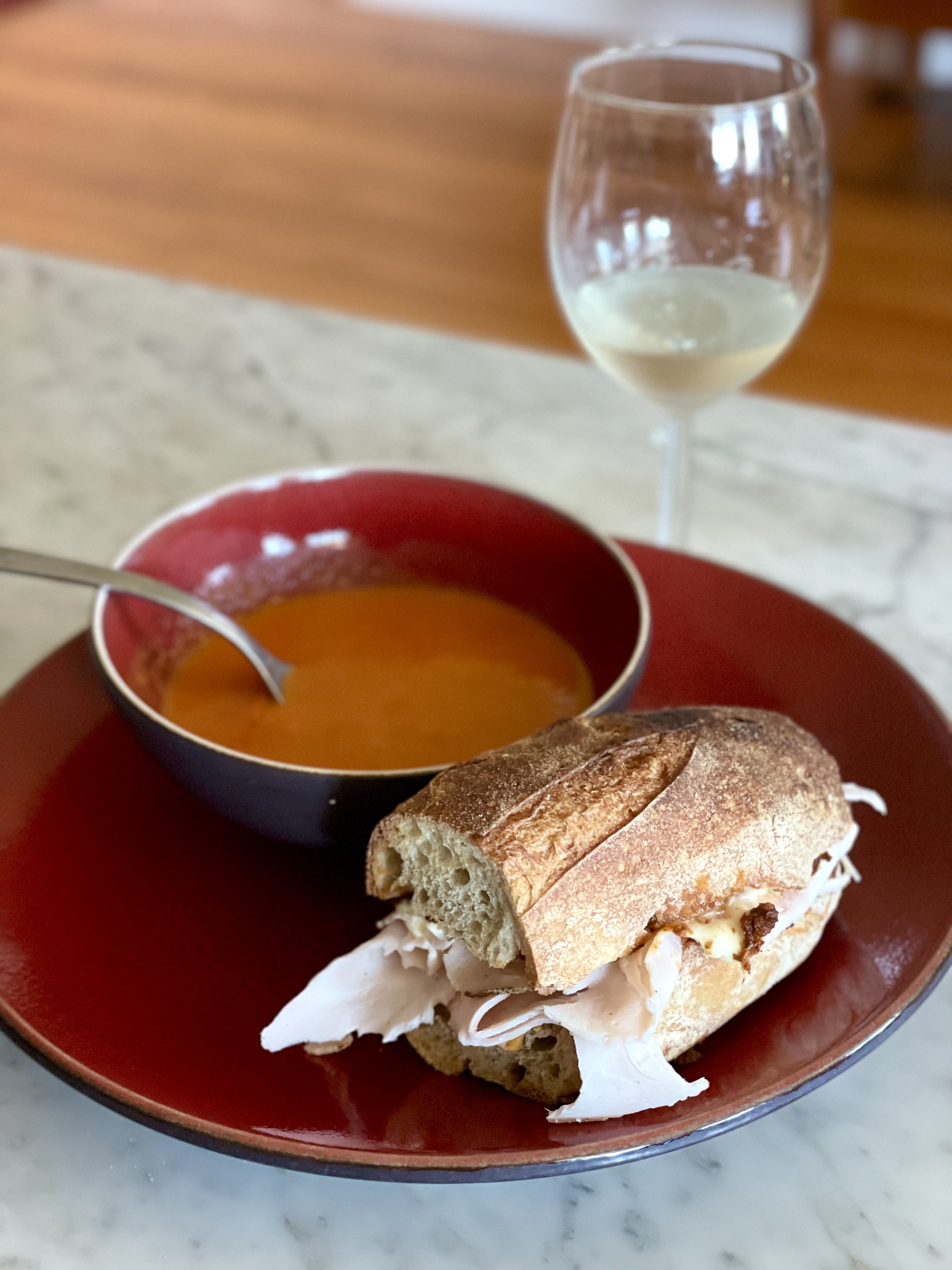

I also tend to love Chardonnays that are lightly oaked and/or have lees contact with roasted chicken, and I think this would certainly be a good candidate. Seafood topped with butter should also be delicious. 

*****


*****


The rest of the World Wine Travel (#WorldWineTravel) blogging group is exploring white wines from Victoria this month. Be sure to check out the rest of their posts:

  • Wendy of A Day in the Life on the Farm paired Peach Chicken and a Chardonnay from Fowles Farm 
  • Cam of Culinary Adventures with Camilla shares Steamed Mussels with a Citrus Drizzle + Punt Road Pinot Gris 2019 
  • Terri of Our Good Life is enjoying Summertime Charcuterie with Whipped Feta + Butterfly Effect Rose Grenach
  • Jeff of Food Wine Click! serves up Frisk Prickly Riesling with Hoisin Pork
  • Deanna of Wineivore is talking about Mango + Tahblik Old Vine Marsanne
  • Gwendolyn of Wine Predator says "Say Hey to Summer with Victoria’s Fowles Wines “Ginger Prince” Sparkling Rosé Paired with Smoked Egg Salad "   


Additional sources used for this post and extra reading:
  • The Oxford Companion to Wine via JancisRobinson.com
  • Wine-searcher.com
  • Australianwine.com
  • Wineyarravalley.com

Extra time in the kitchen this past year has allowed me time to conduct several informal pairing studies of how wines pair with different versions of a few everyday favorite foods. With Memorial Day coming up this weekend, it seems like the perfect time to share my very scientific findings on pairing the first of these: Burgers!

Studies were conducted with homemade burgers, burgers ordered in from restaurants, and burgers made during cookouts with our quarantine pod at the Culinary Cabin. Towards the end of last year, I had the chance to participate in a virtual event that greatly accelerated my research, so today we’ll focus on this experiment, and I’ll share further conclusions in my next post.

Washington State Wines via O'Donnell Lane PR invited me to join a tasting with Devison Vintners and Canvasback Winery. The extra fun component of this tasting was that all of the participants were sent two burgers to enjoy alongside the wines – a bistro-style burger and a good fast-food burger. (I fully believe there are tiers in the world of fast-food burgers.) I received a bacon burger from The Cook and Her Farmer in Swan’s Market here in Oakland, and a classic Five Guys cheeseburger.  

Each winery sent two wines as samples to experiment with and the results were not always exactly what one would expect. Let’s take a look at the wines and how they paired with the burgers. 


Map courtesy of WineFolly.com.


Note: While the wines were provided as media samples along with the burgers, all opinions are my own and no other compensation was received. Click the wine's name for more technical details on a specific bottle.


Devison Vintners

Peter and Kelsey Devison are the husband and wife team behind Devison Vintners in Walla Walla. Both have had long careers in wine, and between the two of them, they’ve touched most areas of the industry. Peter, who joined the virtual event, had already long been a head winemaker in Washington state for many years when he and Kelsey decided to start their own winery. For her part, Kelsey Malm Devison had spent her time on the sales, marketing, and import side of things. Devison makes small-lot, minimal intervention wines aimed at showcasing Washington’s terroir. They source fruit from growers throughout Washington as well as Oregon with whom they have longstanding relationships.


View this post on Instagram

A post shared by Devison Vintners (@devison_vintners)


Devison Vintners Rosé Boushey Vineyard Yakima Valley 2019

Blend: 75% Mourvèdre; 25% Grenache   | Price: $24 (for the current release 2020 bottling)

The grapes in this wine come from the same vineyard as Above the Flood, which we’ll take a look at next. It’s inspired by the Provençal style, but definitely shows Washington character with riper fruit notes. The wine is made via native fermentation in concrete and neutral French oak. It’s then aged on the lees for 5 months and bottled unfined. 

Tasting Notes: Bright strawberries, cherries, and peaches draw you in on the nose and continue on the palate where they gained a tangy quality as they mixed with the lightly creamy mouthfeel created by the lees. 

Pairing: This wine was the surprise MVP of the day. It matched solidly well with both the bacon burger and the cheeseburger. More cherry notes in wine came out when sipped alongside the Five Guys cheeseburger. I don’t think I’d ever really considered rosé as an ideal pairing option for burgers, but it does feed into my evolving belief that rosés are among the most versatile food-pairing wines. This version’s round fruit character helped it to play nicely with tricky elements like ketchup, which can throw off some wines because of its sweetness. 

Greg and I later enjoyed the rest of this bottle with fish poached in a savory Japanese-inspired broth with enoki mushrooms and greens, and it worked beautifully in that combination as well.


Devison Vintners Above the Flood Boushey Vineyard Yakima Valley  2018

Blend: 55% Grenache; 37% Syrah; 8% Mourvèdre | Price: $49 

The grapes for both of these Devison wines come from Boushey Vineyards, which are located in Yakima Valley on the southern slopes of the Rattlesnake Mountains. The vineyards are planted on several sites within a two-mile radius but are generally south-facing slopes at elevations varying between 700 to 1200 feet. The oldest vines were planted in 1980 and the youngest were planted in 2003. The wine is made via native fermentation and is bottled unfined and unfiltered. 

Tasting Notes: Sweet raspberry candy notes hit on the nose, along with hints of spice, cocoa, and vanilla. Berries in all colors – red, black, and blue were all here – continued on the palate along with smoke, spice, singed herbs, with a light hit of pepper on the finish. I’m a sucker for a GSM blend, so it’s not a big surprise that this was my favorite wine on its own.

Pairings: This wine worked solidly well with the Five Guys burgers, but it just sang with the bistro burger from The Cook and Her Farmer. This wine absolutely loved the bacon! The smoky notes in both curled around each other like the coils in a plume of smoke. Magical.

Despite the ripe fruit quality of the wine, you might not want to have it with any super spicy or sweet sauces. We later tried the rest of this bottle with pork belly in gochujang. In that case, the sauce diminished the wine’s fruit character and resulted in a pairing that was just okay.


Canvasback Winery

Canvasback is part of the Duckhorn family of wines, and their first winery outside of California. (We’ve explored wines from Duckhorn several times on this blog, but specifically in a burger pairing here.) Inspired by the quality and character of Cabernet Sauvignon from Washington State, and particularly from Red Mountain, the winery specializes in Cabs with a structured style, although they do make wines from a few other grapes. Canvasback’s winemaker Brian Rudin, who is a Washington native with years of experience working at some of the state’s most esteemed wineries, joined us for the virtual event.

Like most of the Duckhorn family of wines, Canvasback’s name is inspired by the birds. In this case, the waterfowl in question is the Canvasback duck, which is native to the Pacific Flyway and is pictured on the labels. 

Canvasback Cabernet Sauvignon Red Mountain 2017

Blend: 84% Cabernet Sauvignon, 11% Merlot, 2% Mourvedre, 2% Petit Verdot, 1% Syrah | Price: $42 

Red Mountain  is still a fairly young appellation, having gained its AVA status in 2001, nonetheless, it has earned itself a reputation for quality and is particularly renowned for Cabernet Sauvignon. It’s the easternmost subsection of Yakima Valley and is graced with ideal southwest-facing slopes that give the grapes lots of time in the sun. Big swings between the day and nighttime temperature swings provide the conditions for steady ripening that allow the grapes to maintain acidity while developing intense flavors. Canvasback sources their grapes from growers with whom they maintain close relationships. 

Tasting Notes: Friendly black cherry and red plum notes greeted me on the nose. More red fruit notes jumped in on the palate, along with clove, cocoa, vanilla, and a sprinkle of thyme on the finish. The fruit was rich and concentrated while maintaining bright acidity and the tannins were smooth. 

Pairing: This was my favorite wine with the Five Guys burger. The fruit was ripe enough to stand up against the sweetness in the ketchup and it matched the richness of the burger nicely, while the acidity in the wine kept everything lifted so that my palate wasn’t being dragged down by the weight of the food and the big red wine. We finished this bottle that evening with the rest of the burgers after the event, so I don’t have additional pairings for you on this one. 


Canvasback Grand Passage Cabernet Sauvignon Red Mountain 2017

Blend: 98% Cabernet Sauvignon, 2% Merlot | Price: $84

The grapes for this wine are sourced from selected blocks in Quintessence Vineyard, a site with loamy soils that sits at an elevation of 661-1,106 feet. This wine sees about twice as much new oak in comparison to the Red Mountain, which speaks to this wine’s more intense structure. 

Tasting Notes: Red berries, rose petals, and light pepper draw you in on the nose, but then the fruit becomes more dark and intense on the palate with black cherries and plums joining the party. Baking spices, chocolate, and vanilla accent the fruit, while licorice, bay leaves, and pencil lead add complexity. This is a much more structured wine than the Red Mountain, and while the tannins were already fairly supple, the wine would benefit from further aging.

Pairing: The wine worked solidly well with both burgers. I thought the sweetness of the ketchup in the Five Guys burger would challenge the wine, the fruit held up better than expected, although it did narrow the fruit a bit. On the other hand, the fruit came out more with the bacon in the burger from A Girl and her Farmers in a nice way. It was fun to try this high-low combo, but I think the wine’s structure hurt it a bit since the more intense tannic grip seemed to want something more full-on meaty to tame it. Both burgers made for good pairings with the wine, but I think there is a higher calling for this elegant and structured wine. I still have the rest of the bottle since I used my Coravin to pour myself the taste for the event, so will explore further pairings and report back.


This was such a fun virtual tasting and really furthered my very scientific research on burger pairings. I will be back soon with more analysis into the field of burger and wine pairings. Thanks so much to Washington State Wine and O'Donnell Lane for the invitation! 


This post contains affiliate links, including these Amazon Associate links, from which I might receive a commission at no cost to you.


Francine et Olivier Savary Chablis Vieilles Vignes with Scallops and Brussels Sprouts 2 Ways.
 
Whenever I encounter someone who tells me they don’t like Chardonnay because they don’t like big, buttery, oaky white wines, I want to (and usually do) say "But have you tried Chablis?" Chablis is none of those things. Wines from Chablis tend to be lean, mean, minerally machines. 

Well, they’re not all mean — they’re also often very elegant and extremely refreshing . . . but they also taste like a few rocks and shells got mixed in.

I tend to want to drink Chablis when the sun is shining, ideally with a big plate of oysters and other raw bar treats. However, my guess is that those sunny, shiny days are few and far between in this area of northeastern France where it gets quite cold. I’ve never been myself, but a few years ago I read an article called "In Chablis It’s Called 'Rock Juice'" by Adam Leith Gollner in Saveur that really painted my image of this region. Gollner describes it as "a rainy, cold, hardscrabble place where it often seems that villagers would prefer if outsiders stayed away and let them craft their finicky, terse wines in private."

I think this piece has stuck with me for so long because Gollner takes me on EXACTLY the trip that I specifically would want to go on. He visits the winemakers of the region (including some pretty legendary figures — he starts at the door of Jean-Marie Raveneau) to taste their wines with them and get their pairing suggestions. He has ulterior motives though; he’s trying to get himself invited to dinner.

Being suspicious of strangers, most of them initially treat him like he’s un petit fous. However, he says, "the Chablisians may be taciturn, but they're also profoundly kind-hearted and close to the earth." To give you an idea of the personalities we’re dealing with, there’s a humorous scene between Marie-Clotilde Dauvissat and her husband Laurent Tribut. When he can’t take a compliment she admonishes him, "I'm offering you flowers . . . It doesn't happen often. You should take them."

Gollner is eventually able to find the chinks in the armor of the Chablisian winemakers enough to get several invitations to dine to varying degrees. He gets to join in on a few homemade meals, as well as snacks and smaller meals like gougères, crunchy bread and truffle butter, decadent scrambled eggs loaded with more truffles, and guac with chips.

This is a hero’s journey that I really could see myself at the center of.


QUICK REGION RECAP


I’ve covered Chablis before, and if you want to take a deeper look, please check out this post.  As a quick recap though, here are some quick, basics:

  • Chablis is subregion of Burgundy in NE France. It’s a bit removed and farther north from the rest of Burgundy.
  • The grape is Chardonnay. 
  • This area puts its own spin on it. Even when compared to other parts of Burgundy, wines from Chablis tend to be leaner. They're also generally not oaked. Stainless steel tanks are typical fermentation to enhance the crisp minerally style.  Some use neutral barrels that do not give off any oaky flavor. When they do use oak (which is more likely at the high end Premier and Grand Cru levels), it tends to be moderate and well integrated. You'd be hard-pressed to find an "oaky Chablis."
  • They have a cool, semi-continental climate. This factors into the style as the chilly conditions lead to high levels of acidity. Feel your mouth water!
  • Chablis is famous for Kimmeridigian as well as Portlandian soils. These crazy old soils have remnants of fossilized oyster shells leftover from an ancient, long-gone sea. These also factor into the style of the wines here, since they lend a particular minerality to the wines.

Gollner poetically describes the experience of drinking Chablis, which is so tied to that terroir:

One sip is all it takes to realize that terrestrial constituents seem to have infused themselves into the wine like finely flavored microscopic particulate matter. Picture a sprinkling of moon dust in your glass. It's the opposite of ripe, oaky, in-your-face California chardonnays. Chablis carries the memory of glaciers. That oceanic stoniness is the ideal complement to raw oysters.

Image borrowed from Saveur. Photo by William Hereford.


THE WINE & PAIRING


As you might of guessed, I recently revisited this article. The French Winophiles (#Winophiles) are exploring Chablis this month (see the invite post here and scroll down for the rest of the group’s offerings) which inspired me to go searching for it again. It’s stuck with me all this time, so I thought I’d finally try one of the recommended recipes.

I lucked out –– we even had a wine from one the winemakers featured in the story at Bay Grape. I happily grabbed the Francine et Olivier Savary Chablis Sélection Vieilles 2017.


Francine et Olivier Savary Chablis Vieilles Vignes with Scallops and Brussels Sprouts 2 ways.
 

Olivier Savary and his wife Francine have been working in the area since 1984, and Olivier’s winemaking lineage goes back further through his family. However, there were no vines or winery waiting for him to takeover. Nonetheless, Olivier decided to go to Dijon to study winemaking.  He and Francine started out as sharecroppers, along with some help from Olivier’s father as well. When they started out they would sell their fruit to a négociant. After they’d cut their teeth in this way for a bit, they started bottling and selling their own wines. Today, their sons Maxime and Mathieu are part of the family business as well.

The wine was really fresh and light on the nose on the day Greg and I opened it, with notes of citrus, stones, and mixed green and gold apples. It was rounder on the palate with gold apples, lemons, and chalky sea minerals on the finish. There’s plenty of acidity here, but it’s not as crazy searing as it can be on some Chablis. This one’s on the juicy side. Very refreshing! I think this would be a very crowd-pleasing Chablis.

A recipe by Margaux Laroche of Domaine d'Henri  from the article for Seared Scallops with Steamed Brussels Sprout Leaves doused with soy sauce and ginger caught my fancy. However, I also REALLY love the combination of brussels sprouts and bacon. I wanted to try their way, but also really wanted mine too. I decided to do both!

Definitely not a bad move. It’s always fun to compare and see how a wine changes with different flavors. The scallops were an easy match for the wine. All good things there. As for the sprouts, each version brought out a different side of the wine. With all the umami from the soy sauce and ginger, the recipe from Saveur brought out the umami notes in the wine and showcased it’s seashell minerality.

On the other hand, since this Chablis was on the rounder side, it also worked really well with the smoky bacon. This brought out the juicier aspect of the wine. I was really torn between the two, although Greg very slightly prefered the bacony version as a match. Take your pick! These are both really good matches.


OTHER POSSIBILITIES


In the story, Gollner enjoys a dinner of Chablis-style Ham with Tomato Cream Sauce with Francine and Olivier Savary. I will absolutely have to try this in the future.

In addition to the pairings suggested above, the article also mentions how well Chablis goes with sushi. I’ve definitely taken this suggestion to heart and tried it over the years and it really does work quite well.

If you’re looking for other wines to pair, most minerally white wines should work well here. Muscadet and Sancerre (or other another Sauvignon Blanc from the Loire Valley) would be good alternative options. The brussels sprouts made with bacon could also handle wines with a little more fleshiness to them as well.

Or try this clam and burrata pizza I also paired with a Chablis. 


THE GEEKY DETAILS

Taken from the Kermit Lynch Website.

• Average age of vines: 35 years old.
• Soil type: Kimmeridgian Limestone.
• Vineyard size: 3 ha.
• Alcoholic and malolactic fermentation occur in 20% neutral oak barrels and 80% in stainless steel.
• Wine is aged on fine lees.


MONEY TALK

This wine retails for $31 at Bay Grape. I think that a very solid value for this approachable, yet classic wine that’s very representative of the region.


Scallops with Brussels Sprouts 2 Ways


I wanted to cook the scallops and ½ the brussels sprouts in bacon fat, so I’ve included them here as part of the same preparation and have included the second preparation for brussels sprouts separately. Refer to the Saveur recipe here to see a version of  this preparation in combination with the scallops.

Clos de Trias Ventoux with Bacon-Cheddar-Teriyaki Burger. Recipe by Nicole Ruiz Hudson. Photo by Greg Hudson.

Earlier this year I headed up to Napa for the Global Garnacha Summit—a daylong exploration of the many facets of Grenache in the many regions it grows. I must say it was a good reminder of this grape’s full range; from light and fruity to deep and dark. There were a lot of really fun wines, but the Clos de Trias Ventoux 2010 really stood out for it’s QPR (quality to price ratio). It was really tasty,  and when they revealed the price, impressed murmurs rippled through the audience.

A few months later we got the 2012 in at Bay Grape. We poured it at a tasting and it got rave reviews from our guests. I definitely thought it was worth sharing this one.

Although this is a French wine, the winemaker is American. Even Bakke was born in Colorado, and later spent 14 years working in wineries in California. However, when it came to make his own wines, France beckoned. His wife is Champenoise and he loved the French relationship to terroir. They searched for the perfect spot for almost three years before finding their vineyard in Ventoux in the Southern Rhône. 


The 20 hectare vineyard they ultimately purchased has 80+ year old vines, at 300-500 meters above sea level with soils that date back to the Triassic period (starting about 252 million years ago), hence the name. (I wasn’t able to reconfirm it on their site, but I believe the shell on the label alludes to fossilized shells found in the vineyard’s soil.)

They bought the vineyard in 2007 and began converting the vineyard to organic with some biodynamic principles. They completed organic conversion in 2012 and are now certified under the European Organic label. Grapes are handpicked and hand-sorted. Fermentation is spontaneous and the wines are bottled using minimal sulfur. A lot of artisanal care is shown in this winery in a region that is still largely dominated by cooperatives. It’s paid off as they quickly received a lot of acclaim.


Here's an aerial video of the vineyards they shared on You Tube.

You might recognize the name Ventoux if you’re a cycling fan as the Tour de France winds around Mt. Ventoux. It’s a fairly large region in the SE corner of Southern Rhône bordering Provence. The vineyards run along the western and southern sides of the mountain for which it is named. In general, vineyards here enjoy higher altitudes than in other areas of the Southern Rhône.

Like with other wine regions of the Southern Rhône, you’ll find the GSM grapes for the reds of this region. Carignan and Cinsault also join Grenache, Syrah, and Mourvedre to a lesser extent.

(Quick aside: I shared one of my other favorite finds from the Global Garnacha Summit in Trekking Out with Canned Wines.)


THE WINE & PAIRING


Clos de Trias Ventoux with Bacon-Cheddar-Teriyaki Burger. Recipe by Nicole Ruiz Hudson. Photo by Greg Hudson.

I was excited to bring this one home. 

On the day I opened up the Clos de Trias Ventoux 2012 with Greg, the bottle was showing a little earthy funk on the nose, but beneath that there was lots of fruit. (I personally don’t mind a little funk as long as there’s nice fruit to go with it.) There were black cherries, raspberries, sweet plums, a touch of balsamic savoriness,
a bit of stoniness, and a touch of smoke and pepper. On the palate, the fruit was ripe and a little candied like dark maraschino cherries–the good, artisanal kind, not the crappy bright red ones that look and taste like they belong in an industrially made fruit cake.

To tell the truth, Greg wasn’t as excited about this one as I was—the fruit quality was a touch too candied for his taste. Screw him, what does he know?!  . . . TOTALLY just kidding.

I was in the mood for a burger. I knew that much. A big juicy burger, but I’d let the wine dictate the toppings. Since the wine had a combo of sweet and savory notes, we figured it could handle a sauce that had a similar mix. To decide which direction to take things, Greg and I grabbed a BBQ sauce and a teriyaki sauce. The BBQ sauce wasn’t half bad, but we both agreed the teriyaki sauce worked better. Aged cheddar, onions lightly caramelized in balsamic vinegar, and bacon would complete the package. I think a blue cheese would also work quite well, but I had the cheddar on hand.

Since there were so many other big flavors at work here, I kept the seasoning in meat to simple salt and pepper.  Taking a recommendation from Serious Eats, we salted the meat just before cooking. I haven’t done the side by side (although you can see their results), but there is plenty of flavor going on here otherwise so I didn’t miss the extra salt at all, and the burgers were indeed very juicy.

A quarter pound burger seemed a little small, a half pound too big, so 1/3-pound was just right. This leaves you with a slightly awkward 3 burgers per pound, but just double it all if you’re concerned with even numbers. In our case, this left one burger for Greg to have for dinner while I was working the next night. I really don’t think it’s hard to find a home for an extra burger.

I have to admit that the bacon got away from me on this occasion. I was trying to go low and slow to nicely render the fat to use it to cook the burgers afterwards. I got impatient though and cranked up the heat to high. Of course, I ended up charring the bacon a bit. I’m prone to this problem, which is why I usually prefer to cook bacon in the oven. It all worked out, but it’s just a good reminder to try and be patient and pay attention to what you’re doing.

To accompany the burger, I decided on some simply roasted potatoes and zucchini. Altogether, this meal felt like a bistro night at home. The burger was just what I was in the mood for—juicy and just the right amount of messy. The wine worked perfectly. Greg, who had been less enthusiastic about the wine, definitely enjoyed it more with the food. I was already a fan and was a super happy camper. We were both licking our fingers and taking big swigs.


THE GEEKY DETAILS


Taken from the tech sheet on the winery's website.

Alcohol Content:  13.5 - 15 Vol % (14% on the bottle)
Grape Varieties:   At least 80% Grenache noir, 5-10% Syrah, 2-6% Cincault, 2-6% Carignan
Average vine age:  46 years
Fermentation:   Approx. 40% fermentation with stems, 60 % destemmed. Maceration around 3 weeks
Finishing:  20-30 % aged in demi-muid
Decanting:  Recommended
Drinking temperature:  16-18 degree
Spontaneous fermentation:  Yes
Handpicking:  Yes
Average Yield per ha:  25 hl/ha
Yearly production:  45,000 bottles
Type of soils:  Argilaceous shell Limestone, quartz sand and marl from ancient Trias


MONEY TALK


A search online shows US prices in the range of $17 to $25 and I think this wine delivers a lot of QPR in that price range, making it an Overachiever in my book.

You can currently also find this on Wine.com.


OTHER POSSIBILITIES


I see this wine as a particularly good version of a bistro wine and I think it would go well with a lot of dishes in that camp. Steak-frites, cassoulet, a hearty bean stew –– bring ‘em on! That hint of funk should definitely work with mushrooms as well.

If you’re looking for other wines to pair with this, look for medium to full reds with moderately ripe fruit notes balanced with hints of smoke and earth.


For more pairings for the Rhône, Southern France, and Grenache see these posts:
  • Cooking to the Wine: Clarendon Hills Grenache with Chicken Thighs with Spiced Saucy Eggplant and Tomatoes with Polenta  
  • Cooking to the Wine: Les Vins de Vienne Gigondas with Gratinéed Shepherd's Pie
  • Kicking Off 2018 with Corbières and Minervois
  • French Onion Soup and Filet Mignon With Onion Sauce 
  • Lamb Kebabs With Israeli Couscous Salad 
  • Beet Risotto with Herbed Chicken Tenders 
  • Braised Lamb Shanks and Lentil Stew     
And here's one for a white Rhône:
  • Ham Steaks with Peach-Tomato Succotash

Tart Flambee. Photo by Greg Hudson.

In my last post I shared with you a BIG round of wines I served at a dinner party from on one of my favorite wine regions––Alsace.

Today we’ll move onto the food. Specifically, we’re starting with the appetizers.

My friend Heather brought over a beautiful round of cheeses and charcuterie. She and Greg arranged the cheese platter. I have to give the guy props, Greg is getting pretty darn good at putting these together. 


I admit that I was not paying careful attention to how the cheeses paired with specific wines, as I was still half in the kitchen cooking at this point. However, I generally find these wines to be very cheese-friendly, and many of Alsace’s varieties are natural pairings for pork, and charcuterie by extension.

To provide further guidance What to Drink with What You Eat makes the following recommendations for the three varieties we enjoyed that evening. All three are noted as being particularly good matches with cheese.

Pinot Gris: Especially goat cheese, sheep’s milk cheese, smoked cheeses. Additionally, mild cheeses like Fontina, Mozzarella, Muenster, Ricotta.

Riesling:  Especially blue cheese, soft cheese and/or triple crème cheeses like Brie.

Gewurztraminer: Especially soft and/or strong and aged cheeses like Camembert and Epoisses, Muenster, and Roquefort.

I still had more up my sleeve for this party! I have several favorite appetizer recipes from Alsace. In this case, however, I decided to reach out to the lovely Cecile Delarue of French & Parfait for her recommendations. She immediately responded, “I know exactly the best recipe for Alsatian wine for me: Flammekueche.” Flammekueche is also known as Tart Flambée, and it’s basically a thin-crust tart  or flatbread topped with bacon and cream. I LOVE it, but had never made it. Cecile sent me the recipe from her cookbook, Voilà! Effortless French Cookbook, and I dove in.

I generally stuck to the recipe, but I did make a couple of small changes. In the original recipe, onions are cut really thin and then just piled on the tart to cook in the oven. I was slightly worried about the onions cooking all the way through from raw, so I sweat them on the stovetop first. I thought this worked quite well, however, I would take better care to drain them more next time. It could be that my oven temperature is off, however I will note as well, that it took a few more minutes than originally indicated in the recipe.

A couple more notes for further success. Next time I would allow more time for draining off liquid from the ricotta than I did this time. Also, Cecile recommends making the crust really thin. I thought I was doing that, but next time I’d just keep on rolling to make it even thinner.

That said it was freaking delicious! Sooooooooooo good. I made two tarts and pretty much everyone took some home at the end of the evening.

Although I didn’t try all of the wines alongside the tart, I’m pretty sure most of them would work quite well with the Flammekueche. That said I LOVED it with the Meyer-Fonné Brut Extra Crémant d'Alsace. The tart was a bit salty and fatty from the bacon, and the bubbly cut through all of that in a beautiful and refreshing way. A beautiful and delicious combo.


I also liked the two Pinot Gris wines with the tart. The Trimbach Pinot Gris Réserve Alsace 2014 was a light option, and the more refreshing of the two. On the flip side, the Meyer-Fonné Pinot Gris Alsace Grand Cru Kaefferkopf 2015 was a completely decadent choice. The richness of this wine played up the unctuousness of the bacon.


For further description and details on the wines, please see my last post.


Older Posts Home

INSTAGRAM

Sign up for my mailing list!

Subscribe

* indicates required


Somm's Table 2017